As there is still no end to the Iran war in sight, countries across the world have rushed to implement various belt-tightening measures to deal with the looming socio-economic crises. The situation has already worsened, and Bangladesh is among the first countries to face a severe shock. A reduction in energy supply will reduce industrial and agricultural activities, ultimately lowering aggregate income and aggregate demand. The energy crisis will also flare up cost-push inflation, reducing the real income of millions of people. As a result, aggregate consumption will decline, and the economy is set to enter a recessionary cycle soon.
Against this backdrop, the new government has taken a number of measures to contain energy demand as its first priority. The extent to which the measures will be effective depends on the efficiency of the implementing agencies. Early indications already reflected mismanagement and a lack of coordination among the various agencies. Though it is not a new phenomenon, as people in the country have long been experiencing the non-performance on the part of a callous bureaucracy, the continuation of the same will take a heavy toll on the country.
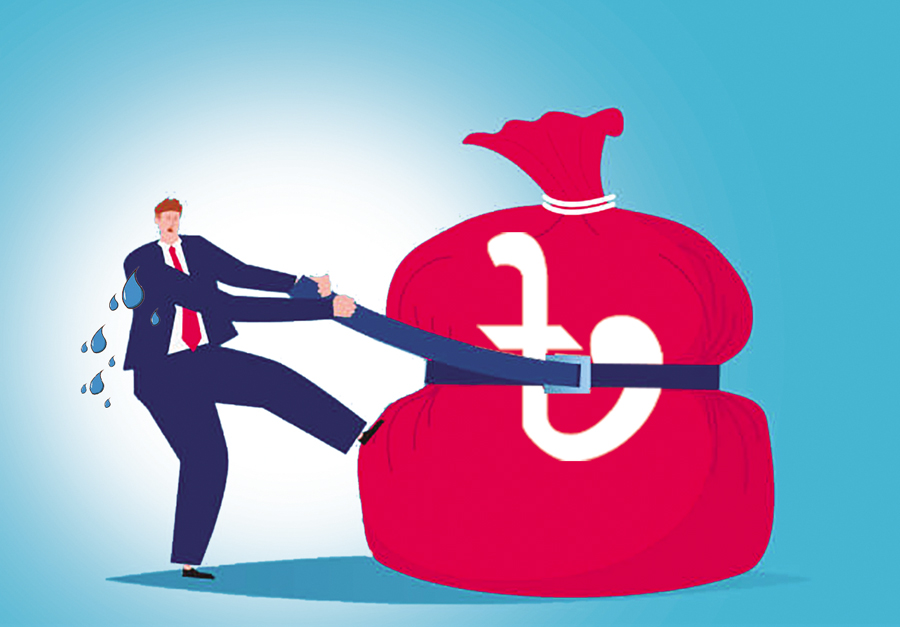
Moreover, the measures to save power are still not sufficient. For instance, though the decision to cut government office hours by an hour and encouragement of the use of daylight is a good move, there should be strict instructions to reduce the use of air conditioning (AC) during office hours, rather than keeping it at least 25 degrees. Many government offices keep the AC running for 8 hours, and some even keep the temperature below 22 or 23 degrees. Over the years, office buildings are designed in such a way that there would be no shortage of power, and so there would be no problem running the AC for a longer period.
And no clear instructions are given on restricting the use of AC in private cars and microbuses for government employees. Earlier, Bangladesh Bank issued guidance asking bankers to use public transport rather than private cars to reduce power demand. Though the terrible condition of public buses in Dhaka and the rest of the country is not taken into consideration before issuing such advice, it rightly indicates that greater use of public transport is a good idea for belt-tightening.
It is unfortunate that the country has yet to make its public transport efficient so that the regular mobility of millions of people could be easy and smooth. Though public transport is largely bus-based, the condition of most buses is awful. Having no alternatives, most people struggle daily to use these buses, where seats are ragged and the space between the rows is insufficient, and windows are broken. Moreover, due to an inadequate number of buses on different routes, some commuters have to keep standing while travelling in these buses during peak hours. Finally, the sector is under the control of rent-seekers backed by the ruling political party. Over the decades, these rent-seekers have become so powerful that it appears almost impossible to restructure public transport by replacing the old, ramshackle buses, which are also a major source of noise and air pollution in Dhaka. The sector also became heavily criminalised during the autocratic regime of Hasina.
As ministers, lawmakers, policymakers, and bureaucrats do not use public buses, it seems they have little concern for the suffering of millions of commuters. So, advising bankers and other professionals to use public buses is a mockery when government officials continue to use private cars. It is thus time to reduce the number of private cars of government officials and compel them to use public transport, such as the metro rail. A dedicated shuttle bus service can also be introduced for them, as belt-tightening involves various steps to provide cheap alternatives for the time being, along with spending cuts at large.
In a similar vein, the use of AC must be restricted in homes, offices, commercial centres and other places. It is also a matter of changing behaviour and practice during the crisis, and there is a need to sensitise citizens across the board. As the summer heat rises slowly, demand for cooling machines will also increase. Many households have already started running AC at night, though it is possible to use ceiling and table fans and keep windows open, especially on upper floors of residential buildings. To protect against mosquito bites, the use of mosquito nets should be encouraged. Modest and casual office attire should be encouraged so people can feel comfortable in summer and avoid using AC. As the prime minister himself is accustomed to wearing smart yet plain clothes, this should be encouraging for others.
As a part of belt-tightening, the government has also curtailed expenditure on hospitality, training, meetings, and travelling, which is the right move. The 50 per cent cut may even be increased to 75 per cent for the time being, as in many cases a portion of this spending turns into waste. A ban on decorative lighting at private weddings and events is also the right step. The government also instructed all markets and shopping centres to close at 6pm, although the owners demanded a two-hour extension. As essential services such as kitchen markets, pharmacies, and food outlets will remain exempt from early closure, there is a scope for misuse of the provision. These outlets should be compelled to cut off power to lights and ACs and close after 10pm. An efficient vigilance is necessary to ensure compliance of the order. There is also the need to look for other areas to cut spending to save for the rainy day.
The current crisis also presents an opportunity to address a number of critical issues in the country. That may involve revamping of public transport by gradually introducing electric buses and replacing the ramshackle, dirty buses with new low-floor buses. The use of AC can be rationalised smartly, such as by adding an auto-stop device centrally.
As the country has already entered a cycle of big uncertainty, almost like the time of Covid pandemic, a combined effort is necessary to fight the crisis. To do so, there is an urgent need to prioritise work agendas and suspend less important tasks for the time being. Citizens also need to cooperate with the government and have some patience to overcome the crisis. They must not pay heed to the misleading information and propaganda of the beneficiaries and adulators of the ousted regime. They also need to keep in mind that the ousted tyrant and her advisers turned the country's energy sector highly import-dependent, while ignoring offshore gas exploration. If there were a well-planned move toward exploration, it would be easier to fight today's severe energy crisis.
asjadulk@gmail.com
© 2026 - All Rights with The Financial Express

