Lightning strikes are increasing in frequency and costing more lives every year. Thunderbolt in the sky is nothing new, but what raises concern is its growing human and economic toll. On Saturday alone, 12 people died in lightning strikes in six districts across the country. Notably, nine of these victims were farmers - a stark reminder that those who till the soil top the list of victims in this natural hazard.
The danger reaches its peak during April and May, a critical period for farmers in the haor areas of Sunamganj. Rain or shine, they have to work outdoors to harvest their crops before flash floods sweep them away. This can explain why farmers account for a disproportionately high number of deaths from lightning strikes. However, if the farmers remain unprotected, the consequences will ripple far beyond the farming communities. It will pose a direct threat to the country's food security as the haor regions contribute nearly one-fifth of the country's total paddy production.
Considering the mounting death toll, the government added lightning strikes to the list of natural disasters in 2016. However, little has been done since then to formulate effective policies or implement protective measures for those vulnerable to this hazard. While some initiatives were taken to plant palm trees and install lightning arresters, how sincerely those projects were implemented during the deposed Awami League regime remains questionable. Consequently, the death toll keeps rising from this natural calamity.
According to the Department of Disaster Management (DDM), lightning strikes claimed at least 3,485 lives between 2015 and 2024, with annual fatalities peaking at 427 in 2020. Although reported deaths fell to 322 in 2023 and 271 by mid-2024, the trend in 2025 turned severe again with 350 deaths. This year, according to a report by a national daily, there have already been 60 fatalities as of April 18.
Overall, lightning strikes are now killing more people annually than any other natural disaster in the country. The severity also appears to be higher in Bangladesh compared to other countries. For example, Nepal has roughly 100 people killed by lightning every year. South Africa has about 200 people killed every year. The number in the USA was just 20 in 2025. If the estimate of 350 deaths in Bangladesh per year is true, then we have reasons to be alarmed.
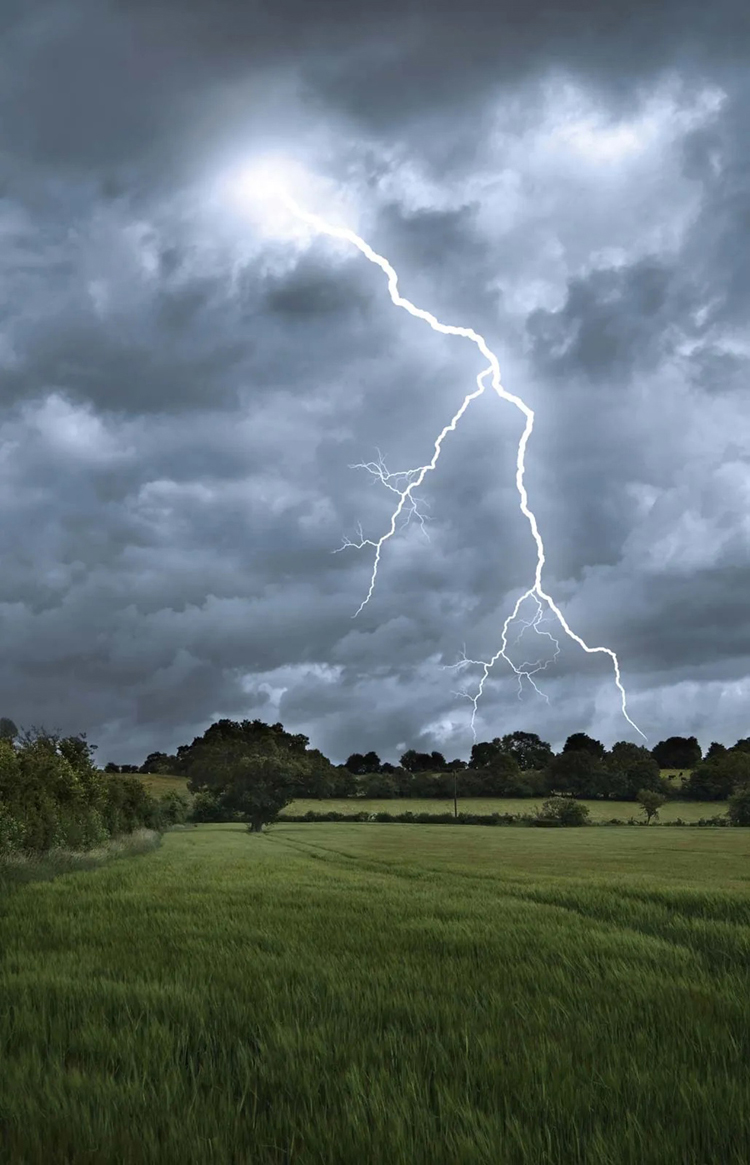
But more important than these numbers is what it tells us about the changing climate in the country that might have far-reaching consequences if not addressed immediately. First of all, lightning is more the symptom than the disease, because the cause behind its rise is global warming. The increasing frequency in lightning strike has a strong correlation with climate change. A study published on Science suggests that lightning frequency increases by about 12 per cent for every one-degree Celsius rise in the global average temperature. So, unless we recognise the manifestation of the issue as a problem unto itself, we may not recognise the more critical problem lurking behind it.
At its core, the issue reflects a growing imbalance between human activity and the natural environment. Driven by short-term economic priorities, natural resources have been exploited without regard for sustainability. The burning of fossil fuels, excessive extraction of resources and widespread pollution of air and water bodies have weakened nature's capacity to absorb carbon dioxide. Much of this has been done in the name of development, only to disrupt the ecological balance. The rising intensity of weather-related hazards, including lightning, serves as a warning about these consequences. It is, therefore, high time to deal with the environmental issue with the seriousness it demand.
One of the reasons ascribed to increasing number of lightning strikes is absence of tall trees such as palm and coconut. These trees attracted the bolts in the past thus keeping the number of human casualties at a minimum. That reality has changed due to indiscriminate felling of trees and the falling number of tall trees being planted.
It is time the authorities woke up to the danger of lightning strikes and took the right steps to combat it. They are aware of both problems and their solution. Yet they are unlikely to take remedial measures speedily. The incumbent BNP government has pledged to plant 250 million trees during its tenure. But it will take at least five to six years to tackle the threat of lightning even if plantation of palm trees starts today. It will take those trees that long to grow to their full heights before being ready to attract lightning.
In the meantime, the government should prioritise practical measures such as constructing safe shelters in agricultural fields, installing lightning arresters in schools and health centres, and strengthening early warning systems to protect those most at risk. At the same time, awareness has to be created amongst the people. Most victims of lightning strikes are in the rural areas, where simple precautions can save lives. For example, one should sit down in open fields instead of standing because lightning strikes the top-most point in an area. Another solution is to take shelter in concrete buildings. It also helps if people get out of ponds, lakes, and rivers during storms.
According to scientists, roughly 1,800 thunderstorms occur at any given moment around the world, amounting to nearly 16 million each year. Thunderstorms, therefore, are an unavoidable reality, and lightning will remain a persistent threat. This makes preparedness and adaptation essential, particularly in a country as vulnerable as Bangladesh. Strengthening protective measures, raising public awareness and promoting safer practices must become integral to disaster management efforts. Overall, a broader public commitment is a must to live in harmony with nature rather than in defiance of it.
aktuhin.fexpress@gmail.com
© 2026 - All Rights with The Financial Express

