The rapid expansion of artificial intelligence (AI) across different areas in economy and trade has pushed countries onto a complex trajectory. To attain optimal gains from trade, wider use of AI now appears unavoidable. Countries are gradually using AI in trade facilitation, a set of measures to ease cross-border movement of goods, reduce trade costs, and enhance competitiveness. Recognising the importance of trade facilitation, World Trade Organization (WTO) member countries adopted the Trade Facilitation Agreement (TFA) at the 9th Ministerial Conference (MC9) in 2013. The agreement entered into force in 2017, requiring members to fulfil commitments within a specified timeframe by implementing trade facilitation measures. The core of the agreement is simplification, modernisation, and harmonisation of export and import processes. This involves shifting from paper-based, manual procedures to digital trade processes, with electronic data interchange, national single-window systems, and interoperable digital trade platforms gaining prominence. AI advancement is set to accelerate and simplify digital trade facilitation, though it is not risk-free.
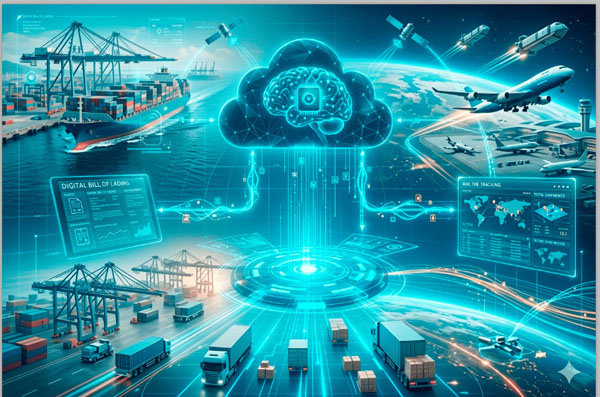
AI is broadly defined as machine-based systems capable of learning from data, generating outputs, and influencing real or virtual environments. A key question is whether and to what extent countries like Bangladesh are prepared to use AI for trade facilitation. The Asian Development Bank (ADB) and United Nations (UN) Economic and Social Commission for Asia and the Pacific (ESCAP) try to address this in the 'Asia-Pacific Trade Facilitation Report 2026: Harnessing Artificial Intelligence in Trade Facilitation.' Released in the second week of this month, the report shows that although AI is gradually reshaping trade processes across Asia and the Pacific, most economies have yet to deploy the technology at scale. AI implementation in trade facilitation is below 15 per cent across the region.
Before examining AI's current status in trade facilitation, it is necessary to understand the overall implementation of measures in the region. Since entering into force in 2017, WTO TFA implementation has accelerated efforts toward simplification and harmonisation. The UN Global Survey on Trade Facilitation (UNTF Survey) includes these 'TFA-plus' paperless trade measures. According to the survey, the implementation rate reached around 70 per cent in Asia and the Pacific last year, matching the global rate. The implementation rate of digital trade facilitation rose to 60 per cent last year, up from 33 per cent in 2015. Developed countries have a higher rate of 78 per cent, however.
The UNTF survey covers 62 trade facilitation measures that the countries are now implementing. The measures are classified into 12 sub-groups, covering both binding and non-binding WTO TFA measures, as well as measures beyond the scope of the WTO TFA, with a focus on digital and sustainable trade facilitation. The five main sub-groups of the 'TFA-plus' measures are: (i) Transparency, (ii) Formalities, (iii) Institutional Arrangement and Cooperation, (iv) Paperless Trade, and (v) Cross-Border Paperless Trade. Measures under these subgroups are the core of trade facilitation.
The remaining seven sub-groups are: (i) Transit Facilitation, (ii) Trade Facilitation for SMEs, (iii) Agricultural Trade Facilitation, (iv) Women in Trade Facilitation, (v) Trade Finance Facilitation, (vi) Trade Facilitation for E-Commerce, and (vii) Green Trade Facilitation. Most of the measures under these sub-groups are largely dependent on the core measures.
According to the UNTF Survey, Bangladesh's average implementation rate of trade facilitation measures was 70 per cent last year, up from 32 per cent in 2015. The country made significant advances in transparency at 93 per cent. Progress in formalities was also satisfactory at 83 per cent. However, Bangladesh lags in institutional arrangements and cooperation at 67 per cent. Despite notable progress in paperless trade (71 per cent), it has yet to make visible progress in cross-border paperless trade (33 per cent).
The ADB-ESCAP report identifies five trade facilitation phases: (i) the paper-based era (pre-1990s); (ii) early digitalisation and electronic data interchange (late 1980s to 1990s); (iii) expansion of single window and paperless trade (late 1990s to 2010s); (iv) emerging technologies (late 2010s to early 2020s); and (v) advanced AI integration (early 2020s and beyond).
To get a clear picture of the current status, readiness, and challenges of AI in trade facilitation in Asia and the Pacific, ADB-ESCAP conducted a survey. The survey focuses on AI use by customs administrations and other government agencies involved in trade procedures, complementing the UNTF Survey. A separate working paper presents the survey findings and analyses, providing critical inputs for the ADB-ESCAP joint report.
The working paper showed that higher-income countries often have higher AI implementation and trade facilitation readiness than low-income countries. Nevertheless, some Least Developed Countries (LDCs) have made significant progress. For example, implementation rates for Bangladesh and Cambodia exceeded the region's average. In establishing legal frameworks and AI governance, survey findings show the Republic of Korea leads East and North-East Asia; Kazakhstan leads North and Central Asia; Singapore leads South-East Asia; and Bangladesh leads South and South-West Asia. The development is encouraging for Bangladesh.
According to the survey report, nearly 50 per cent of Asia-Pacific countries have initiated work on AI systems to automate customs procedures, though implementation rates for specific measures are much lower.
Overall, it showed that AI is most used for fraud/smuggling detection and cargo inspection/image analysis in these countries. The customs department is also well ahead of other government agencies in applying AI to trade facilitation.
Several barriers challenge the use of AI in trade facilitation. The most significant barrier in the developing Asia-Pacific region is the lack of AI and Machine Learning expertise and skills, along with coordination challenges and high costs, according to the survey findings.
The findings and analyses presented in the above-mentioned reports carry significant implications for policymakers in Bangladesh and other developing nations. Though trade facilitation is designed to cut costs, the persistence of geopolitical conflicts and tensions has driven up trade costs in various ways. So, it becomes more challenging for nations to contain costs and advance trade facilitation measures. The use of AI can help countries reduce trade costs.
asjadulk@gmail.com
© 2026 - All Rights with The Financial Express

