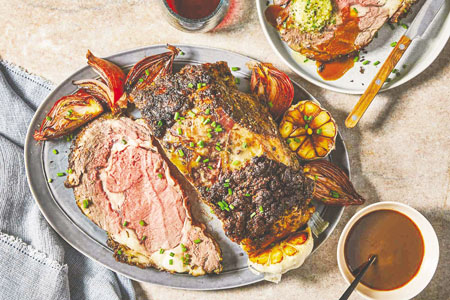
 We live in a very connected world. Practices pass quickly from one place to another. This is how we have become Burger and Pizza eaters. Shops abound in selling these items. This is in spite of risks attached to eating fast food, meat in particular. In a similar manner Biriyani is our national dish along with kebabs and umpteen varieties of meat dishes.
All over the world there is a general awareness about the risk of eating meat, red meat in particular. Consequently, popularity of vegetarian food is on the rise. This is very visible in the western world. Most chain restaurants in the west now have vegetarian dishes on the menu. Some go one step up for 'vegan' food to exclude egg from the menu. Going further, a developing trend is to avoid milk and related products.  This is on ethical ground as it is stealing from an offspring. This is an element of ethical thinking, yet to enter the country. For the same reason the term RSPCA does not ring a bell in our social life. To the contrary, slaughter of animal is a social event, celebrated with pomp. Often children are seen to accompany parents to watch the gory scene of animal slaughter in preparation for a festive meal.
I have lived in the Middle East for a couple of years. I have never seen any sacrificial offering of animal. According to them the slaughter is part of the Haj to be done by people performing Haj and not required for others. Yet it is a must for us, even for people with meagre means. The meat is mostly eaten within the family. How we love the meat!
Looking at another side, English language schools abound in the country, cities in particular. But they have not been able to make any dent in areas of activity that matter. Look at the state of English as spoken on the television screen. The situation is similar in most corporate board rooms. We are a small country speaking one common language. There is no need for an alternate language as in India or Pakistan. This can be a reason for our weakness in a second language. It costs us dearly as we interact with stakeholders across the border at various levels of engagement. The inability is due to internal inability to fill up vacancies with appropriate skill. It is a weakness along the supply chain in education. The regulators need to act in terms of when, where and how.
 Consider the annual book fair. There is hardly an English book other than academic texts. This contrasts sharply with areas of entertainment. We willingly embrace the body gyrations in dances, as seen on television screen, often offensive to our cultural life. Same goes for many other areas such as attires. Once, a foreign lady friend came to visit us. We found her very uncomfortable in a social gathering. This was due to sarees worn by some guests. The blouse underneath was very short exposing much of the body area. Our priorities in life are changing fast but in some important areas where it is needed. Could that be due to laziness in making the extra effort? We are a confused nation not being able to choose between priorities.
This is also a weakness visible in many other important areas such as export. Bangladesh is a relatively new entrant in global business. The garments sector has done wonders in introducing the country to the world. Items 'made in Bangladesh' are sold everywhere. But there is a question. Could we have done better? We do not yet have a brand name that can claim premium price for a product or a service. This is necessary as competition at the lower segment of market, where we now belong, is price sensitive. This is seen in buyer behaviour as orders are placed by the buying houses. Branding is about customer perception beyond a physical product or service.That needs better communication. Ability in a global language, English in our case, is part of that requirement. The ability will vary as per level of engagement, from exchange of pleasantries at the shop floor to progressive higher skills up the ladder.That is part of marketing.
I was in a meeting for promotion to senior positions in an organization. That was the last working day of the CEO. He had his preferences and selections were made accordingly. This is typical of how an organization is run these days. For some, it is a drop of water in the bucket. But that is how milk pond of a king turned into a pond of water. Not different from how a kid may pee in a swimming pool. Left untamed, this is how the good work in an organization can be lost. This is where we stand today, covered in a shroud, unwilling to make the extra effort. An overhaul of the system is now an imperative. In Biblical terms that would be an equivalent of 'turning the upside down to put the right side up'.
chowdhury.igc@gmail.com
© 2026 - All Rights with The Financial Express

