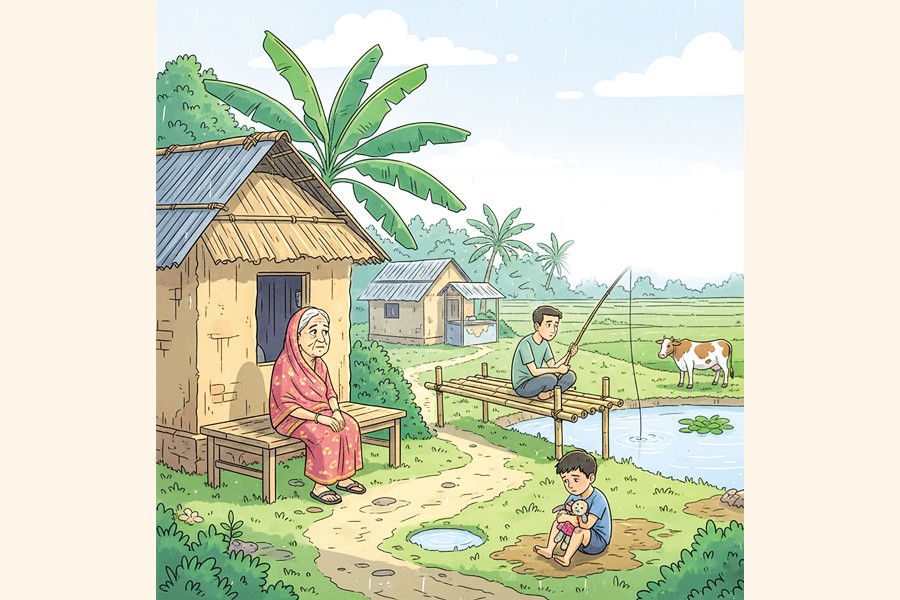
Loneliness and being alone are not synonymous. One can feel lonely in a crowd while someone else can seek solitude and enjoy being alone away from the known social circle. Loneliness is marked by emotional and social detachment or withdrawal. Craving for human companionship is inborn but in a world of fragmented families and self-centred calculation, people are fast becoming emotionally isolated. However, the sense of isolation or separation felt by a person of advanced age and a child widely vary. Both of them experience emptiness and indifference but yet the feeling vary widely.
While a senior citizen may have known or not intimate relationship and camaraderie and now miss or pine for the past, a child also can feel ignored or abandoned if parents are busy and leave him or her to someone else's care. Technological advancement has reached such a stage where human values are underrated and material considerations get the better of the family bond. In search of individualism and identity, people ignore moments of small bliss which collectively act as an anchor to strike a balance between materialism and emotional overdrive.
TS Eliot in his poem, "The Love Song of J. Alfred Prufrock" highlighted the crisis of human relations. Jibanananda Das in his poem, "Aat Bachhor Ager Ekdin" also portrays a very complex mentality of the protagonist. Here the protagonist had known what love is and still feels the inescapable attraction for ending his life prematurely. The emotional crisis is personified as the ultimate call. Strange and mysterious and still unavoidable, the call proves the finality of a life.
Well, loneliness haunts a modern man or woman in diverse ways. Even a very successful person can fall victim to loneliness. As long as a person remains active in his or her occupation and earns enough to command respect, the dependants try to appease their provider but this equation can go haywire when the benefactor retires and become physically vulnerable. The senior citizens thus develop a sense of hollowness in relational affairs. How this takes a mental toll is best highlighted by the growth of modern homes for the geriatric. They would rather buy professional care and services at the geriatric home instead of suffering the insidious indifference.
A child, on the other hand, is yet to know the detachment from parents. If the little one craves for more time with his or her parents and continue to miss it, a kind of resentment grows and may in certain cases reach the explosive point. The teenagers and youths are connected with their peers on social sites. Indeed, the social sites have given them an unlimited opportunity to stay connected. But despite this, they may feel the anguish of loneliness. If elderly people suffer from social isolation, introversion, depression or dementia, the teenagers have their own anxiety and frustration. Because they are not familiar with the way of the world, they can take some dangerous decisions. The suicidal tendency among these groups is quite evident. According to US Surgeon General Vivek Murthy, the risk of premature death due to loneliness has increased by 26 per cent and 29 per cent due to social isolation in the US. How the people in Bangladesh, particularly the elderly and the teenagers, are affected is not known. A study on this issue of social isolation is overdue.
In the immediate post-pandemic Bangladesh, several cases of suicides by teenagers and youths were reported. It has not come to an end as yet. The Gen Z is supposed to be more active and considerate. Yet there are psychological pressures on them which they cannot always handle by themselves. Such pressures isolate them with a visceral distrust of the system. As for the children not getting enough attention, it is the parental responsibility to observe the reaction of their sons and daughters to their time spent together and make amend for the lacking. Some of the elderly people are as vulnerable as children. The state has a responsibility to give legal protection to their rights and needs. After all, they have served their families and society and now need special care. They deserve such returns in their advanced age.
Since loneliness is pervasive enough to steal peace of mind and lead to dementia and some killing diseases like stroke and cardiac arrest, let society get more connected in a face-to-face situation. The elderly people can also form their own groups or joins those that are working on this front. A social bond can keep them busy and active with exchange of views. Developing a habit of reading books as well be a nice way of fighting loneliness and social isolation.
© 2026 - All Rights with The Financial Express

