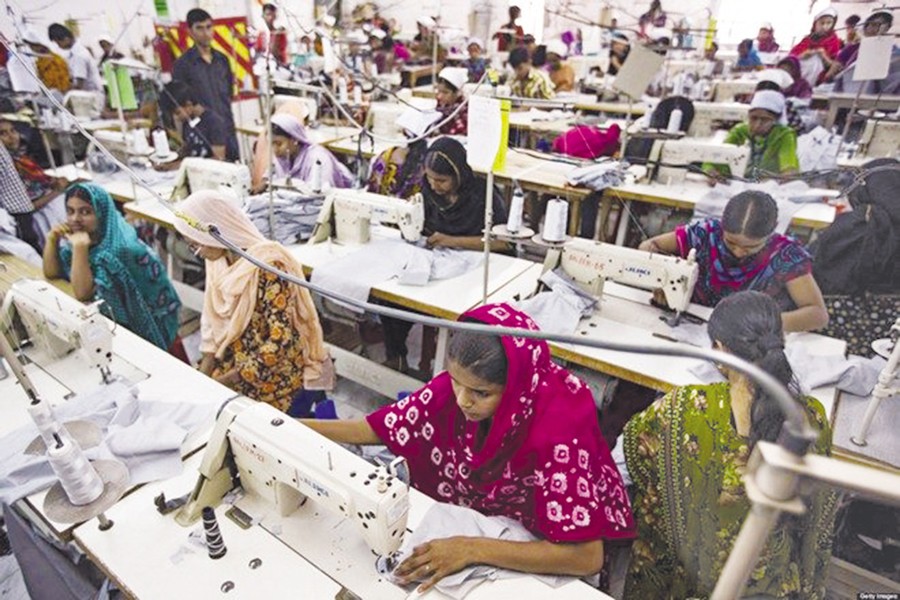
 For the millions of workers in Bangladesh's labour-intensive industries especially in the ready-made garments and export-oriented sectors-Eid is not just a religious festival; it is a long-awaited hope, a dream of returning home. With Eid-ul-Adha approaching, many workers are now dreaming of reuniting with their families and sharing the joy of Eid with their loved ones. During this time, workers have natural and legitimate expectations-receiving their wages and Eid bonuses on time, spending a few days in peace with their families, and having the means to return to their villages with dignity to observe Qurbani.
But time and again, many organisations fail to meet these expectations. Numerous companies do not pay workers their dues within the stipulated time, forcing workers to take to the streets, protest, or suffer in uncertainty. This humanitarian crisis is not just an individual issue-it poses a significant threat to the stability of the industry and the national economy as well. Therefore, with Eid-ul-Adha approaching, now is the time to take humane, timely, and coordinated measures to prevent labor unrest.
Workers' expectations surrounding Eid go beyond just receiving their salaries on time. They also include Eid bonuses, a fixed holiday schedule, and assurance of safe travel home-all of which are essential for celebrating Eid with dignity and peace of mind. Especially during Eid-ul-Adha, workers have a strong desire to fulfill their religious obligations-an urge that is not merely emotional but deeply tied to their faith and cultural identity. However, when salaries and allowances are not paid on time, there is ambiguity regarding bonuses, holiday announcements are uncertain, and travel arrangements are insecure, it creates frustration and dissatisfaction among workers. This accumulated resentment often erupts suddenly into protests, demonstrations, or even violence in industrial areas. Such unrest not only disrupts the factory environment but also casts a negative impact on the entire industrial sector and the national economy.
Main causes of pre-Eid labour-related tensions:
One of the main causes of pre-Eid labour-related tensions is the lack of planning. Many industrial establishments do not prepare in advance for financial management related to Eid or other festivals. As a result, they face a financial crisis at the last moment and use that as an excuse to delay salary and bonus payments, which creates resentment and a sense of uncertainty among workers.
The lack of well-structured policies and their proper implementation is another major reason. Although existing labour laws and policies in the country specify deadlines for paying wages and bonuses, these often remain limited to paper. When the relevant authorities and labour organisations fail to monitor and take strict action, some employers become encouraged to violate the rules. This deprives workers of their rightful dues and leads to deep dissatisfaction among them. As a result, during sensitive times like Eid, the situation quickly escalates.
If timely and transparent communication is not ensured, it creates uncertainty and anxiety among workers. Especially during Eid, if clear information is not provided about wages, bonuses, holidays, and other benefits, workers become frustrated and angry, which can later lead to unrest and protests.
Moreover, the lack of humane sensitivity from the employers is also a significant reason. Workers are human beings too-they have families, children, and dreams. If their joy and needs during Eid are not valued, and they are made to work overtime solely for increased production without appropriate incentives, it creates negative reactions in their minds.
Before Eid or other festivals, due to increased production demands or special work pressures, workers often have to work overtime. If, amid this additional workload, salaries or extra benefits are not provided, it leads to frustration and dissatisfaction among the workers.
Impacts: Labour unrest leads to instability in industrial areas and disrupts production. Especially in the 7-10 days leading up to Eid, this period is extremely critical-any unrest during this time can result in order cancellations, delayed deliveries, and significant financial losses. This puts both the reputation of businesses and customer trust at risk.
If the labour environment is not stable, domestic and foreign investors lose interest in doing business. When production is disrupted due to labour unrest, it can cause long-term damage to the industrial sector, posing a serious threat to the country's economic growth and foreign investment.
Labour unrest also increases social instability. Incidents such as road blockades, clashes, strikes, and violence affect not only industrial zones but also surrounding areas. This leads to a deterioration in law and order and disrupts the daily lives of ordinary people, posing a threat to overall stability and national security.
When workers protest before Eid and such events are covered in international media, foreign buyers and investors begin to view Bangladesh as an unstable and unreliable production hub, which harms the country's international image.
Solutions: Currently, Bangladesh's industrial sector, especially the ready-made garments industry-is facing a global competition, economic pressure, and challenges in the labour market. When a festival like Eid approaches, failure to pay workers their rightful wages and bonuses on time can lead to labour unrest. Therefore, the time has come not only to suppress the problem but also to establish a solution framework in three stages: forecasting, prevention, and mitigation.
Forecasting: To prevent labour unrest, the root causes of issues need to be identified in advance. This requires collecting factory-based data, monitoring the schedules for wage and bonus payments, and receiving regular feedback from labour unions. A digital reporting system could be implemented with coordination between BGMEA, BKMEA, industrial police, and the Ministry of Labour. This system would allow real-time monitoring of progress related to wage, bonus payments, and holiday schedules in each factory. Additionally, forming regional task forces based on industrial areas can help ensure forecasting and immediate resolution of issues.
Prevention: It is crucial to take preventive measures before any issue arises. To ensure timely wage and bonus payments, an 'Eid Preparation Committee' should be formed. This committee would be responsible for ensuring that payments are made within a set timeframe. Each factory should be mandated to maintain a festival fund to avoid financial crises or complications. Additionally, wages and bonuses should be treated as a "priority category" and paid before any other expenses. Regular tripartite meetings, the establishment of worker assistance cells, and providing affordable Eid transportation options for workers can all serve as effective preventive strategies.
Mitigation: If issues arise despite preventive efforts, immediate mitigation strategies must be implemented. A designated "peaceful protest area" should be identified in industrial zones, and a hotline for workers should be set up to receive and resolve complaints promptly. An active, experienced team led by the relevant authorities and law enforcers should reach the incident site quickly to ensure swift resolution. In case of a crisis, temporary incentives or bonus allowances, as well as extra leave, can be announced to manage the situation. Strict penalties or fines for employers who violate the rules should be enforced, sending a message to others about the consequences of non-compliance.
Additionally, organising awareness campaigns, such as posters, leaflets, and seminars, about workers' rights, responsibilities, and peaceful ways of raising demands is essential. This will help both employers and workers maintain a harmonious environment, which is crucial for ensuring stability during sensitive times like Eid.
Employer Responsibility and Humanity: Labour unrest is not only a legal or administrative issue; it is also a humanitarian and ethical crisis. When an employer enjoys the profits generated by the sweat and hard work of their workers, it becomes their responsibility to ensure the joy of Eid for the workers' families. The mindset of "workers are my assets" can be the foundation of a peaceful industrial environment. Direct discussions with workers regarding wages, bonuses, and holidays before Eid can help prevent misunderstandings and reduce tensions.
With Eid-ul-Azha approaching, employers should ensure the timely payment of wages and bonuses. Eid teaches us sacrifice and empathy, and this lesson should not only be reflected in religious practices but also in the workplace. If employers internalise the core message of Eid-responsibility, humanity, and self-sacrifice-then creating a worker-friendly, stable, and productive industrial environment will undoubtedly be possible.
A festival is truly complete when people from all walks of life can participate. If the worker class is forced to protest before Eid, it is not only an economic failure but also a moral and social one.
Therefore, let us ensure that we no longer witness the familiar scene of workers protesting on the streets or heated situations over wage and bonus demands before Eid. Through timely actions, sincerity, and inclusive management, our commitment should be to create a peaceful Eid, with a satisfied worker class and a stable industrial sector. Let this Eid serve as a positive example-a time not for unrest, but for unity, cooperation, and satisfaction.
Dr. Sohel Mia is a labour relations expert
drsohelbepza@gmail.com
© 2026 - All Rights with The Financial Express

