 The hardworking people of the country are moving towards the cities in the hope of work. Therefore, the major cities of Bangladesh are getting busy day by day to provide them with employment. Therefore, the capital of Bangladesh, Dhaka, has taken its place in the list of the largest cities in the world in terms of population. According to the
  Population and Housing Census 2022 of Bangladesh Bureau of Statistics (BBS), the city has a population of over 10.00 million. Also, according to the World Population Review, the current population of Dhaka city is 24.70 million and is expected to reach 31.20 million by 2035. In this busy
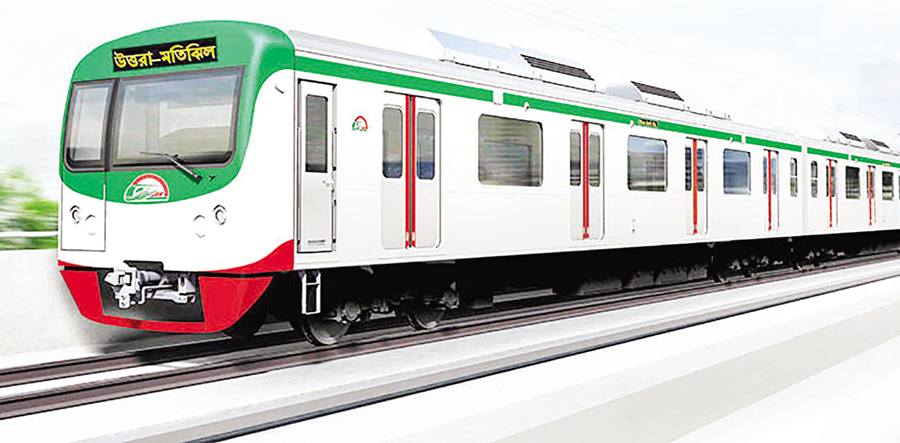
  city, public transport is the only hope for the general public to communicate and travel to different places. Buses are widely used in public transport. Metro rail service was added to it in 2022. There are also trains through which the general public can travel to distant districts as well as to districts near Dhaka.
Now let's see how the fare is collected in these public transports! First of all, the public still has to suffer in paying the fare in buses running in the city. Because till now, when traveling by bus, one has to travel by paying in cash or buy a ticket with cash. However, on certain routes government buses can be traveled with Rapid Pass (a smart card automated fare collection system). In this case, the Metro Rail is a little ahead - MRT Pass and Rapid Pass are being used to travel effortlessly. However, for long-distance travel by bus or train, the issue of tickets has come to the online ticketing platform. With this touch of modernism, ordinary passengers are easily arranging tickets. This online ticketing platform has become very popular at present and the number of platforms increased to 10-12 in the last 20 years. Cash is still popular in paying the fare in public transport. However, when purchasing online tickets, the fare has to be paid from mobile financial services (MFS) and credit/debit cards.
Therefore, carrying multiple cards while traveling to different places creates inconvenience and there is a lot of risk in cash transactions. Also, this MRT / Rapid Pass or card top-up also takes a lot of time. Therefore, if passengers had the convenience of a single payment method, they could use it for a smooth journey on trains, metro rail or buses. In 2023, Visa conducted an Urban Mobility Survey in 12 different markets around the world (Singapore, Japan, Egypt, Australia, US, Indonesia, UK, Pakistan, Germany, Italy, Mexico and Chile). Three out of five respondents said that if this method was easy and a single payment method, they would use public transport more.
Can public transport bring urban mobility?
Busy city, public transport, transport fares, ticketing system and traffic jams - these are the words that are constantly being complained about by the people of densely-populated Dhaka. Many people are encouraged to use private transport to get rid of these issues. Can private transport really provide a final solution to the problems of transport and commuting in individual and family life? No, it can't! Although private transport can reduce a few problems, it increases the number of vehicles on the roads and further exacerbates traffic jams. So, is public transport the only solution to urban mobility? To find a solution, we need to look at the growing population of cities. As the population of cities increases, so does the traffic congestion in cities. Busy cities are realizing that they need to introduce public transport systems such as metro rail, bus rapid transit systems (BRT) or buses instead of private vehicles and increase investment in these systems.
Such initiatives for metro rail have already been taken for the city of Dhaka. But it is not the case that more people will use public transport simply by increasing the construction of metro lines or the number of buses. There are also several non-transport factors. An important one is population density. A famous study by former World Bank staff member Alain Bertaudfound that density is the primary reason why 30 percent of daily trips in Barcelona are made by public transport, but only 4.0 per cent in Atlanta. Barcelona is about 30 times more densely populated than Atlanta, so it is relatively easier to provide the same level of public transport service in Barcelona than in Atlanta.
An article published in the World Bank in 2017 revealed some startling facts. One of them is that the population of Greater Dhaka, which is rapidly urbanizing, accounts for 36 percent of the country's urban population. In the last 10 years, the average vehicle speed in Dhaka has dropped from 21 kilometers per hour to 7 kilometers per hour, and traffic congestion in Dhaka wastes 3.2 million working hours every day. Later, a World Bank report titled World Urbanization Prospects published in 2018 projected that Dhaka's population would reach 28 million by 2030, and Dhaka would become the fourth largest city in the ranking after Delhi, Tokyo, and Shanghai by 2030. Not only that, but global urbanization is expected to increase to 70%. Therefore, public transport is the appropriate means of transport for Dhaka with a growing population.
Therefore, apart from urban planners and transport authorities of various countries, our country's urban planners, regulatory bodies, transport authorities and policy makers have also paid attention to the issue of increasing urbanization. Therefore, the Metro Rail Authority has decided to introduce smart ticketing to reduce the suffering and waiting time of the public. The government has taken this initiative of digital ticketing due to the limited availability of Single Journey Tickets (SJT), the ongoing crisis of Rapid Pass and MRT Card. Therefore, if a modern system like digital/smart ticketing is introduced, the pressure from the overloaded physical ticket counters will be reduced and in the distant future there may be no such thing as a ticket counter. As a result, there may not be any need to hire separate people to operate the counters.
 Open Loop: Payments Under Same Roof
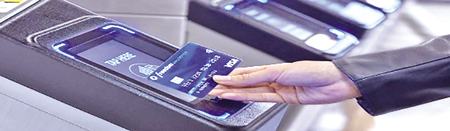
Not only will ticketing be smart, but the payment system will also have to be modern. That's why urban planners have opted for an open-loop payment system. They believe that an open-loop payment system could be the key to solving urban mobility.Open-loop technology is a type of service based on the concept of Mobility as a service (MaaS) that enables users to plan, book and pay for multiple types of mobility services through an integrated platform. It is based on the concept of account-based ticketing (ABT) systems that links the passenger to a single personal account, such as a debit/credit card used by the passenger. In this case, the back-end server is responsible for managing account information and fare transactions.Closed loop technology relies on a specific card that stores all the funds and records related to the passenger. Although this is a classic process in public transport, it is still ongoing in our country. First, the passenger has to buy a ticket for the journey and later, using this ticket, the passenger will get access to the system of public transport operator's (PTO). Conversely, open-loop technology-based payment systems offer a chain of advantages. By analyzing the vast volumes of data they produce, transportation companies can learn more about the behaviors of their passengers and enhance their services, which will benefit the environment by drawing in more passengers.
On the other hand, another advantage of this technology is Open-loop digital interoperability. Open-loop digital interoperability refers to the ability of different payment systems, platforms, or networks to seamlessly interact and process transactions, regardless of their specific origins or providers. This means users can use their payment cards or digital wallets across various merchants and locations, without being restricted to a particular system or network.
According to a white paper published by the International Association of Public Transport (UITP), there are currently three transaction models for contactless open loop payments for public transport.
• The Known Fare Model
• The Accumulated Model
• The Pre-Purchase Model
The above models work wonders for urban mobility solutions. The models support all types of EMV® contactless payment cards and devices, helping to transport passengers quickly and collect fares efficiently and securely.
 The Known Fare model applies to single-trip tickets. The transaction is completed when the passenger taps their card on the validator to pay the fare and the operator receives the payment after approval by the issuing institution. One of the characteristics of the Accumulated Model is that the ultimate transaction value is unknown at the beginning of a journey. The payment card is used for all financial transactions, including the travel fare, once the entire trip is finished. A typical retail payment is the foundation of the pre-purchase model. It suggests that a specific fare product must be bought in advance of travel and is kept in a travel account that could be linked to a payment card. Not only that, a global study conducted by the Visa Economic Empowerment Institute in partnership with ThoughtLab found that the use of contactless, open-loop payment systems can increase public transit usage by an average of 10 percent.
Therefore, to popularize public transport, it is necessary to actively implement all relevant laws and take all possible reforms, including infrastructural development for transport. Not only that, using modern technology to pay for public transport fares will reduce the suffering of the people, but also reduce traffic congestion in Dhaka city. In this case, open loop technology can be supportive which is currently popular in various countries. This will also bring urban mobility and the general public will be relieved from the traffic congestion caused by increasing urbanisation.
A. S. M. Ahsan Habib is a seasoned banker and certified digital finance practitioner (CDFP).
Email: ahabib46@gmail.com
© 2026 - All Rights with The Financial Express

