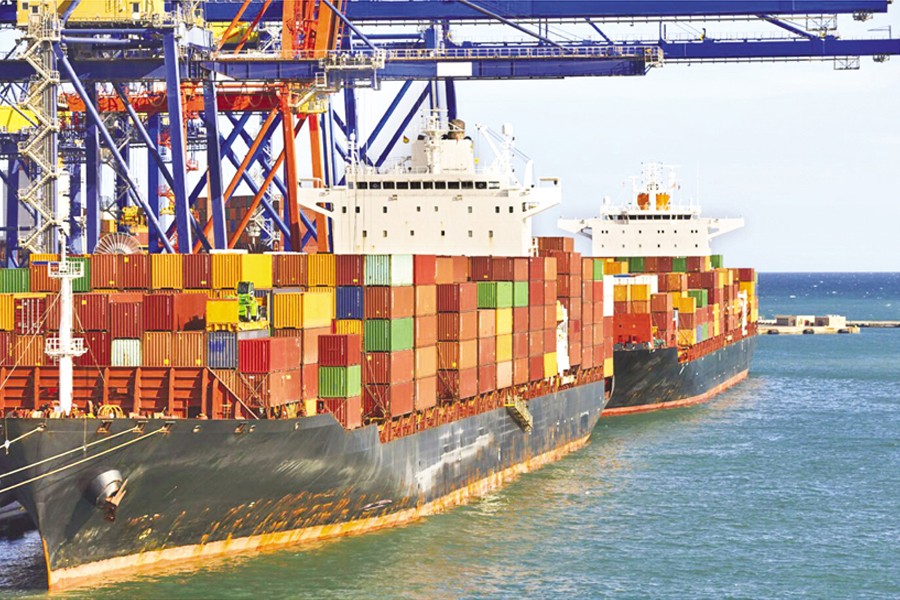
Freight Forwarders are considered as the architects of international trade logistics. They organise and coordinate the carriage of goods from origin to destination through the maze of customs regulations, multimodal transport systems, and intricate supply chains. In today's world of globalisation, the role of Freight Forwarders becomes quite indispensable for seamless cross-border movement of goods. Freight Forwarders operate both domestically and internationally, arranging consolidation, storage, handling, and packaging of goods before arranging transportation. Their expertise directly influences export costs, supply chain efficiency, and market stability. Freight Forwarders stand as the cornerstone of Bangladesh's global branding - driving trade, trust, and the nation's international reputation. The sector, which came into existence in Bangladesh in 1991-92, has been relentlessly supporting the country's import-export trade for more than three decades now, despite all obstacles.
 Freight Forwarding rarely finds a niche in discussions on economic development. Still, the sector is the heart of international trade and global supply chains. As countries strive to increase their trade volumes and attain high rates of economic growth, the importance of Freight Forwarding cannot be compromised. In Bangladesh, where trade continues to take the center stage in economic policy and strategy, Freight Forwarding Industry remains underrepresented in policy discourse.
This is an important aspect for countries like Bangladesh, whose economy runs on highly export-oriented sectors, in which the garment industry dominates. More than 80 per cent of the total exports consist of Ready-Made Garments alone, and any delay in the process or inefficiency in logistics may cost dearly towards Bangladesh's competitiveness in world exports. Basically, Freight Forwarders take care of supply chains uninterruptedly; hence, contributes to timely delivery of goods, cost reduction, and customer satisfaction. The current foreign trade volume of Bangladesh stands around USD 100 billion annually, out of which Freight Forwarders handle around 95 per cent. The sector involves over 1,200 companies, employing more than 100,000 people directly and indirectly, with growth continuing to provide jobs and enhance economic development.
According to the 2024 Agility Emerging Markets Logistics Index, Bangladesh has shown progress in the logistics sector, moving up to the 33rd position among the 50 most promising emerging logistics markets globally. This is attributed to its performance in domestic logistics opportunities, digital readiness, and business fundamentals. The country also advanced four positions from the previous year. The index evaluates competitiveness based on domestic and international logistics opportunities, business fundamentals, and digital readiness, with Bangladesh scoring 4.61 out of 10 this year. Bangladesh improved in various areas within the index, except for international logistics opportunities. It advanced to 16th place in domestic opportunities but declined to 36th place in international opportunities. In spite of this, Bangladesh has made progress in business fundamentals and digital readiness, moving up in the rankings. The country also saw improvements in the World Bank's Logistics Performance Index, indicative of its ongoing efforts to enhance its logistics sector.
The previous Government of the People's Republic of Bangladesh had set an ambitious development goal: graduation from LDC category by 2026, earning USD 100 billion from exports, achieving the status of upper-middle-income by 2031, and transforming Bangladesh into a high-income country by 2041, with export earnings targeted at USD 300 billion. In this connection, for all these to be materialized, the country's development of the logistics sector cannot do without modernisation and introduction of revised policies.
Freight Forwarding acts as the backbone of the export-oriented Bangladesh economy by directly supporting garments, vegetables, frozen and live seafood, jute, leather goods, and handicrafts. In the same way, this sector is of critical importance for imports of machinery, capital goods, infrastructure project cargo, power plants, and bridges. Such is the case when, for instance, there is a shortage of space or a problem with time; Freight Forwarders look for alternative routes or even special cargo flights to make sure the goods arrive at their destination on time. Such interventions ensure timely delivery of goods, thereby protecting export orders and the country's reputation in global markets.
The sector also earns considerable foreign currency for Bangladesh. Freight Forwarders earn a lot as commissions, helping the national exchequer. They are also paying a substantial amount in the form of VAT to the government. Almost all the exports are made under LCs, and here also through their overseas agents, Freight Forwarders arrange safe and on-time delivery of the shipment, for which payment of the exporter is ensured.
Besides that, employment generation is the major contribution of this industry. With its dependency on integrated networks of global communications, Freight Forwarders require a human element adept in skills for warehouse jobs, transportation of goods by road and rail, and operations within both airports and seaports. It, in one way, has aided in sustaining economic growth.
Thus, efficient logistics costs remain not only a means of ensuring global competitiveness for exports but also one of passing reasonable product prices to on-shore markets. However, their absence has inflated the rates through inefficiencies. Due to fragmented management by multiple players through several processes, there lies an urgent need for seamlessly streamlined operations in order to reduce them toward overall efficiency in the Freight Forwarding industry.
Freight Forwarding is not a supporting industry; it is one of the most important pillars within the Bangladeshi trade ecosystem, playing a critical role in fulfilling national economic imperatives for continued growth within the global marketplace.
Challenges Facing the Sector
Despite its importance, the Freight Forwarding sector in Bangladesh faces several challenges:
1. Autocratic and Arbitrary Customs Practices
• Authoritarian Management of Manifests: Convoluted procedures for handling Import General Manifests (IGMs) and Export General Manifests (EGMs) lead to delays and confusion.
• Opaque Decision-Making: Customs officials frequently make arbitrary decisions, resulting in delays, fines, and inconsistent enforcement of regulations.
• Lack of Communication: Freight Forwarders struggle to resolve disputes or clarify procedures due to limited accessibility of customs officials.
2. Ambiguities in Regulations
• Vague Rules: Unclear and outdated customs regulations create room for inconsistent interpretations, delays, and corruption.
• Lack of Standardization: Freight Forwarders often feel subject to the whims of officials rather than clear, standardized processes.
3. Exorbitant Taxes & Policy Constraints at Bangladesh Bank
• High Tax Burdens: Value Added Tax (VAT) and Advance Income Tax (AIT) on foreign currency transactions significantly raise operational costs.
• Delays in Bills of Lading (B/L): Manual and outdated procedures for verifying and managing B/Ls disrupt supply chains.
• Remittance Delays: Lengthy approval processes and excessive documentation for foreign currency remittances strain relationships with international partners.
4. Shipping Line Practices
• Arbitrary Charges: Non-transparent detention fees and unscheduled charges add financial strain.
• Monopolistic Behavior: Dominant shipping lines impose restrictive terms and exploit their positions in the supply chain.
• Unethical Practices: Sudden price hikes and hidden charges undermine trust and profitability.
5. Limitations in Bonded Warehousing
• Outdated Licensing System: Redundant processes for bonded warehouse licensing create delays and operational hurdles.
• Inadequate Facilities: Limited storage capacity and bureaucratic hurdles impede trade facilitation.
6. Operational Failures at Logistics Hubs
• Mismanagement at Cargo Villages: Limited screening capacity, lack of space, and inadequate security checks disrupt efficient cargo handling.
• Port Congestion: Insufficient infrastructure at Chittagong Port leads to delays, higher costs, and reduced competitiveness.
7. Non-Delivered Containers at Ports
• Customs Backlogs: Failure to adhere to section 94 of the Customs Act, 2023, results in unclaimed goods and stranded containers.
• Shipping Line Blacklisting: Delays caused by autocratic and arbitrary customs practices & sometimes suboptimal practices lead to penalties and reputational damage for Freight Forwarders .
8. Outdated Port-Specific Licensing Requirements
• Obsolete Policy: The Freight Forwarding sector, a critical enabler of Bangladesh's trade-dependent economy, faces significant challenges due to outdated and misaligned licensing regulations set by the National Board of Revenue (NBR).
• Licensing Bottlenecks: A key concern is the requirement for Freight Forwarders to obtain separate licenses for different ports, which adds complexity and bottlenecks to their operations.
Policy Recommendations
Some relevant recommendations, to take up these issues and unlock the potential of the sector, include the following:
1. Reform Customs Operations and Procedures
• Standardize and Simplify Regulations: To reduce delays and operational confusion, streamline and clarify the rules governing IGMs and EGMs. Eliminate ambiguous and redundant regulatory provisions to ensure consistency in enforcement.
• Enhance Communication with Freight Forwarders : Establish a dedicated communication channel for Freight Forwarders to engage with customs officials and address disputes efficiently. Implement periodic training and engagement programs for customs officials to align with industry practices and reduce delays.
• Enforce Section 94 of the Customs Act, 2023: Strengthen compliance mechanisms to ensure unclaimed goods are auctioned within the stipulated timeframes to alleviate congestion at ports. Implement regular audits to monitor adherence to this law.
2. Address Foreign Exchange Tax Burdens
• Review and Rationalize VAT and AIT Policies: Reduce excessive taxes on foreign currency transactions (VAT, AIT) to alleviate the financial burden on Freight Forwarders . Explore the feasibility of tax incentives for transactions routed through formal banking channels to reduce reliance on informal systems.
• Strengthen Oversight on Informal Channels: To minimise financial risks while supporting transparency, monitor and regulate alternative foreign exchange channels, such as, hundi and offshore accounts.
3. Reform Banking and Remittance Policies
• Digitize Bills of Lading (B/L) Processing: To minimise delays caused by manual processing, modernize and integrate digital solutions into B/L handling. Facilitate faster processing of B/L approvals by leveraging technology and automating verification.
• Ease Remittance Procedures: Simplify documentation requirements and approval processes for remitting payments to foreign service providers. Establish a clear and efficient framework to expedite foreign currency transfers, maintaining relationships with international partners.
4. Regulate and Monitor Shipping Line Practices
• Implement Transparent Pricing Policies: To ensure fairness and transparency, introduce clear guidelines that regulate detention fees, non-scheduled charges, and other additional fees.
• Strengthen Anti-Monopolistic Regulations: Introduce competition policies to prevent dominant shipping lines from imposing unfair and exploitative terms on Freight Forwarders .
• Enhance Dispute Resolution Mechanisms: Set up a neutral Arbitration Body to mediate disputes between Freight Forwarders and shipping lines, ensuring a fair resolution process.
5. Modernize Bonded Warehouse Licensing and Infrastructure
• Merge Freight Forwarding and Bonded Warehouse Licenses: Streamline licensing processes by combining Bonded Warehouse Licenses with Freight Forwarding Licenses to minimize administrative and procedural delays.
• Invest in Infrastructure Development: Improve the storage capacity and operational capabilities of Bonded Warehouses to ensure efficient cargo handling. Upgrade logistics hubs with modern screening systems, better storage facilities, and advanced cargo-handling equipment.
6. Strengthen Logistics Hubs and Port Efficiency
• Resolve Bottlenecks at Chittagong Port and Cargo Villages: Expand port facilities by adding more berths, cranes, and container handling and storage options to meet growing trade demands. Address delays caused by inadequate infrastructure by investing in modern cargo screening technology like additional Explosive Detection Systems (EDS).
• Implement Key Performance Indicators (KPIs): Establish and monitor International Best Practice KPIs for logistics hubs to ensure operational efficiency and timely cargo movement.
• Optimize Port Management: Establish a clear and coordinated approach to Port Management, focusing on reducing congestion, improving logistics operations, and facilitating smooth cargo movement.
7. Enhance Transparency and Build Trust in the Financial Sector
• Modernize Financial Tools: To ensure transparency in foreign exchange flows, strengthen digital financial solutions and cross-border payment systems, including formalising data links between payment/FX platforms and customs/supply-chain certifications (e.g., integrating Authorized Economic Operator (AEO) status into electronic trade and payment workflows).
• Prioritize certified AEO importer/exporter transactions: To minimize manual checks and illicit FX leakage. Facilitate secure metadata exchange for shipments and payments among customs, banks, and remittance providers. Integrate AEO compliance into AML/CFT risk scoring for streamlined, low-friction processing for low-risk actors.
• Strengthen International Partnerships: Work with international financial institutions to align remittance systems with global best practices - and adopt AEO mutual recognition and information-sharing as part of those partnerships. Specifically, pursue cross-border AEO agreements to minimise redundant checks, implement shared protocols for rapid verification of AEO status, by regulators and banks, and leverage mutual recognition to differentiate legitimate trade remittances from high-risk flows, enhancing compliance targeting.
8. Streamlined Licensing & Coordination
• Facilitate Inter-Agency Collaboration: Foster better coordination between Bangladesh Customs, Bangladesh Bank, National Board of Revenue, and Ministry of Shipping to address overlapping jurisdictional challenges and reduce operational bottlenecks.
• Establish Joint Task Forces: Create joint oversight bodies to address systemic issues like port congestion, delays in remittances, and tax burdens through coordinated efforts.
• Adoption of a Unified National Digital License System: Introduce an Online Single, Unified License (valid for all ports) combined with simplified procedures, digital processing and consistent enforcement thereby streamlining operations, cutting costs, improving transparency and supporting export growth.
9. Foster Technological Integration and Capacity Building
• Promote Digital Tools and Automation: Leverage blockchain, the Internet of Things (IoT), and other modern digital solutions to improve supply chain visibility, transaction efficiency, and cargo processing.
• Build Skilled Human Resources: Implement training programs to improve workforce expertise in logistics, trade operations, and the use of digital tools.
• Strengthen Cybersecurity: As technology adoption expands, ensure cybersecurity measures are in place to secure financial and trade-related information.
10. Strengthen the Regulatory Framework for Shipping Lines and Port Congestion
• Introduce Stricter Penalties Against Unfair Practices: Penalize unethical practices by shipping lines that exploit their market positions.
• Encourage Fair Competition: Support policies that encourage entry into the market by smaller, fair, and transparent shipping operators to break monopolistic practices.
Effective logistic management serves as the strong force of international trade. This cost-effective imports and exports have consequently increased economic development. Development of Freight Forwarders in Bangladesh is vital in ensuring increased percentages in the share of world market exports and firming markets through the lowering of commodity prices in local markets. Investing in this particular area would make that sector stand out in the global supply chain and directly contribute to many developmental dreams of its government. Freight Forwarding is actually the invisible backbone of the economy in Bangladesh. Bangladesh can unlock new vistas for trade, economic growth, and global integration by recognising its importance and empowering the sector through strategic interventions.
It is now time to act.
Kabir Ahmed is Chairman, Conveyor Group, and President (2019-2021, 2021-2023 and 2023- 3 Jun 2025), BAFFA
kabir@conveyor.com.bd
© 2026 - All Rights with The Financial Express

