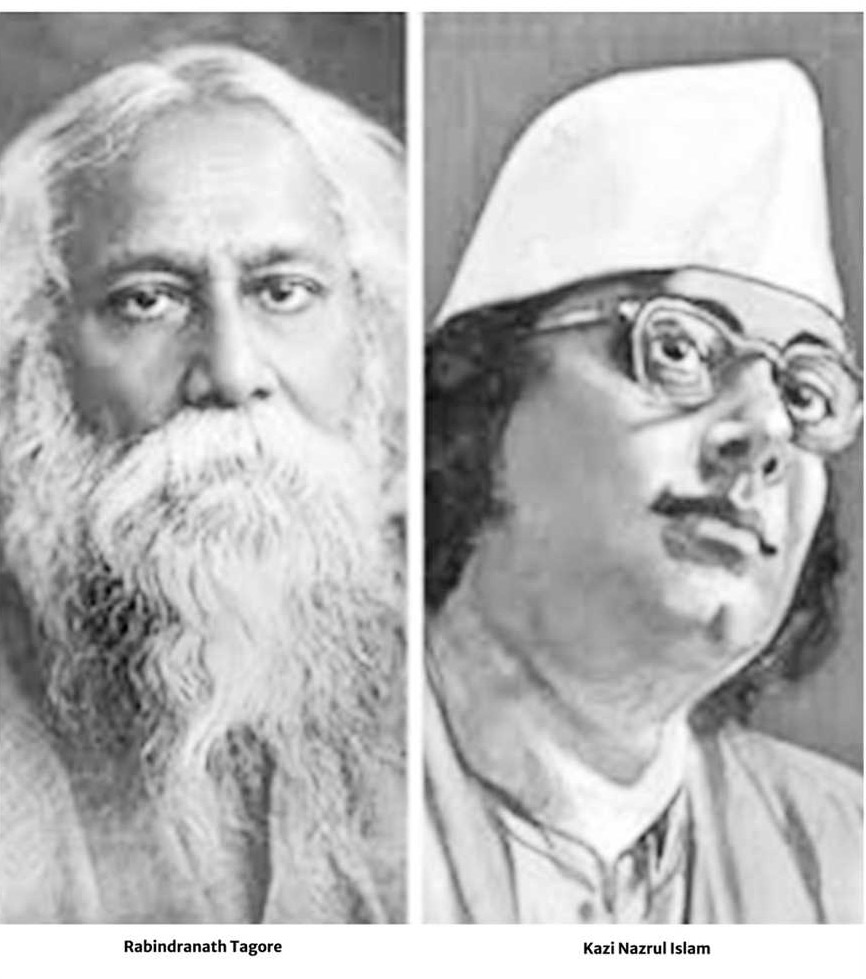
Bangladesh, a land of rich culture, continues its journey towards achieving true equality for women. While the nation has made significant progress in various sectors, deeply-rooted patriarchal norms and economic inequalities still hinder the progress and well-being of women. In this critical context, the powerful and enduring ideas of two Bengali thinkers and poets, Rabindranath Tagore and Kazi Nazrul Islam, offer a guiding light to dismantle unjust systems and build a society where women are truly strong and empowered.
Despite their distinct artistic expressions, philosophical viewpoints, and approaches to social engagement, both Rabindranath Tagore and Kazi Nazrul Islam shared a deep-seated belief in the fundamental dignity and equality of all human beings, especially the women of the society. Their literary and artistic creations powerfully critique societal injustices, particularly the oppression faced by women, and propose a vision for a more equitable future. Understanding their philosophies can provide Bangladesh with renewed strength to tackle the persistent issue of women's disempowerment.
Nazrul's Call for Equality:
Kazi Nazrul Islam, famously known as the "Rebel Poet," was very passionate to talk about social justice and gender equality. He directly challenged the prevailing patriarchal norms and the subjugation of women, boldly mentioning their inherent equality with men. His famous line from the poem "Nari" (Woman), "Of all that is great and good, half belongs to woman, half to man," encapsulates his unwavering belief in equal partnership.
Nazrul urged women to break free from the chains of societal limitations, to claim their rightful place, and to fight for a just world alongside men. His philosophy emphasized women's active resistance against oppression, encouraging them to embrace their inner strength and untapped potential. Here, we can also think of Begum Rokeya Sakhawat Hossain, a contemporary of Nazrul, who fearlessly talked about women's education and challenged purdah through her writings and establishment of schools for girls.
Nazrul's constant resistance against injustice proves him as an ideal inspiration for Bangladeshi women to raise their voices and demand their rightful position in society. His poems like "Bidrohi" (The Rebel) echoes a spirit of self-assertion that can empower women to challenge the current conditions.
Tagore's Vision of Dignity and Holistic Empowerment:
Rabindranath Tagore, on the other hand, painted a sober and realistic portrayals of women's oppression in his literary works. He depicted women not as mere figures but as individuals with complex emotions, intellect, and a deep need for self-expression in various spheres of life. Consider Binodini from his novel "Chokher Bali" (Sand in the Eye), a widow who yearns for intellectual companionship and agency beyond societal expectations.
Tagore strongly emphasized women's education as a cornerstone of their empowerment, believing it to be the key that unlocks independent thought and meaningful contribution to society. He talked about the inherent strength and diverse nature of women, envisioning a society that respects their individuality, nurtures their unique talents, and allows them to flourish beyond restrictive traditional roles. He deeply valued their inner strength, intellectual capabilities, and spiritual depth, considering women as equal partners in all aspects of life, from family to the wider community. His educational institution, Shantiniketan, was progressive in its inclusion of women and its emphasis on holistic development.
Complementary Philosophies for Collective Progress:
While Nazrul's voice was a powerful call to action against injustice, Tagore's approach focused on nurturing inner strength and fostering a society that values women's multifaceted contributions. However, both of their core beliefs circles on the fundamental need to liberate women from oppression and establish a society based on equality and respect. Nazrul's passionate approach against inequality and Tagore's emphasis on education and inherent dignity are not mutually exclusive but rather complementary pathways towards women's empowerment in Bangladesh.
Moving Forward:
Inspired by the philosophies of Tagore and Nazrul, achieving gender equality for women in Bangladesh demands focused action. We must actively promote awareness and education to dismantle harmful stereotypes and foster understanding of women's rights. Reforming discriminatory laws and practices in areas like inheritance and employment is crucial. Investing in women's education and economic empowerment through skills training and entrepreneurship support is vital for their independence. Cultivating a society of mutual respect and challenging patriarchal attitudes is paramount. Creating platforms for women's voices and ensuring their participation in decision-making is essential. Finally, addressing systemic inequalities by ensuring equal access to resources and justice for all women is key to lasting change.
Kazi Nazrul Islam and Rabindranath Tagore's philosophies provide a vital and enduring framework for handling women's oppression and sufferings in Bangladesh. Their emphasis on equality, dignity, empowerment, and challenging injustice remains profoundly relevant. Embracing and actively implementing these principles through sustained efforts is crucial for Bangladesh to achieve genuine gender equality, empowering women to their full potential and fostering a more equitable and prosperous nation. Their enduring wisdom continues to guide Bangladesh towards this goal. We may end up quoting from two philosophers and poets of our heart-
l Rv‡Mv bvix Rv‡Mv ewý-wkLv|
(Rise up women, rise up like the flaming fire!) - Kazi Nazrul Islam
l bvix‡K Avcb fvM¨ Rq Kwievi
†Kb bvwn w`‡e AwaKvi
†n weavZv?
(Why will you not give women the right to conquer their own destiny, O Providence?) - Rabindranath Tagore
The write is the Head and Chair of the English Department, Canadian University of Bangladesh.
peea1617@gmail.com
© 2026 - All Rights with The Financial Express

