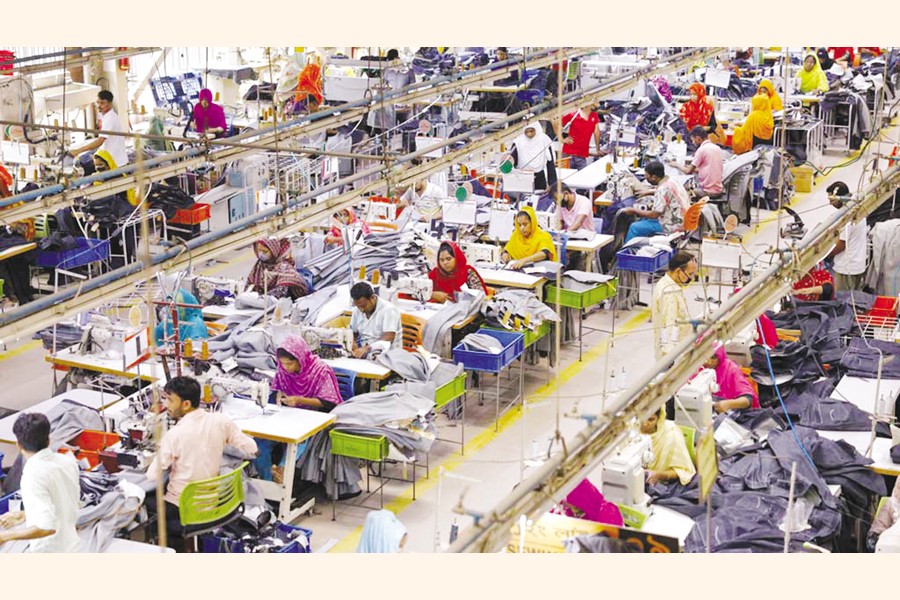
 The contribution of the industrial sector to Bangladesh's economic development is extremely significant. Millions of workers are directly involved in various industries, especially in the garment, leather, electronics, food processing, and pharmaceutical sectors. However, one of the major obstacles to the growth and sustainable development of this sector is frequent labour unrest. Such unrest often arises over issues like wages and benefits, job insecurity, working hours, inhumane treatment, or mass layoffs. As a result, industrial production is disrupted, the mental and social security of workers is undermined, and the confidence of foreign investors begins to decline. In this context, the constructive role of trade unions has become a crucial need of the time.
Labour unrest is not new in Bangladesh. It is often observed that agitated workers suddenly take to the streets, go on strike, halt production, and at times even engage in violent incidents. There are multiple underlying reasons for such unrest-such as complications regarding wages and overtime payments, unjust layoffs and dismissals, lack of a safe working environment, denial of maternity benefits, and mistreatment of workers. In many cases, as the majority of workers are illiterate or lack legal awareness, they are unable to effectively present their grievances. As a result, the discontent builds up and eventually erupts explosively.
The primary role of a trade union is to protect workers' rights and establish a fair understanding with the employers. When properly managed, a union can serve as the voice of the workers, a peaceful medium for realizing just demands, and an effective bridge for improving labor-management relations. However, in Bangladesh's industrial sector, the role of trade unions is often limited, controversial, or influenced by partisan politics. In this reality, if unions can take on a constructive role, they can make a significant contribution to reducing labor unrest. To achieve this, unions need to:
It is essential to establish accountable leadership among workers. Often, workers are unaware of how to express their problems or what legal procedures to follow. In this regard, trade unions can play a responsible role by developing skilled, transparent, and well-trained representatives from within the workers. These leaders, as true representatives of the workforce, can take proactive steps by negotiating with employers before dissatisfaction escalates into unrest.
Creating opportunities for interim dialogue is also crucial. When labour unrest begins to emerge, an effective trade union can mediate between employers, the administration, and the workers. Through tripartite discussions, even complex issues can be resolved peacefully-provided the union can gain the trust of both parties. In such cases, the Ministry of Labor and the Industrial Police must also act as partners in supporting the union's efforts.
The role of trade unions is extremely important in raising awareness about labour laws. Trade unions can play a vital part in educating workers about their legal rights. When workers are aware of what their rights are and how to claim them, they are more likely to follow legal procedures rather than abruptly taking to the streets. Providing such education is one of the core constructive responsibilities of a union.
While protest is a democratic right of workers, it should be regulated, peaceful, and lawful. Trade unions can teach workers how to organize effective protests without halting production. Movements grounded in principles and ethics are ultimately the ones that are sustainable and successful.
Modern trade unions should not remain confined to demands and protests alone; rather, they must analyze problem patterns using technology-based information and research. This approach will enable them to provide constructive proposals to both employers and the government-proposals that can protect workers' interests while also establishing effective roadmaps to prevent unrest.
However, there are several serious challenges that limit the constructive role of trade unions. First, many unions fall under the influence of political parties, causing them to prioritize partisan agendas over workers' interests. This often intensifies labour-management tensions. Second, a lack of professionalism is a major concern-many union leaders lack training in labour law, industrial structures, or negotiation techniques, making it difficult for them to act responsibly. Third, administrative complexities and barriers to registration hinder the formation and effectiveness of unions. Lastly, there is a lack of trust among employers toward unions; many see union leaders as adversaries rather than collaborators, which fosters a defensive rather than cooperative attitude.
Unless these challenges are overcome, the full potential of trade unions to play a constructive role cannot be realized.
To reduce labour unrest in the industrial sector, structural and coordinated reform of the trade union system is essential. Firstly, the government must assist in formation of unions in a neutral and supportive manner, ensuring that workers can freely elect their own representatives. Secondly, the Ministry of Labour and the Industrial Police should maintain regular coordination and communication with trade unions so that potential issues can be jointly addressed before they escalate. Thirdly, professional training is necessary for union leaders to help them gain legal knowledge, negotiation skills, and the ability to make data-driven decisions. At the same time, industrial owners need to shift their perspective-viewing unions not as adversaries, but as partners working toward shared interests. If these four strategic steps are implemented, trade unions can become an effective bridge among workers, employers, and the government-ensuring stability and productivity in the industrial sector.
Labour unrest in the industrial sector is a multifaceted challenge. It cannot be resolved simply through suppression or blame. If trade unions act responsibly, rationally, and strategically as true representatives of workers, many causes of unrest can be prevented before they arise. Constructive and modern trade union practices can bring about stability in the industrial sector, accelerate production, and strengthen the national economy.
Dr. Sohel Mia is a Labour Relations Specialist
© 2026 - All Rights with The Financial Express

