Bangladesh's fiscal deficit narrowed slightly during the first seven months of the current fiscal year compared to the same period a year earlier, although government spending continued to outpace revenue collection.
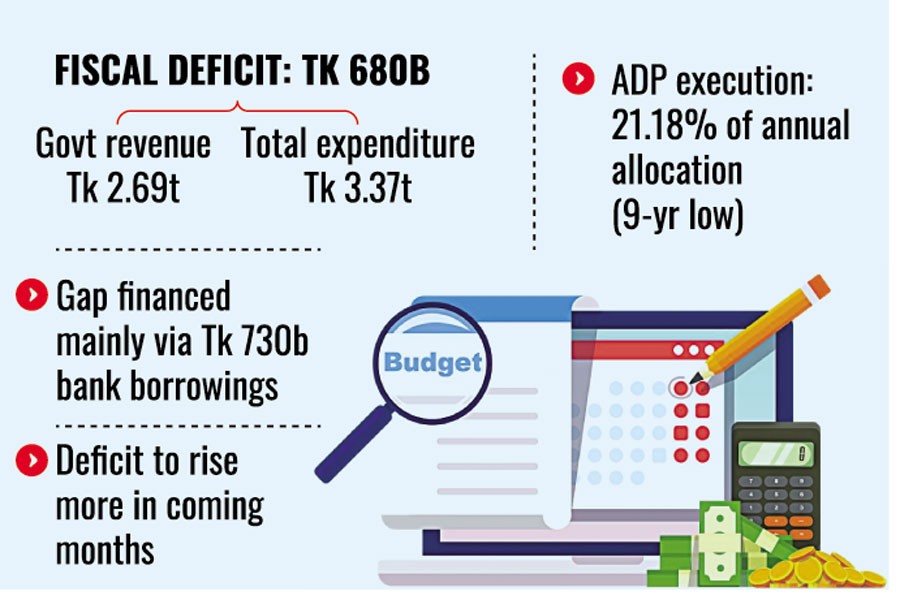
Data from the Bangladesh Bank shows the deficit stood at Tk 680 billion during July 2025-January 2026, about 5.0-percent lower than the Tk 717 billion recorded in the same period of the previous fiscal year.
Government revenue during the period under review totalled Tk 2.69 trillion, including both tax and non-tax receipts, while total expenditure reached Tk 3.37 trillion, resulting in the deficit.
Public spending, however, remained subdued in the development sector.
The implementation of the Annual Development Programme (ADP) - the government's main public investment programme - fell to a nine-year low during the period.
In the first seven months of the 2025-26 fiscal year, ADP implementation reached only 21.18 per cent of the annual allocation, reflecting slower progress in executing development projects.
According to official figures, development expenditure amounted to about Tk 420 billion during July-January, compared with the total ADP allocation of Tk 2.39 trillion for the whole FY26.
People familiar with the development say weak implementation of development projects has become a recurring issue, often linked to bureaucratic delays, slow procurement processes, and limited project readiness at the beginning of the fiscal year.
They, however, say in the coming months, the deficit will be higher, including higher subsidies and fuel payments.
The fiscal gap was financed mainly through domestic sources, particularly borrowing from the banking sector.
The Bangladesh Bank data shows net bank borrowing by the government reached around Tk 730 billion during the period under review.
However, the government also made repayments against earlier borrowings, partly offsetting the overall increase in bank-based financing.
Higher borrowing from the banking sector can help bridge the government's financing needs in the short term, but economists warn that excessive reliance on banks could put pressure on liquidity in the financial system and potentially crowd out private sector credit.
With several months remaining in the fiscal year, the pace of revenue collection and development spending will be closely watched to assess whether the government can maintain fiscal stability while supporting economic growth, which has already been forecast by the World Bank at 3.9 per cent.
jasimharoon@yahoo.com
© 2026 - All Rights with The Financial Express

