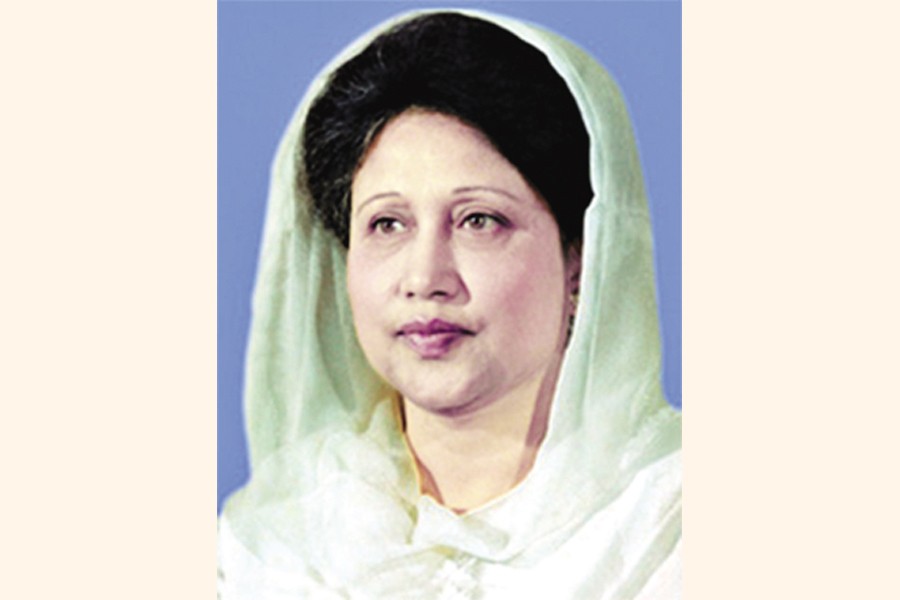
 Khaleda Zia
 Devotees prayed at mosques countrywide at jumaa congregations and adherents and kinspersons swarmed her grave as a three-day state mourning for political matriarch Khaleda Zia concluded Friday.
Her elder son, Tarique Rahman, who had led the Bangladesh Nationalist Party as Acting Chairman from exile in London and now turns BNP chairman in uncrowned succession, joined devotees at Gulshan Azad Mosque in offering after-jumaa prayers for the late party chief and three-time prime minister.
On the other hand, Tarique's daughter, Zaima Rahman, led the bereaved family members and relatives in offering tributes to Khaleda at her grave beside the tomb of Khaleda's husband, martyred president and liberation warrior Ziaur Rahman, on the northern side of the parliament house.
People were seen coming along with family members, including children, to offer tribute and special payers for the departed soul of Khaleda Zia ignoring the chilling weather with the mercury dipping across the country.
Mahmudul Hasan came with his two kids and wife to visit the grave of Khaleda from the city's Badda neighbourhood. They were seen capturing photos and offering special prayers.
"They, my family members, couldn't join the funeral due to the huge presence of general people coming from across the country. I didn't see such a rush of people in the country in my lifetime. So, today I brought my family to see the grave in person," he says.
Like Hasan, Aysha Begum came with family members and flowers in hand. They offered flowers and prayers at the grave of Khaleda. Later, they roamed around the Zia Udyan park and spent time like some thousands others there where Khaleda Zia was buried Tuesday next to former president Ziaur Rahman's tomb.
Earlier, Khaleda's granddaughter, Zaima Rahman, Syeda Sharmila Rahman, wife of Khaleda's late younger son Arafat Rahman Koko, and Nasrin Iskander, wife of Khaleda's late brother Sayeed Iskander, and Khaleda's sister Selina Islam, along with other family members, visited the grave on the day.
Zaima offered floral tributes and prayers at her grandma's grave.
Khaleda's domestic aide all through the repressed latter days of the leader, Fatema Begum, was also among those present.
Members of the Bangladesh Jatiotabadi Ulama Dal also visited and offered prayers and recited verses from the Quran on the graveyard premises.
The grave was open to the public for visiting and reciting prayers after the Fajr prayers in the early morning.
However, the entry of general visitors was temporarily closed for about an hour due to the arrival of family members.
Khaleda Zia died while undergoing treatment at Evercare Hospital in the capital on Tuesday.
Her funeral and burial took place Wednesday. Countless people attended the funeral, regardless of party affiliation. After the funeral, Khaleda Zia was buried next to the grave of her husband.
The national flag was still flown at half-mast in all government, semi-government, autonomous institutions, educational institutions and all government and private buildings in the country and Bangladesh missions abroad.
Various arrangements were being made by BNP and its affiliated organisations to pray for the eternal peace of Khaleda Zia.
The octogenarian, who transformed herself as a revered political leader through struggles since her husband and former President Ziaur Rahman's assassination, had suffered from various complications, including heart disease, diabetes, arthritis, liver cirrhosis, and kidney problems, for a long time.
She was sentenced to prison in two cases during the Awami League government--toppled in a mass uprising last year--and had spent more than two years before internment on release. The BNP leader was not allowed to go abroad for treatment despite severe health complications and requests from her doctors, the party leaders deplore.
She was released after former Prime Minister Sheikh Hasina flew to India on August 5 last year in the face of the uprising that overthrew her government.
nsrafsanju@gmail.com
© 2026 - All Rights with The Financial Express

