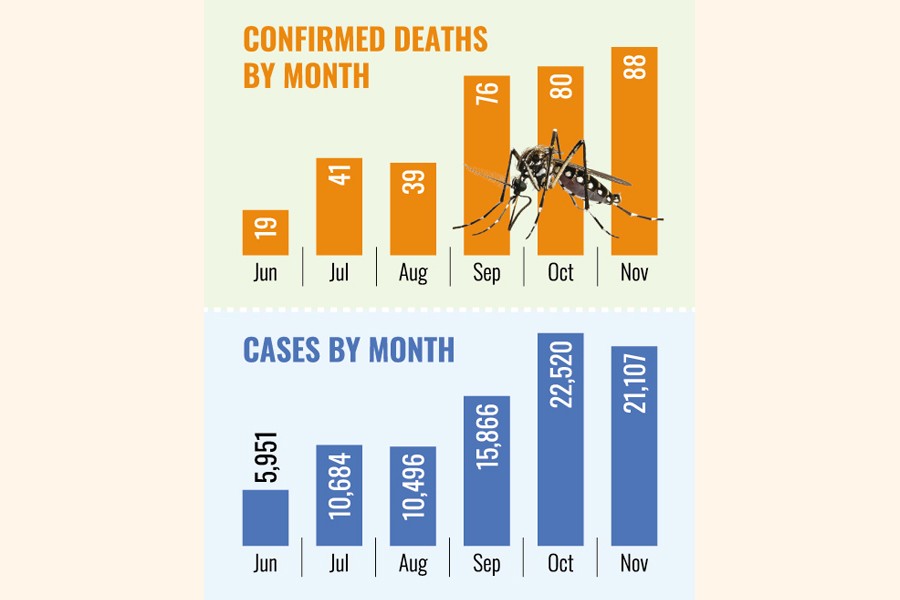
Bangladesh reported 88 dengue deaths in the first 24 days of November this year, making it the deadliest month of 2025 for the disease, even with a week remaining.
Two more people died of dengue in the last 24 hours until Monday morning, raising this year's death toll to 366, according to the Directorate General of Health Services (DGHS).
DGHS data shows dengue claimed 10 lives in January, three in February, seven in April, three in May, 19 in June, 41 in July, 39 in August and 76 in September.
A total of 21,107 dengue cases were recorded until 24 November, while 22,520 cases were reported in October, DGHS data showed.
Dengue patients numbered 1,161 in January, 374 in February, 336 in March, 701 in April, 1,773 in May, 5,951 in June, 10,684 in July, 10,496 in August and 15,866 in September, as per DGHS figures.
Dengue cases in Bangladesh showed a marked increase throughout 2025, according to DGHS. The monthly patient count rose steadily from 1,161 in January to 5,951 in June.
The surge continued through the monsoon season, peaking at 15,866 in September, following 10,684 in July and 10,496 in August. Earlier months saw 374 cases in February, 336 in March, 701 in April and 1,773 in May.
In the last 24 hours, hospitals admitted 705 new dengue patients, taking the total caseload since January to 90,969. The latest two deaths occurred in Dhaka and Sylhet divisions, outside city corporation jurisdictions.
DGHS figures show that of all dengue fatalities this year, 51.9 per cent were men and 48.1 per cent were women. At present, 2,345 patients are receiving treatment in hospitals nationwide.
In comparison, dengue claimed 575 lives across the country in 2024.
Experts have warned that the current dengue wave is likely to persist through the coming months, extending into January. They say rainfall helps the Aedes aegypti mosquito, which spreads the virus, lay eggs over a longer period, fuelling further outbreaks.
sajibur@gmail.com
© 2026 - All Rights with The Financial Express

