
There is a kind of conversation that does not rely on sound-no voices, no noise, yet full of meaning. Hands move, facial expressions change, and bodies lean forward or step back a little. This is how the stories are told, situations are explained, and feelings are shared.
Many people think sign language is just a few hand gestures. Something very simple that anyone can guess. But this idea is far from the truth. Sign language is not a shortcut for speech. It is a complete language, rich with emotion, rules, and rhythm. For millions of Deaf people around the world, it is not an alternative way to communicate. It's their first language, their voice.
There are more than 300 sign languages used across the world. American sing language is different from British Sign Language. Even though both countries speak English in their own way, their languages do not match.
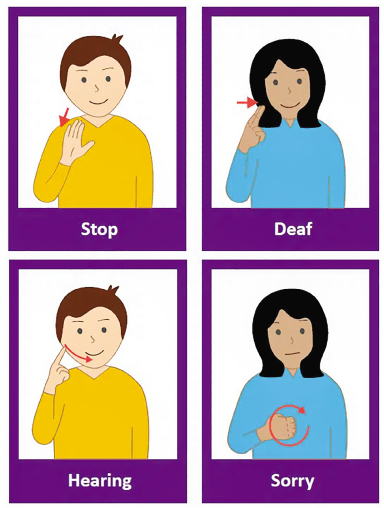 Each sign language has its own grammar, syntax, and expressions. Some signs may be familiar across borders, but most are different. This diversity reminds us that Deaf communities are not the same everywhere, and neither is their language.
In Bangladesh, sign language is part of everyday life for thousands of Deaf people. Bangla sign language is not a new or imported system. It has grown within this society, shaped by local culture, habits, and needs.
Learning to navigate from home
For many Deaf people in Bangladesh, the first challenge begins at home. Almost 90 per cent of deaf children are born to hearing parents. Most of these parents have never seen or learned sign language before. They do not know how to communicate with their child. They don't know the techniques.
At First, families rely on basic gestures or facial expressions. These may work for simple needs like food or sleep. But as the child grows, communication breaks down. Thoughts, emotions, fears, and dreams remain unspoken.
Many deaf children grow up with a language gap. This affects their mental development, self-confidence, and social communication.
Challenges in education
Education is a significant challenge for the deaf community in Bangladesh. There are very few schools specifically designed for deaf students, and most are located in cities. For children living in rural areas, reaching these schools is very difficult.
The situation in specialised schools is also poor. Ahasan Habib, an interpreter on Bangladesh Television and a sign language trainer, explains that the school for deaf students teaches Bengali, Mathematics, and Science. Still, there is no provision for learning sign language.
The teacher does not know Bengali Sign Language. Teaching depends mainly on spoken words and writing on the board. He also added that there is no specific dictionary for sign language in Bangladesh.
The National Foundation for the Development of the Disabled and the National deaf Organization jointly published a small book in 1996, which is not enough. No official initiative has been taken for people who are deaf or hard of hearing so far.
 As a result, many deaf students sit in classrooms for years without clearly understanding their lessons. They can see what is written, but they cannot hear the teacher. Over time, they fall behind in their studies and are forced to drop out of school.
Barriers in the job sector and public life
Deaf people face another reality as they enter the workplace after completing their education. Many employers view deafness as a weakness and do not value their skills. The term 'boba-kala' is still used in Bangladesh, which demeans deaf people. This creates a misconception that they cannot understand or work.
Those who get jobs are often left out. There are no interpreters at meetings, instructions are difficult to understand, and opportunities for promotion are rare.
Basic services are also difficult to access. Deaf patients often cannot explain their symptoms properly. Doctors rarely know sign language, and interpreters are almost unavailable.
In a police station or courts, the situation is even more serious. Without proper interpretation, deaf people may not understand legal processes that directly affect their lives.
Public spaces are also sound-dependent. Emergency announcement like vehicle directions, are all audio-based. As a result, deaf people are often deprived of important information.
Ray of hope?
But the good news is that in the last few years, technology has opened up new possibilities for the deaf community. For deaf people in remote villages, smartphones are not just tools; they are lifelines.
Through video calls, they can communicate in sign language and stay connected with friends and family. Social media platforms like Facebook and YouTube have created new spaces. Many deaf people in Bangladesh are now making videos to teach simple sign language and share their daily lives. This is helping them connect.
Some apps offer signs for expressing basic emotions. They can be used in daily conversations as well, but the language is English. Apps like Signschool and Lingvano are popular. In Bangladesh, we have BdSL and other YouTube-based videos that offer sign language. Mostly, the only way to learn is to get the basic signs that are language-independent. But it shows the bigger picture: we lack interest in this particular sector.
To build an inclusive Bangladesh, deafness should not be seen as just a medical issue. It should be recognised as a language and cultural identity.
Early support is essential. Parents of deaf children need immediate sign language training so they can communicate with their children from an early age. The government should include sign language in the national curriculum. Teachers in special schools must be fluent in Bangla sign language. NGOs should also come forward alongside the government. Public attitudes should also change.
Sign language is not about silence. It is about expression. It carries laughter, anger, love, and pain. It unites people, builds identity, and creates understanding. When society ignores sign language_ they ignore people. Knowing, respecting, and making space for sign language means moving toward a more inclusive society.
In a time when so many voices compete to be heard, the sign language reminds us of something important. Communication is not about sound. It is about connection. And sometimes, the most powerful voices are the ones we see, not hear.
sumaiyariva1120@gmail.com
© 2026 - All Rights with The Financial Express

