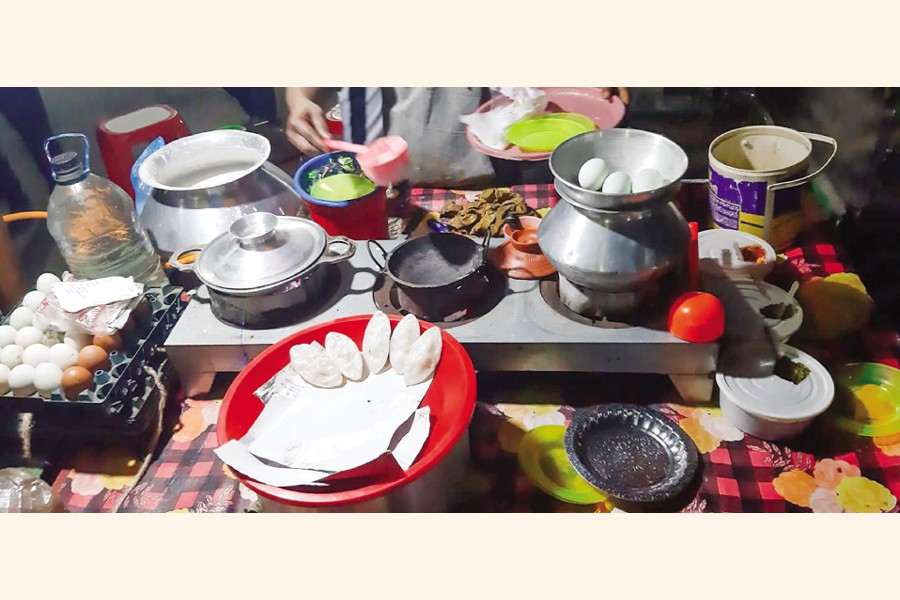
 Freshly made pitha steams on a roadside stove, keeping winter traditions alive. — Photo by Author
 After sunset, the gates of the National Zoo and the Botanical Garden close to visitors. Inside, the paths fall quiet. Outside, the evening begins.
In front of the darkened entrances, carts line the roadside. Charcoal fires glow under aluminum pots, and steam rises into the winter air. People gather in small clusters, their hands wrapped around cups of tea-bodies leaning toward warmth, filling the space with conversation and movement. Though the zoo and the garden allow no visitors after dark, the street beyond the gates refuses to sleep.
In winter, food does what the gates cannot. It keeps people coming.
 Dhaka's colder months change the city's rhythm. When the cold increases, people slow down.
They stop on their way home for warmth. They stand longer, talk more, and eat differently. Winter evenings turn sidewalks into social spaces, stitched together by stalls selling tea, snacks, and comfort.
Among the vendors outside the Zoo and Botanical Garden is Abdul Hamid, a nearly 50-year-old man who has been selling bhapa pitha for many years. His pot releases soft bursts of steam each time the lid is lifted, carrying the familiar smell of rice flour and coconut into the air.
"Before, people used to eat these more," he says, watching customers pass by. "Now they want fast food. Traditional food doesn't sell as it used to."
Abdul Hamid says his sales have gone down over the years, even in winter, the season that once guaranteed good business. Still, he sets up his stall every evening.
"It's not like before," he admits. "But it's enough to survive."
Not far from the steaming bhapa pitha, another winter delicacy quietly persists. Chitoi pitha served with spicy shutki bharta.
A middle-aged woman runs the stall, arranging the delicate pithas on plates beside the fiery bharta. Fewer people seek these today, but those who do approach with intent. Customers gather around her cart, savoring the sharp smell and bold flavors, each bite distinctly Bengali. Just a few steps away, the mood shifts.
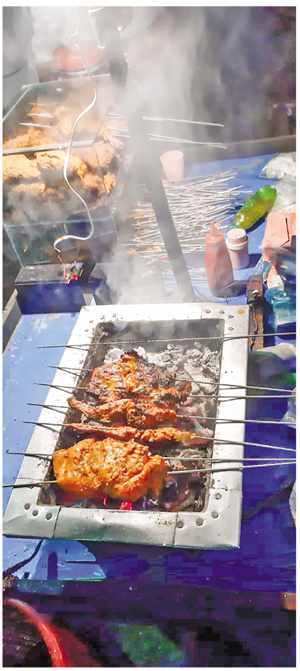
Sharif Miah's cart announces itself with a cloud of smoke. He grills chicken over a coal-fired barbecue, the embers glowing red beneath blackened grates.
Fat drips onto the coals and hisses, sending up bursts of scent that pull people toward the stall. In winter, the grill rarely cools.
"Sales increase a lot in winter," Sharif says, turning the chicken with quick, practiced movements. "People eat more chicken when the weather is cold."
He explains that the difference between summer and winter is evident in his business. During the hotter months, people eat less and move on quickly. In winter, they return again and again. "People crave chicken for longer in winter," he says, smiling as another order comes in.
Two customers, Mr Ranjan and Sumon, sit nearby, sharing a plate fresh off the grill. They say the cold changes what they crave. "In winter, you feel hungry more often," Ranjan says. "Chicken feels better in the cold." The other nods, adding that heavier food becomes easier to eat when the weather cools.
Between Abdul Hamid's quiet pot of bhapa pitha and Sharif's sizzling coal grill, two versions of Dhaka's winter evening exist side by side. One rooted in tradition, the other shaped by changing habits. Both draw people in, but not in the same way.
Amid this evolving street scene, another flavour has quietly found its place: momos.
Once a foreign novelty, these steamed or fried dumplings now appear at street carts across the city, often with small crowds gathered around bamboo baskets releasing plumes of steam.
People line up, patiently waiting for parcels filled with chicken, vegetables, or spicy mixtures. What was once new has become part of the city.
Momos represent more than taste; they represent adaptation and desire. Dhaka's street food culture absorbs new flavours, making them its own. The dumplings are not just eaten, they are shared, photographed, and celebrated in their own right.
Winter magnifies this phenomenon. A plate of steaming momos becomes an event, a reason to pause, and a reminder that food, foreign or local, can unite people.
About twenty minutes from the Zoo, Love Road tells the story of winter evenings in full swing. Narrow streets are filled to the brim with friends walking in groups, couples standing, and nearly every step offering a place to stop. Restaurants sit shoulder to shoulder with street carts selling tea, bread, waffles, and snacks designed for sharing.
Here, tea dominates the scene. Though consumed year-round, the unusually harsh winter has made tea a necessity, a social ritual, and a source of warmth. People huddle around steaming mugs, friends chat, and office workers pause mid-walk. Every sip is a reason to stay, to connect, and to fight off the chill.
Alongside tea, plates of snacks, and light meals fill tables and sidewalks. Conversations rise above the hum of chatter and music, couples and friends leaning over shared cups, making every corner a space of connection. Winter gives the street a rhythm of its own, pausing, gathering, and staying warm.
Across Zoo Road, Love Road, and the smaller streets that connect them, the city is stitched together by food and drink. Steam rises from pots, grills smoke, dumplings exhale warmth, and tea cups steam in hands. Winter transforms Dhaka's streets into spaces where strangers, friends, and couples alike linger a little longer, finding warmth not just in food, but in each other. When winter arrives, the city eats. And in doing so, it learns how to stay together a little longer.
samiulhaquesami366@gmail.com
© 2026 - All Rights with The Financial Express

