Almost 4 per cent of the street-involved boys in Dhaka are victims of commercial sexual exploitation, according to new national research launched on Monday by The Freedom Fund with government agencies, research partners, and national child protection organisations.
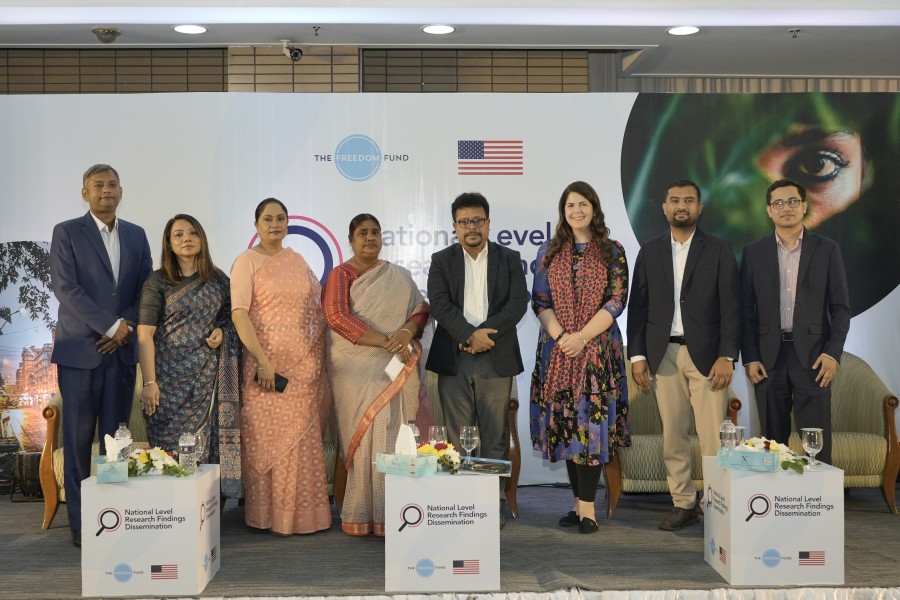
The findings, from two landmark studies entitled Through Her Eyes and Beneath the Surface, were presented at a national dissemination event attended by senior representatives of the Ministry of Women and Children Affairs, Department of Social Services, UN agencies, INGOs, NGOs, and survivor leaders.
This event was funded by a grant from the United States Department of State.
Drawing on surveys, qualitative interviews, and hotspot mapping, these studies covered different high-risk locations and brothel communities, yielding the most significant evidence in recent years on commercial sexual exploitation of children in Dhaka.
Taken together, they shed light on previously underdocumented trends in recruitment, coercion, survival strategies, and a lack of gender-responsive services for exploited boys and girls.
This data showed that places of exploitation include highly public areas such as parks, terminals, river ports, and roadside workplaces, as well as brothels where survivors described restrictive and abusive environments.
Speaking as the chief guest, Mamtaz Ahmed NDC, Senior Secretary of MoWCA, stressed the need for an inclusive and improved approach to protecting vulnerable children.
"Girls and boys are being pulled into exploitation through different but equally brutal pathways," said Khaleda Akter, Country Representative of The Freedom Fund Bangladesh.
"Girls are deceived through promises of care or financial security, while boys are pushed into survival sex because they are hungry, homeless, and unprotected. These findings must drive stronger policies, adequate investment, and an unwavering commitment to prioritizing children's safety."
These studies highlight gaps that urgently need to be addressed, said Md. Saidur Rahman Khan, Director General of the Department of Social Services.
"While the government operates shelters, legal support services, and rehabilitation programs, the findings show that we must widen our reach, strengthen trauma-informed support, and ensure services are better equipped to respond to boys as much as girls. The Department of Social Services is committed to integrating these recommendations into ongoing reforms."
Survivor leader Mst. Farida Parvin underscored supportive policies, particularly around legal identity and reintegration: “We cannot rebuild our lives without documents proving who we are. Many of us were once denied schooling, healthcare, and even the right to be buried with dignity. Today we stand here because organisations believed in us. But thousands of children still need that support.”
These studies emphasized that prevention efforts should begin earlier, with more effective child protection committees, coordinated referral pathways, family-based care models, community awareness campaigns, and specialized training for law enforcement officials.
They also underscored the broader drivers of the rising living costs, internal migration, and limited adolescent opportunities, which should be addressed through social protection programs and education pathways that reduce children's vulnerability to exploitation.
The Freedom Fund said long-term investment in child protection yields significant economic and social returns and underlined that Bangladesh's progress would depend upon partnerships across government, civil society, survivor-led groups, and international donors.
The organization also pledged its commitment to expanding technical support, policy engagement, and community-centered initiatives to ensure no child is left behind.
bdsmile@gmail.com
© 2026 - All Rights with The Financial Express

