A UN report on Friday detailed the grave abuses against those trafficked into scam centres from dozens of countries across the world, mostly in Southeast Asia, including Bangladesh.
Scam centres are compounds often connected with transnational criminal networks through which various criminal activities, including online fraud, human trafficking, and slavery take place.
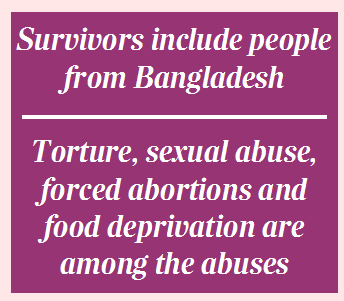 The report of Office of the UN High Commissioner for Human Rights (OHCHR) geographically documented instances of torture, sexual abuse, exploitation, forced abortions, food deprivation, and solitary confinement, among other grave human rights abuses, UN said.
"The treatment endured by individuals within the context of scam operations is alarming," the report said, based on interviews with survivors from Bangladesh, China, India, Myanmar, Sri Lanka, South Africa, Thailand, Viet Nam and Zimbabwe.
The victims had been trafficked into scam centres in Cambodia, Lao People's Democratic Republic, Myanmar, the Philippines and the United Arab Emirates between 2021 and 2025. The report is also based on interviews with police and border officials, as well as civil society and others with knowledge of such operations.
"One Bangladeshi victim said that he was ordered to beat other workers and a victim from Ghana recounted being forced to watch his friend being beaten in front of him", the report said.
Satellite imagery and on-ground reports showed that nearly three-quarters of the scam operations are in the Mekong region, which have also spread to some Pacific Island countries and South Asia, as well as Gulf States, West Africa and the Americas.
Victims described being lured into scamming jobs under false pretences and then being coerced into perpetrating online fraud ranging from impersonation scams, online extortion, financial fraud as well as romantic scams.
They told of people losing their lives as they attempted to escape, including falling from balconies and roofs in the compounds.
The victims were severely punished for making failed rescue attempts, the report finds. One Vietnamese victim described how her sister was beaten, tasered and locked in a room with no food for seven days after she tried to escape.
It found traffickers would video call family members to watch their loved one being abused and mistreated in order to pressure families to pay extortionate ransoms.
"The litany of abuse is staggering and at the same time heart-breaking," UN Human Rights Chief Volker Türk said adding that effective responses need to be centred in human rights law and standards.
Türk called on states and relevant stakeholders to engage trusted and community-based actors -- such as survivor-led groups - with individuals considered at risk of trafficking into scam operations. Awareness activities need to be accessible, concrete and available through trusted media.
nsrafsanju@gmail.com
© 2026 - All Rights with The Financial Express

