A massive investment in metro rail infrastructure alone cannot significantly ease Dhaka's chronic traffic congestion, according to a study conducted by the Japan International Cooperation Agency (JICA).
The study found that while the operation of Mass Rapid Transit Line-6 (MRT-6) significantly improved mobility along the corridor connecting Uttara and Motijheel, the initial gains in easing road congestion gradually diminished over time.
Conducted in different phases after the metro rail's partial inauguration in January 2023, the study titled Impact of the MRT on Road Congestion in 2025 observed that improved traffic flow beneath the elevated corridor encouraged additional vehicle movement, eventually offsetting the early benefits.
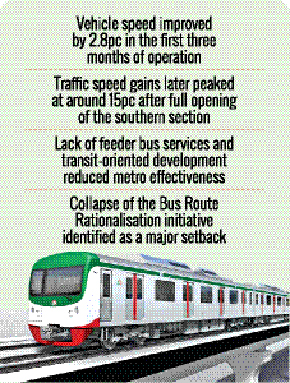
According to the findings, the impact on vehicle speed was modest during the first three months of operation at around 2.8 per cent. The improvement increased to nearly 10 per cent between the seventh and ninth months and later peaked at around 15 per cent after the opening of the southern section of the line on November 5, 2023.
However, the study noted that the positive effects gradually weakened as more vehicles began using the corridor.
"The MRT might have diverted part of traffic demand from vehicle-based travel to the MRT in the short run, creating more road space and increasing vehicle speed," the report explained. "But the improved speed reduced travel costs and attracted additional vehicles to the corridor over time."
Transport analysts said the situation reflects the failure to implement complementary measures essential for a mass transit system to function effectively in a densely populated city like Dhaka.
Despite repeated recommendations, feeder bus services, transit-oriented development (TOD), and bus route rationalisation were not introduced alongside the metro rail system.
According to the study, hundreds of small motorised and non-motorised vehicles have occupied areas around MRT stations, worsening congestion and creating disorder due to the absence of organised last-mile transport services.
Experts also pointed to the collapse of the Bus Route Rationalisation (BRR) initiative, which was originally designed to restructure Dhaka's chaotic bus network and support metro-based mobility.
"Without bus route rationalisation and a deeper understanding of local travel patterns, the metro will continue to face bottlenecks at intersections despite the massive investment in rail," the study noted.
MRT-6 has been operating since 2023 along its 20.1-kilometre elevated route from Uttara Diabari to Motijheel's Shapla Chattar. The government has already spent more than Tk 330 billion on the country's first metro rail project.
However, transport experts warned that rail infrastructure alone cannot resolve Dhaka's traffic crisis unless it is integrated with disciplined bus services, pedestrian-friendly station access, parking management, and effective traffic control measures.
They said the experience of MRT-6 demonstrates that without coordinated urban transport planning, even large-scale investments in mass transit may fail to deliver sustainable relief from congestion.
smunima@yahoo.com
© 2026 - All Rights with The Financial Express

