The recent interim government initiated significant moves to repatriate the assets siphoned off abroad, and a substantial amount could be recovered within the next three to four years, if the efforts continue, said former finance adviser Dr Salehuddin Ahmed.
He, however, noted that recovering assets - looted over the past 18 years - would not be possible overnight, as those involved in laundering money are "very smart" and reluctant to bring them back.
He made the remarks while speaking as the chief guest at a budget talk, titled "Resource Mobilisation, Prioritisation and Implementation", organised by the Department of Economics - Independent University, Bangladesh (IUB) at its auditorium on Thursday.
The event also hosted a panel discussion, featuring Dr. Ijaz Hossain, energy and sustainable development expert and retired professor of the BUET; Dr Md Ferdous Alam, joint secretary at the Ministry of Finance; and Dr. Shamsuddin Ahmad, former senior financial sector specialist at the World Bank.
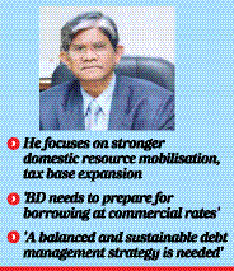
"We identified 11 high-priority, sensitive cases of money laundering abroad," Dr Salehuddin said, expressing hope that continued efforts would help recover the laundered assets.
He stressed the need for stronger domestic resource mobilisation, expansion of tax base, and modernisation and digitisation of the NBR.
He said around 60 per cent of e-return filers remain outside the formal tax system, as they report incomes below the taxable threshold, questioning how such a large share of the population could earn below Tk 0.35 million annually.
Dr Salehuddin called for improving the tax- GDP ratio through strengthening the NBR's capacity.
"An expansionary budget with 3.6 per cent of GDP as deficit is not a bad one, but resource mobilisation is a major challenge."
On budget financing, the former adviser said foreign grants and concessional loans would not remain available at desired levels in the future.
"Grant financing is declining, and access to concessional financing may become more limited. Bangladesh needs to prepare for a transition towards borrowing at commercial rates."
He also warned against excessive domestic borrowing, saying treasury bills should not become the main instrument for financing the fiscal deficit.
"A balanced and sustainable debt management strategy is required," he said, calling for better coordination between monetary and fiscal policies.
Dr Ijaz Hossain said reliable energy supply could create significant employment opportunities over the next two decades through generation, transmission and distribution services.
He also highlighted the leather sector's potential for job creation, and said waste management could become an economic opportunity.
Dr Shamsuddin Ahmad called for phasing out blanket subsidies and introducing targeted support mechanisms, saying universal subsidies create inefficiencies, and energy and mobility sectors require proper auditing and reforms.
Didar A. Husain, Chairman of IUB Board of Trustees; Dr. Daniel W. Lund, Acting Vice Chancellor of IUB; Dr. Raisul Awal Mahmood, Acting Dean; and Dr. Khaled Saifullah, Head of Department of Economics; spoke at the event, among others.
jahid.rn@gmail.com
© 2026 - All Rights with The Financial Express

