The prices of eggs, vegetables, onions, ginger, and other spices increased over the past week in the capital's markets, intensifying the sufferings of commoners.
Onion prices rose by Tk 10-15 per kg, selling at Tk 45-60 a kg. Ginger prices increased by Tk 10-20 per kg and were sold at Tk 180-200 a kg.
The prices of imported spices, such as clove, cinnamon, cardamom, cumin seeds, and others, also witnessed a 10 per cent hike in a week. Traders said the prices of most spices surged ahead of Eid-ul-Azha, which will be celebrated later this month.
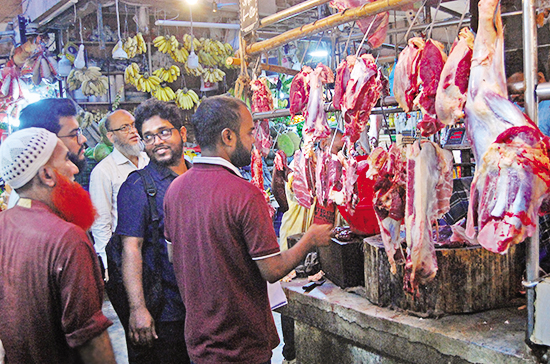
Buyers at a butcher shop at Palashi in the capital on Friday. — Focus Bangla
Meanwhile, the egg market remained volatile last week.
Egg prices further increased to Tk 150-160 per dozen from Tk 145-150 a dozen.
The prices witnessed nearly a 50 per cent hike over a month, according to grocers.
Golam Rabbani, a spice trader in Mohammadpur area, said although onion prices increased somewhat, it was still cheaper than last year.
Belal Hossain, a grocer at Adabor, said middlemen were taking advantage of the increased demand to raise prices as onions were now stocked in the warehouses of large traders after leaving farmers' hands.
Retailers are forced to sell commodities at higher prices due to the rise in wholesale rates. In the wholesale markets, onion prices are increasing by Tk 2.0-3.0 per kg almost every day.
However, chicken prices remained static last week. Broiler chicken sold at Tk 185-190 per kg, while the Sonali/Pakistani variety was priced at Tk 350-360 per kg.
Meanwhile, papaya, considered the cheapest vegetable, sold at Tk 80-90 per kg, marking a Tk 10 hike in a week.
The price almost doubled in the last two weeks, according to the Department of Agricultural Marketing.
Depending on quality, brinjal sold at Tk 90-120 per kg. Okra, snake gourd, sponge gourd, and ridge gourd sold at Tk 90-100 per kg. Bitter gourd, yardlong beans, and teasel gourd were priced even higher at Tk 100-130 per kg.
Consumers Association of Bangladesh Vice-President SM Nazer Hossain said lower- and middle-income families were facing greater pressure in the current market situation.
He feared the market could become even more unstable ahead of Eid if monitoring was not strengthened.
"Showing various excuses, including supply shortages, to raise prices has now become a regular practice," he said.
"Had the government enforced strict monitoring, traders would not have dared to manipulate prices so frequently," he added.
tonmoy.wardad@gmail.com
© 2026 - All Rights with The Financial Express

