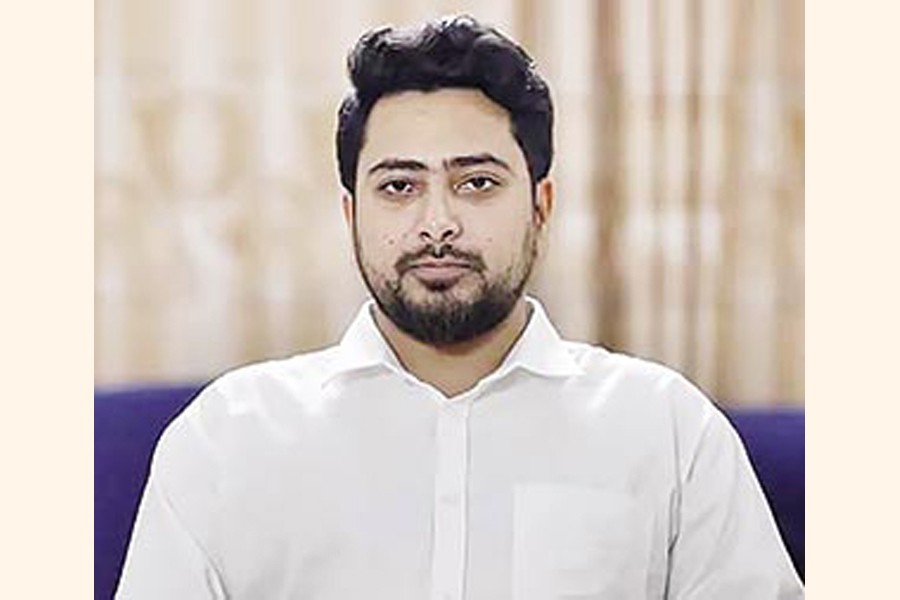
Nahid Islam, convener of National Citizen Party, has called for the swift arrest and prosecution of military officers implicated in crimes against humanity during the July Uprising, reports bdnews24.com.
His remarks, made in a Facebook post late Thursday, urged the government to take decisive action to address these abuses and clear the Bangladesh Army's name from this 'disgrace'.
His statement follows the recent issuance of arrest warrants for 30 individuals involved in two cases of crimes against humanity.
The charges stem from accusations of torture, abductions, and killings during the regime of the ousted government of Sheikh Hasina.
The charges include 'detention and torture of detainees' in the Rapid Action Battalion's Task Force Interrogation (TFI) cells and the Joint Interrogation Cells (JIC).
Among the 30 arrested individuals, 17 were linked to 'torture' under the TFI, and 13 were tied to similar crimes in the JIC.
The key suspects in the cases are Hasina, and her defence adviser, retired maj gen Tarique Ahmed Siddique, along with five former directors of the Directorate General of Forces Intelligence (DGFI).
Nahid said, "While the Army played a critical role in defending the country's sovereignty and security, certain officers, particularly those in RAB and DGFI, engaged in serious human rights violations during Hasina's rule."
Nahid said the need for reforms in the military, advocating for a system of justice that applies equally to all individuals, irrespective of their position.
He added, "The long-standing failure of democracy has led to political interference in state institutions. Now, we have a historic opportunity to cleanse, reorganise, and prevent political influence in these institutions. Only then can we establish a true democratic state."
Lastly, Nahid hoped that the Army leadership would fully cooperate with the government and the tribunal in these matters.
"This is not a matter of institutional ego or prestige; it is a question of the state, democracy, and justice."
He called for the cessation of political influence within the Army and other state institutions.
© 2026 - All Rights with The Financial Express

