
Hilsa export to India
$13.6m earned so far this year
22-day ban on hilsa fishing from Oct 7 to 28
Friday, 7 October 2022
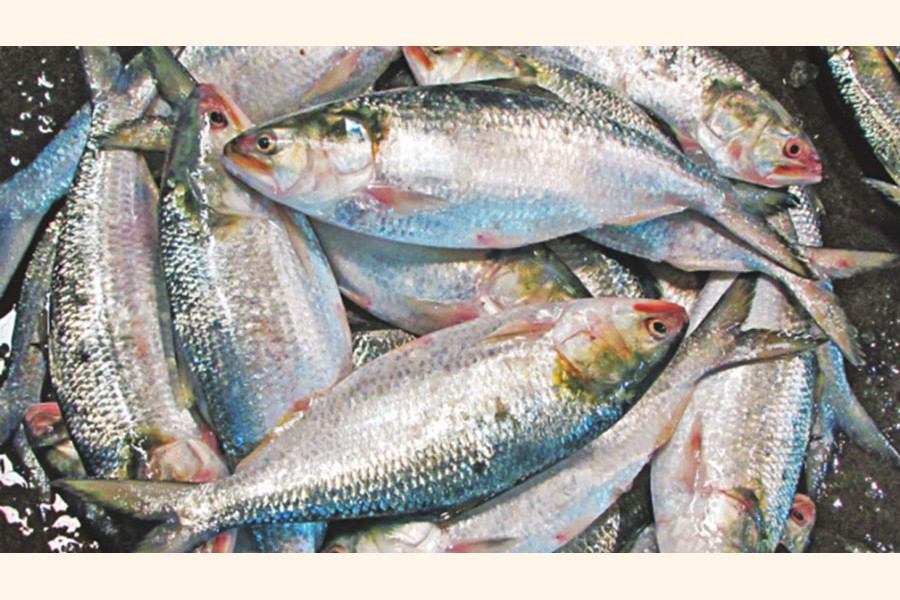
Bangladesh government has earned 13.6 million US dollars from exporting 1,352 tonnes of hilsa fish to India this year so far, Fisheries and Livestock Minister SM Rezaul Karim said on Thursday, reports UNB.
Hilsa production doubled in last 12 years and the rate of production is now 90 per cent, he said.
The minister revealed this information while speaking at a press briefing on 'Mother hilsa conservation drive 2022', held at the Secretariat.
Like every year, the government is going to impose a 22-day ban on hilsa fishing - from October 7 to 28, he said.
Hilsa catching, selling and transporting will remain prohibited in the 7,000 square km area during the period to ensure the safe spawning of the hugely popular fish during its peak breeding period, he added.
"Those found violating the law will face legal action including imprisonment and fine. None will be spared," said the minister.
During this ban period all activities including catching, selling and transportation of hilsa will be prohibited in 20 districts including Chandpur, Laxmipur, Noakhali, Feni, Chattogram, Cox's Bazar, Barishal, Bhola, Patuakhali, Barguna, Pirojpur, Jhalakathi, Bagerhat, Dhaka, Shariatpur, Madaripur, Faridpur, Rajbari, Manikganj and Munshiganj districts, he said.
The fishermen of 18 districts including Gopalganj, Narayanganj, narsingdi, Kishoreganj, Tangail, Rajshahi, Chapainawabganj, Pabna, Sirajganj, Natore, Bagura, Kurigram, Gaibandha, Brahmanbaria, Khulna, Kushtia, Narail and Jamalpur districts will be allowed to catch other fish except hilsa.
Alongside police, local administration, Navy personnel, Air Force, Coast Guard, Rab, river police and Fisheries Department will jointly conduct the drives.
Meanwhile, dredging work in different rivers will be suspended during this period to ensure smooth spawning of hilsa, he said. Hilsa, the national fish of Bangladesh, is recognised as a certified patented product of Bangladesh.
Nearly 0.6 million people of Bangladesh are involved in catching hilsa directly while 20-25 lakh people are involved in transporting, selling and other activities indirectly.
Thanks to government initiatives, production of hilsa has increased to 5.65 lakh tonnes in 2020-21 fiscal year while it was 2.98 lakh tonnes in 2008-09 FY.