
23pc urban population suffers from hypertension
FE REPORT | Friday, 2 September 2022
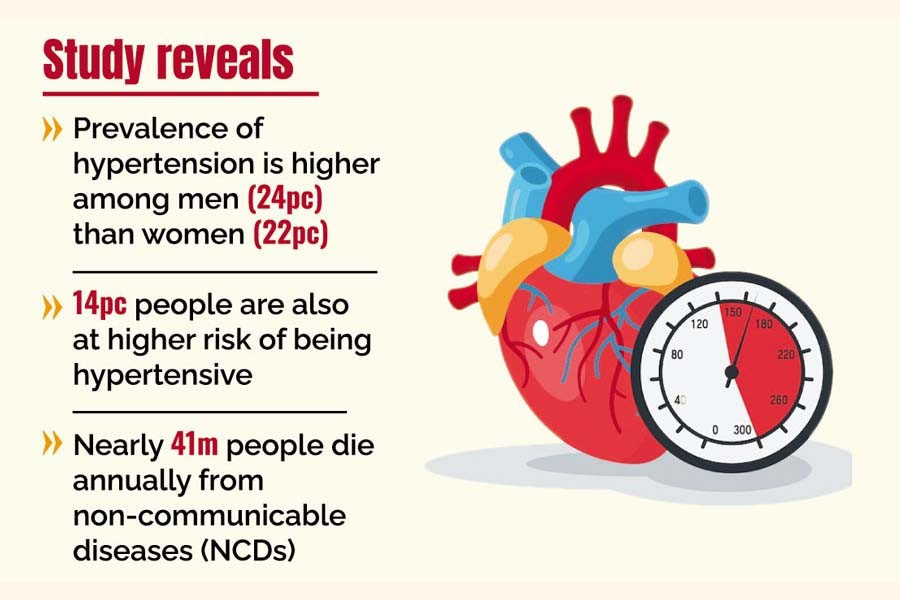
Nearly 23-per cent urban population in four city corporations in Bangladesh suffers from hypertension, a common risk factor among city-dwellers that leads to several life-threatening complications, says a study.
The four cities are Narayanganj, Cumilla, Mymensingh and Rangpur.
The findings of the study styled 'Hypertension and Obesity Load in Bangladesh: How Large is the Iceberg?' were disclosed at a scientific seminar at a city hotel on Thursday. The prevalence of hypertension is higher among men (24 per cent) than women (22 per cent), says the study.
Meanwhile, 14-per cent people are also at higher risk of being hypertensive, it adds.
Nearly 41-million people die annually from non-communicable diseases (NCDs). Hypertension and obesity are among the major chronic NCDs with life-threatening consequences and have become global public health concerns.
The study was conducted under the 'Strengthening Urban Public Health System' project implemented by Save the Children in Bangladesh and South Asia Field Epidemiology and Technology Network (Safetynet), Bangladesh with assistance from US Centers for Disease Control and Prevention.
A total of 48,644 participants were screened to measure their blood pressure, height and weight to calculate hypertension status and BMI (body mass index) status for the study.
Among the respondents, the prevalence of obesity was 8.0 per cent while almost 28 per cent were overweight (or at high risk of being obese).
Prevalence of obesity was higher for female participants (10 per cent) compared to their male counterparts (7.0 per cent).
After dissemination of the findings, a certificate handover ceremony was held marking the successful completion of a one-year 'Applied Epidemiology and Public Health Management Fellowship Course'.
Twenty-six participants-11 health officers of 12 city corporations and 15 public health epidemiologists appointed by Save the Children in all city corporations-took part in the training.
The project is being implemented in 12 city corporations with an eye to enhancing the capacity of their health force so they can make strong public health decisions and prioritise public-health issues.
A new cadre of 'Public Health Epidemiologist' has also been introduced at the city corporation health department as a first step to address an unmet public-health leadership need.
The study suggested community-based screening be done for early detection of hypertension and obesity status and that it be scaled up in other city corporations, even in rural areas.
nsrafsanju@gmail.com