
5 yrs after the mutiny
Tuesday, 25 February 2014
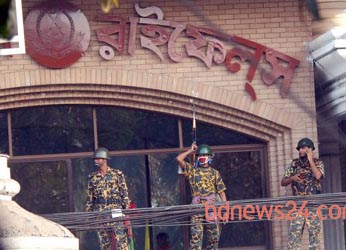
The force has been renamed after the mutiny five years ago, but it will not be easy to wipe out its bloody memories. Bangladesh Rifles (BDR) has been reorganised as Border Guards Bangladesh (BGB) – a process of re-christening initiated after the bloody mutiny in 2009, in which 74 including 57 army officers were killed. The mutiny by some troopers of the erstwhile BDR started at the force’s Peelkhana headquarters in Dhaka on February 25, 2009. By the time it was controlled a day later, it had hit national and the international headlines. The mutiny spread to other BDR camps across the country but no killing was reported outside Dhaka. Though some suggested deeper conspiracies behind the rebellion, police investigators concluded that the BDR personnel’s deep-seated grievances led them to revolt. After the mutiny, BDR was renamed as BGB. Its uniform was also changed. Two types of cases, totalling 58 in all, were filed over the bloody incident – one for serious crimes like murders and looting and the rest for mutiny and disaffection. Trials in 57 cases concerning the mutiny have been concluded more than a year ago. 5,296 border guards have been handed down various terms in prison. 152 personnel, jawans and non-commissioned officers, were sentenced to death for murders and looting in a verdict on November 5 last year. Never before had so many accused been tried in a single case in Bangladesh. Of the 846 accused who are alive, the court handed down life sentence to 161 people, including former BNP MP Nasiruddin Ahmed Pintu and local Awami League leader Torab Ali. 161 men were also given 10 years in jail and Tk 20,000 in fine for looting arms and two more years of imprisonment for non-payment of the fine. 256 accused were given various jail terms between three and 10 years and asked to pay various amounts of fines. 277 men were acquitted for insufficient evidence. The court, in its verdict on the case of murder and looting, observed that the mutiny was orchestrated with the motive to destroy the military security system and might have been engineered to weaken the country’s economy, according to bdnews24.com.