
A massive portrayal of Bengalees' intellectual exercises
Shihab Sarkar | Friday, 27 October 2023
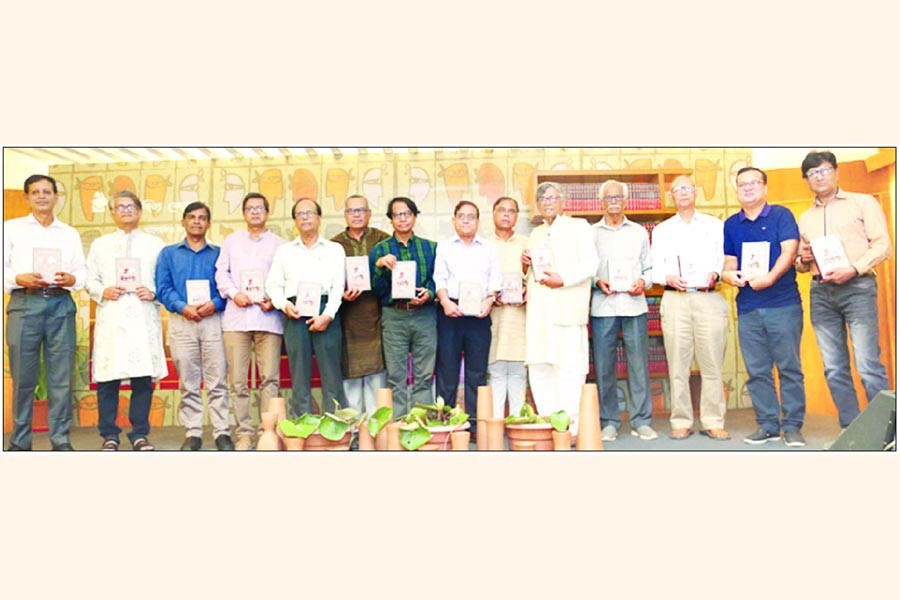
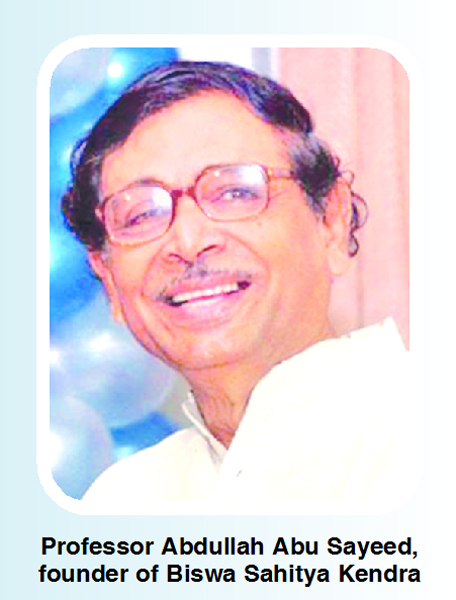 Capital Dhaka witnessed a literally unprecedented ceremony in the sphere of book launches on October 14. On the day, the event centred round the start of the publication of books numbering 205 under 16 titles and subjects. The book is called 'Bangalir Chintamulok Rochona Songroho' (A Collection of Essays on the Intellectual Thoughts of Bengalees), featuring more than 74 thousand pages. Adullah Abu Sayeed, educationist, a pioneer of the country's book-related movements, author and editor, is behind the mega project as chief editor. He is the founder-president of the Biswa Sahitya Kendra, the centre dedicated to promotion of books and raising the number of book lovers.
Coming to the book publication event, a total of 54 books came out under five categories in the first phase on October 14. Biswa Sahitya Kendra is behind the publication of all the books in the whole collection. With a view to assembling the intellectual thoughts of scholars in their respective periods --- active in Bengal in the last 200 years, the mammoth collection offers a portrayal of the most fertile intellectual activities of the Bengalees. Its chief emphasis is placed on the 19th century, a period comprising the regenerative times of the Bengal Renaissance. The authors of the 16-subject collection comprise social reformers, creative writers, religious leaders, politicians, economists, philosophers, historians and scholars from a lot of other disciplines. A major aspect of the books featuring the collection is a total of 22 editors. They are behind the vital editing job. It was a highly arduous work to present the detailed picture of a period spanning two long centuries. That the editorial board has sought to present the Bengali Renaissance and its message of achieving new heights of thoughts to the new-generation readers becomes clear with the careful selection of the subjects. In fact, they didn't want to remain confined to the 19th century. As for instance, in the category of economics the editors included stalwarts on the subject beginning from Niharranjan Roy, Subodh Kumar Mukhopaddhay, Goutam Bhadra to Amartya Sen, Rehman Sobhan, Akbar Ali Khan et al. A broad gamut of economics as it existed in the ancient Bengal and later evolved into the modern times has been recorded in the relevant volumes.
Although not yet fully published, the encyclopedic tome has a broad space for the history of Bengal. In dealing with the subject, the 18 volumes under it go back to the conditions of Bengal under British, Pakistan and the present Bangladesh periods. The 'history' segment is edited by Dr. Md. Mofakkharul Islam. In the 20-part thoughts on philosophy, the readers are provided with the insights beginning from Rammohon Roy, Rabindranath Tagore to Dr. Muhammad Shaheedullah, Dewan Mohammad Azrof, Debiprosad Chattopadhyay and some others. The voluminous collection on the intellectual worlds of renowned Bengalees also includes a segment on the 'thoughts of women'. This section leaves space for scholarly essays on the conditions of women in their times. Edited by Akimun Rahman, the three-book volume features Swarna Kumari Devi, Begum Rokeya Sakhawat Hossain and others with their write-ups.
Dwelling on his experience of undertaking the highly challenging task, Abdullah Abu Sayeed says scores of scholarly and thoughtful essays published in different magazines, periodicals and books during the last 200 years lie scattered. In order to have access to them for the nation's mundane and spiritual uplift, those thoughtful reading materials ought to be collected and preserved in an organised manner. Initially, this urge has led him to the idea of compiling 'Bangalir Chintamulok Rochona Songroho'. As he views it, the researchers of the future will be benefited greatly if they turn to the 16-subject books included in the massive collection.
On the part of Abdullah Abu Sayeed, he says he has taken up the job as a challenge. During the 2001-2008 period, he and his editors spent time in selecting subjects, reading carefully the chosen materials and books, receiving suggestions, and other preparations. The spellings were reviewed four times. As has been put by Alauddin Sarkar, chief of publications at the Kendra, it could be termed the largest of compilations of books dealing with assorted subjects.
With the publication ceremony of all the books dealing with five subjects ranging from essays on thoughts on history, philosophy, women's emancipation, science and the area of 200-year Bengalee culture, the inaugural phase of the massive collection's launch was held before an audience interested in scholarship. The formal exposure of the other books will take place in phases in the coming days. The focus of attraction at the inaugural publication ceremony revolved round Abdullah Abu Sayeed, now president of the Kendra, and chief editor of all the books. In his speech, the Kendra president reminisced about the critical phases of the publication of this grand collection containing 205 books. The initiative was literally herculean, as it involved a gruelling phase of preparatory work. It included choosing the properly qualified and erudite editors in the main. Giving repeated reminders to the book-editors was also a part of the job.
In his speech, Abdullah Abu Sayeed explained in detail the reason for choosing the last 200 years as his theme-period. As he put it, the two centuries stood witness to the intellectual resurgence of the Bengalees. The period chronicled a long journey and achievements of the Bengalees. Apart from the various types of rise and fall in their social, political and cultural lives, the people were gifted with an unprecedented wealth of vibrancy in their thoughts. The great people of the period didn't remain fully absorbed in their thoughts on myriad aspects of life and reality; they also left for posterity the seeds of newer thoughts in writing.
According to Abdullah Abu Sayeed, if there were any possibility of flames of renaissance outside Europe, it would have surely flared up in Bengal. And so it did happen in Bengal. The greats who made it possible included persons like Raja Rammohon Roy, Michael Madhusudan Dutt, Bankimchandra Chatttopadhay and Rabindranath Tagore. That their writings should have been preserved for future generations is beyond any controversy. The famed academic and the Kendra president at this point referred to geniuses the like Joydev and Choitonyo. As has been observed by the Kendra director Shamim Al Mamun, apart from the 60-part 'Great Books', he is not aware of any other voluminous collection other than 'Bangalir Chintamulok Rochona Songroho'. There is not even the faintest of doubt that the job accomplished by a team of 22 editors for different subjects and led by Abdullah Abu Sayeed is monumental. The educated and enlightened Bengalees have cogent reasons to take pride in the collection, which is perfectly representative of the intellectual attainments of the geniuses born in Bengal. The collection doesn't keep itself confined to the traditional areas of thought. As a display of its unique character, the 'Songroho' also includes the relatively modern topics like environment and environmental activism.
shihabskr@ymail.com