
Adopt marine policy, tap resources
Friday, 11 July 2014
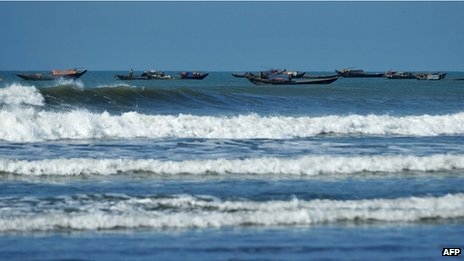
Bangladesh needs to be serious about preservation, exploration and optimum utilisation of marine resources through adopting a comprehensive policy as recent triumphs against India and Myanmar over maritime boundary disputes have opened up enormous opportunities for the country, say marine experts.
Today Bangladesh, according to the experts, cannot afford to turn away from the sea, the untapped frontier as the sea can only now provide the alternative to land resources which can help boost the economy and create huge employments.
Bangladesh needs to create marine scientists, develop capacity to explore resources with adequate skilled manpower and required tools and engage in extensive researches as the resources at the Bay of Bengal can play a massive role in changing the country’s economic scenario, they observe.
“Apart from gas, there’re so much of other resources that remained unidentified because there has been no specific research,” Prof Dr M Maruf Hossain of Institute of Marine Sciences and Fisheries, Chittagong University told UNB.
He said the government will have to give the same priority to exploration of marine resources the way it had done in ending maritime disputes with India and Myanmar.
Responding to a question, Prof Maruf said Bangladesh is not only a riverine country but also a maritime nation. “Unfortunately, we don’t have any maritime policy.”
The Bay of Bengal, the largest bay in the world, is bounded by eight countries -- Bangladesh, India, Indonesia, Malaysia, the Maldives, Myanmar and Sri Lanka.
“Each country except Bangladesh under the Bay of Bengal has such maritime policy,” Prof Maruf said adding that it will be easier to identify lacking if Bangladesh formulates a policy.
He laid emphasis on having the right person in the right position at the policy level, and mentioned that a national institute should be created to deal with the maritime resources.