
AI cameras, RFID scanners tighten grip on traffic violations in city
Unregistered vehicles still outside surveillance network coverage
FE REPORT | Saturday, 23 May 2026
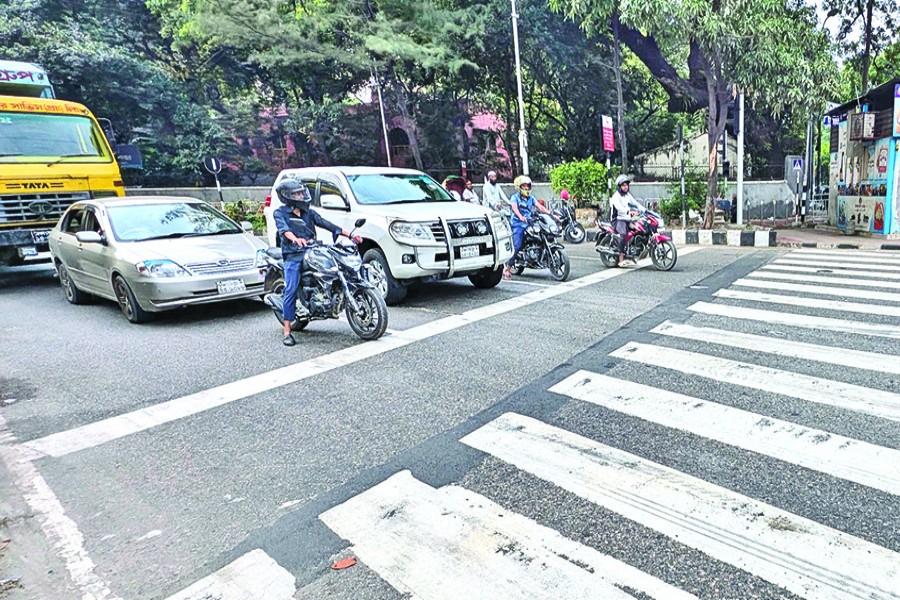
Drivers who break traffic rules or operate vehicles without valid papers are increasingly coming under scrutiny as the Dhaka Metropolitan Police (DMP) quietly rolls out a new digital surveillance system powered by artificial intelligence (AI) cameras and radio-frequency identification (RFID) scanners.
Although the number of devices remains limited compared to the capital's sprawling 1,700-kilometre road network, officials say their impact is already visible on city streets.
Motorists who once routinely crossed red lights, drove on the wrong side or made reckless overtakes are now seen slowing down at intersections, uncertain whether they are under surveillance.
Police also detected an incident where a motorcyclist attempted to evade identification by covering part of the number plate with tape, preventing RFID scanners from reading the vehicle details.
Since April 27, the DMP has begun automatic monitoring at eight signal points from Shahbagh to Jahangir Gate using AI-powered cameras installed at key intersections, according to police sources.
In parallel, 12 RFID scanners have been deployed at strategic locations across the city to identify vehicles operating without valid fitness certificates, tax tokens, registrations or route permits.
Officials say the scanners are difficult for motorists to avoid.
"Five major traffic violations have been brought under surveillance in the first phase of the AI camera installation," a DMP official said, declining to disclose the exact locations of the scanners.
The AI system currently detects violations such as crossing stop lines, ignoring red signals, wrong-way driving, blocking the left lane, and picking up or dropping passengers outside designated bus stops.
The devices are also integrated with Bangladesh Road Transport Authority (BRTA) databases, enabling law enforcers to identify vehicles with expired fitness certificates, missing tax tokens or invalid route permits through RFID technology.
Cases are being filed based on database verification.
Senior System Analyst of the DMP Traffic Division Mohammad Nurus Samad said the new system is gradually reducing the need for traffic police to physically stop vehicles for document checks.
He added that the full benefits of the system would be realised once it is expanded citywide, allowing traffic personnel to focus more on enforcement rather than manually managing intersections.
Although the DMP did not disclose the number of violations detected so far, officials acknowledged that the cameras are capturing hundreds of offences, with cases being filed after reviewing their severity.
The psychological impact of surveillance is already being felt across the city.
Many private car and CNG-run auto-rickshaw drivers are now slowing down at intersections, fearing detection by AI cameras.
The Financial Express observed a CNG driver refusing passengers' request to take the wrong side of the road after hearing about the new system.
Despite more than 2.3 million registered vehicles under the BRTA, Dhaka still has hundreds of thousands of unregistered vehicles, including battery-run and pedal rickshaws as well as motorcycles, which remain outside the system's purview.
smunima@yahoo.com