
AI in Islamic finance: Bangladesh must act before the future arrives
M. Kabir Hassan | Monday, 25 May 2026
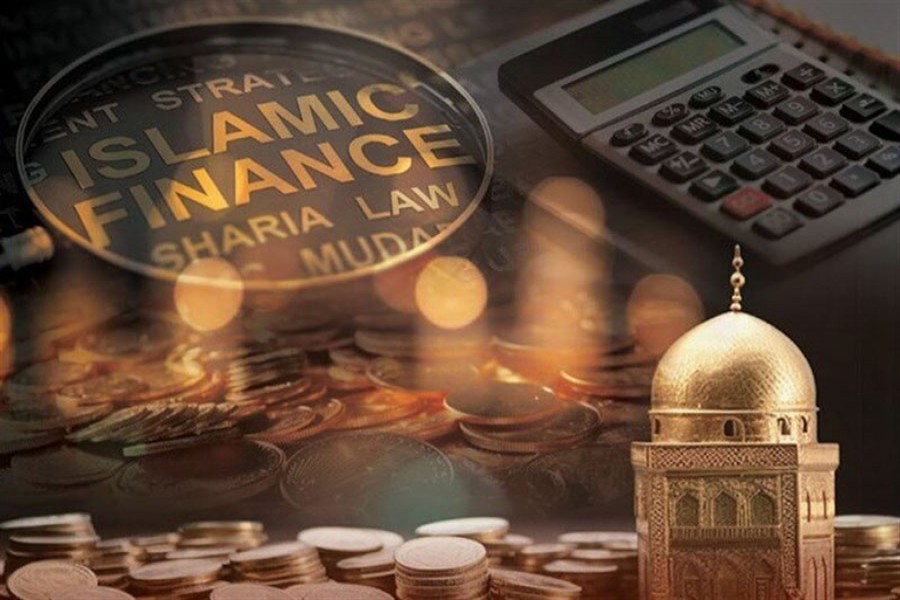
Artificial Intelligence (AI) is no longer merely a technological development. It is rapidly becoming a transformative force reshaping banking, business models, risk management, regulatory supervision, and customer relationships. Islamic finance cannot remain outside this transformation. With global Islamic financial assets already exceeding $4.5 trillion and projected to reach about $6.67 trillion by 2027, the question is no longer whether AI will affect Islamic finance, but whether Islamic financial institutions and regulators will adopt it responsibly and ethically, in full harmony with Shariah principles.
This article draws on my recent co-authored review article, "AI Agents in Islamic Finance: Applications, Governance, and Future Directions," written with Mohammad Rezoanul Hoque and Md Meftahul Ferdaus. The central argument of that study is straightforward: AI offers enormous opportunities for Islamic finance, but the technology must not be allowed to outrun Shariah governance, human judgment, and ethical accountability.
Islamic finance is built on the prohibition of riba, gharar and haram activities. These principles are rooted in the Qur'an, Sunnah, and the broader tradition of Islamic jurisprudence. Unlike conventional financial regulation, where compliance can often be reduced to technical rules and quantitative thresholds, Shariah compliance requires interpretation, context, and scholarly judgment. A financial product may appear technically acceptable but still raise deeper concerns about fairness, risk-sharing, exploitation, or substance over form. This makes the application of AI in Islamic finance both promising and delicate.
At present, AI is being applied in Islamic finance mainly in three areas: Shariah compliance automation, risk assessment and management, and customer service. In compliance automation, AI systems can scan contracts, monitor transactions, detect prohibited elements, and flag potential Shariah violations. Natural language processing can help review financial documents more quickly than manual methods. Bank Islam Malaysia, for example, has reportedly used AI-driven contract analysis to reduce manual review time by 60 per cent, while Dubai Islamic Bank has introduced automated Shariah screening systems that can examine thousands of transactions daily.
The second major area is risk management. Islamic financial products such as murabaha, ijara, musharakah and sukuk have distinct risk profiles because they are based on asset-backing, trade, leasing, partnership or profit-sharing arrangements. Conventional credit and market risk models are not always suitable for these instruments. AI can help Islamic financial institutions assess credit risk, liquidity risk, operational risk and market risk with greater speed and sophistication. It can also assist in sukuk valuation, portfolio screening, fraud detection and stress testing.
The third area is customer service and advisory functions. Islamic robo-advisors and Shariah-compliant chatbots can provide personalised financial guidance to customers seeking halal investment options. They can analyse customers' risk tolerance, investment goals and financial behavior while applying Shariah screening criteria. For markets with large Muslim populations and growing digital finance ecosystems, these services can expand access to Islamic financial advice at lower cost.
Yet these opportunities come with serious limitations. Our review highlights a major concern known as semantic drift. AI systems may use Islamic finance terminology correctly at the surface level while failing to capture the deeper jurisprudential meaning of those terms. Research cited in our study shows that, when AI-generated definitions of 96 AAOIFI-defined Islamic finance terms were compared with authoritative standards, the vast majority showed low conceptual similarity. In practical terms, AI may sound fluent but still be doctrinally inaccurate.
The same problem appears in compliance judgment. AI systems may identify simple Shariah violations, such as explicit interest, with relatively high accuracy. But their performance weakens sharply when they face complex cases involving hybrid instruments, cross-border transactions, or new fintech products. These are precisely the situations where Islamic finance needs careful reasoning, human wisdom and scholarly deliberation. Therefore, AI should assist Shariah scholars, not replace them.
This is why I propose a dual governance framework for AI in Islamic finance. Under this model, the traditional Shariah Supervisory Board should work alongside an AI Governance Committee. The Shariah board would remain responsible for religious compliance, fiqh interpretation and fatwa-related decisions. The AI Governance Committee would oversee algorithmic transparency, model performance, data quality, cybersecurity, explainability and operational risks. A joint oversight panel would then ensure that technological efficiency and religious authenticity move together, not in opposite directions.
For Bangladesh, this debate is timely and urgent. Islamic banking represents a significant part of the country's banking system and has deep social trust among depositors. Bangladesh has also made remarkable progress in mobile financial services and digital financial inclusion. This gives the country a strong foundation for Islamic fintech innovation. Yet in AI adoption, Bangladesh remains behind leading jurisdictions such as Malaysia and the UAE, where regulatory sandboxes, innovation hubs, and national AI strategies have already created space for experimentation.
Bangladesh should not wait passively. Bangladesh Bank can begin by establishing a dedicated Islamic fintech and AI regulatory sandbox. Such a sandbox would allow banks, fintech firms, universities, and Shariah scholars to test AI-driven solutions in a controlled environment. These may include automated Shariah screening, AI-assisted sukuk valuation, halal investment advisory, compliance monitoring, digital onboarding, and risk analytics. A sandbox would encourage innovation while protecting consumers, depositors, and the credibility of Islamic finance.
Islamic banks must also modernise their legacy systems. Many existing platforms lack standardised data, open APIs, and the technical architecture needed for AI integration. Without clean, structured and reliable data, AI systems will produce unreliable results. Data governance, cybersecurity, privacy protection, and model validation should therefore be central to Islamic banking reform.
Bangladesh also needs human capital. The future of Islamic finance will require professionals who understand both Shariah and technology. Universities should introduce interdisciplinary programs combining Islamic finance, data analytics, AI governance, fintech regulation, and ethics. Shariah scholars should receive exposure to AI concepts, while technologists should be trained in the foundations of Islamic commercial jurisprudence. Without this bridge, AI solutions may remain technically impressive but religiously weak.
Robo-advisory services deserve special attention in Bangladesh. A Shariah-compliant robo-advisor can help small investors identify halal investment options, diversify portfolios and understand risk. It can support capital market development, especially if linked with sukuk, Islamic mutual funds and ethical investment products. However, such systems must be transparent, explainable and validated by qualified Shariah scholars. The customer must know not only what recommendation is being made, but why it is considered Shariah-compliant.
The broader lesson is clear: AI can make Islamic finance more efficient, inclusive and innovative, but it can also create new risks if introduced without proper governance. Technical errors may become Shariah errors. Data bias may become financial exclusion. Algorithmic opacity may weaken public trust. That is why regulators, Islamic banks, Shariah scholars, universities and technology firms must work together.
AI is a powerful tool, but it is not a moral authority. The ethical and spiritual foundations of Islamic finance must remain under human stewardship. If Bangladesh combines technological ambition with Shariah integrity, it can become a meaningful South Asian hub for Islamic fintech. But the window of opportunity will not remain open forever. The future of Islamic finance is arriving quickly; Bangladesh must prepare for it now.
M. Kabir Hassan is Professor of Finance and Moffett Chair, University of New Orleans; 2016 IsDB Prize Laureate in Islamic Banking and Finance; Member, AAOIFI Ethics and Governance Board and Chairman, AAOIFI Education Board.