
An endemic crisis in the leather industry
Syed Muhammed Showaib | Saturday, 23 May 2026
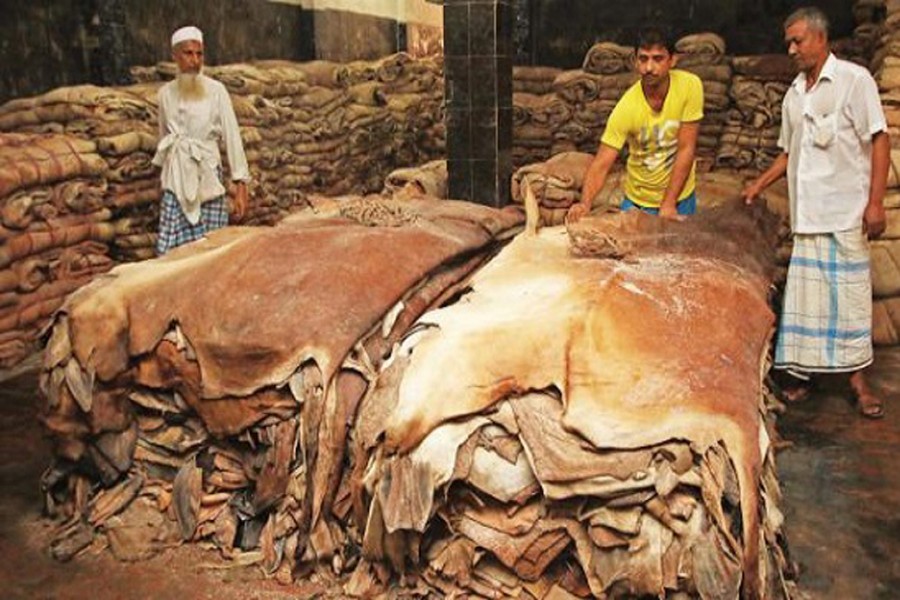
In most industries, an abundant supply of raw material is considered an advantage. In Bangladesh's leather trade, that same abundance has somehow turned into liability. Every Eid-ul-Azha, nearly 10 million animals are sacrificed across the country and an enormous volume of rawhide enters the market within hours. By the most basic principles of commerce, a sudden surge in supply normally lowers prices to some extent, but in no way does it erase the value of a commodity that feeds a profitable manufacturing chain and retains strong demand further down the supply line. Yet that is precisely what happens in the rawhide market every year. Prices collapse so sharply that hides which later become shoes, jackets, belts, wallets, gloves and bags worth thousands of taka are sold for almost nothing or discarded altogether because buyers refuse to pay even the minimum price. A leather jacket in any Bangladeshi store now costs at least Tk 10,000, yet the hide used to produce it may have been purchased from the original seller for less than one tenth of that amount. Retail prices of leather goods continue to climb year after year, but the value of the raw material that sustains the entire industry keeps falling. If the prices of leather shoes, jackets, belts, wallets, gloves and bags continue to rise, why does the value of rawhide continue to collapse?
Leather remains one of Bangladesh's major export sectors after readymade garments. In fiscal year 2024-25, the country reportedly earned around $1.67 billion from leather exports, registering strong year-on-year growth. Unlike the garment sector which depends heavily on imported raw materials, the leather industry benefits from domestically sourced inputs and comparatively low labour costs that meet international demand standards. On paper these factors should have positioned Bangladesh as a far stronger player in the global leather value chain. Instead the sector continues to underperform despite these advantages.
The most disturbing aspect of this crisis is that the collapse in rawhide prices has persisted for more than a decade despite repeated assurances from governments and business groups. Around 2013, the price of cowhide hovered between Tk 80-90 per square foot. By 2020 it had fallen to nearly half that level. Although the government announces official rates every year, these declared prices rarely hold in practice. A crisis that returns with such predictability every Eid cannot be explained by logistics or ordinary market fluctuations. It points instead to coordinated control over the market involving traders, middlemen and storage operators who are able to depress prices during the peak supply period to protect their own margins. The consequences of this pattern extend far beyond individual sellers and buyers, affecting religious educational institutions that depend on hide sales and low-income communities that treat it as a seasonal source of support and, more broadly, the national economy. In recent years a significant share of collected hides has never reached tanneries at all. Faced with prices that do not cover basic value, many traders and collectors have been left with no practical option but to bury hides or discard them in waste dumps. The result is an industry that operates far below its capacity, with large volumes of raw material lost before they can enter production.
Tannery owners cite serious infrastructural failures as a key reason for their inability to pay fair prices, particularly the non-functional central effluent treatment plant at the Savar leather industrial park. The inoperability of this plant has prevented local tanneries from securing the Leather Working Group certification, which is essential for access to higher value international markets. The government reportedly invested around $53 million in the facility installed by a Chinese company and later handed over to the Dhaka Tannery Industrial Estate Waste Treatment Plant Company in an incomplete state, leaving it in need of substantial repair and upgrading before it can operate at required standards. Instead of ensuring the plant's full operation, previous policy efforts shifted responsibility onto individual tanners by encouraging or pressuring them to build their own effluent treatment systems. While a small number of large and well-capitalised tanners have managed to install such facilities to retain access to global buyers, most units remain small and financially constrained, making such investment unfeasible. As a result, Leather Working Group certification remains out of reach for the majority of producers, and around 65 percent of Bangladeshi tanned leather is sold to Chinese intermediaries at prices significantly below the prices of premium markets.
The domestic market faces a parallel challenge from the unchecked inflow of foreign goods. Despite access to good quality local hides and the advantage of low labour costs, the market is increasingly crowded with inexpensive leather products from neighbouring countries. Many of these goods enter through informal channels and offer poor durability while still competing aggressively on price, placing local manufacturers at a disadvantage. The lack of effective enforcement against such inflows raises questions about the state's approach to protecting domestic producers.
Recently, Commerce Minister Khandaker Abdul Muktadir remarked that the leather industry could become a billion-dollar export sector and that the ongoing issues cannot be resolved in two and a half months. This framing overlooks the fact that the sector already earns over a billion dollars in export revenue. The real question is not whether that threshold can be reached, but whether the industry can move beyond it and become a multibillion-dollar powerhouse which is entirely feasible given the unwavering global demand for leather. What is required is sustained political commitment and practical intervention at multiple levels. This includes restoring full operation of the central waste treatment facility, addressing market control practices that distort rawhide pricing and strengthening protection of the domestic market against unfair foreign competition. Without decisive action, this seasonal loss will continue to weaken the industry that clearly has the potential to play a far larger role in the national economy.
showaib434@gmail.com