
Apple a decade behind Japan mobile payment curve
Monday, 15 September 2014
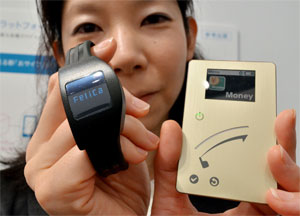
TOKYO, Sept 14 (AFP) : Apple's proud announcement that its new iPhone could be used to buy goods in a single swipe left customers non-plussed in Japan, where mobile contactless payments have been normal fare for a decade.
A type of Near Field Communication (NFC) chip, known in Japan as FeliCa, was introduced to the Japanese mobile market in June 2004 and has been been implanted in almost all phones sold in the country since.
The iPhone has been one of the few chip-less exceptions -- something that will change when the new models hit Japanese shelves on September 19.
Ten years ago the charismatic Takeshi Natsuno, who was then multimedia services director of Japanese mobile operator NTT Docomo, extolled the benefits of swapping cash for cell phones.
"When I leave my house in the morning all I take with me is my phone, which lets me do everything -- pay, take public transport -- simply by swiping a special reader in shops, stations or airports," he said at the time.
FeliCa was conceived by Sony way back in 1989 and first used in the Hong Kong underground railway system in 1997 -- in a card known as Octopus -- inspiring cities around the world to use similar technology in their own contactless transport cards.
Japan adopted an electronic payment system for trains in 2001, starting with the JR East network, which serves the Tokyo region.
The transport cards' success led to the integration of contactless chips into Japanese mobile phones and lifestyles with the creation of a group of apps known as the "mobile wallet" by NTT Docomo in 2004.
Thousands of readers are now installed in convenience stores, on vending machines, in office buildings and at stations and airports in Japan.
Contactless payments are a normal part of everyday life for many Japanese people, said Michael Au, president of the South Asia and Japan branch of digital security firm Gemalto.
"Japan has the most developed contactless infrastructure in the world and customers are already familiar with using their mobiles for contactless services," he said.