
ART to deepen mutually beneficial economic cooperation
Says US ambassador in talks with ICC Bangladesh
FE REPORT | Tuesday, 9 June 2026
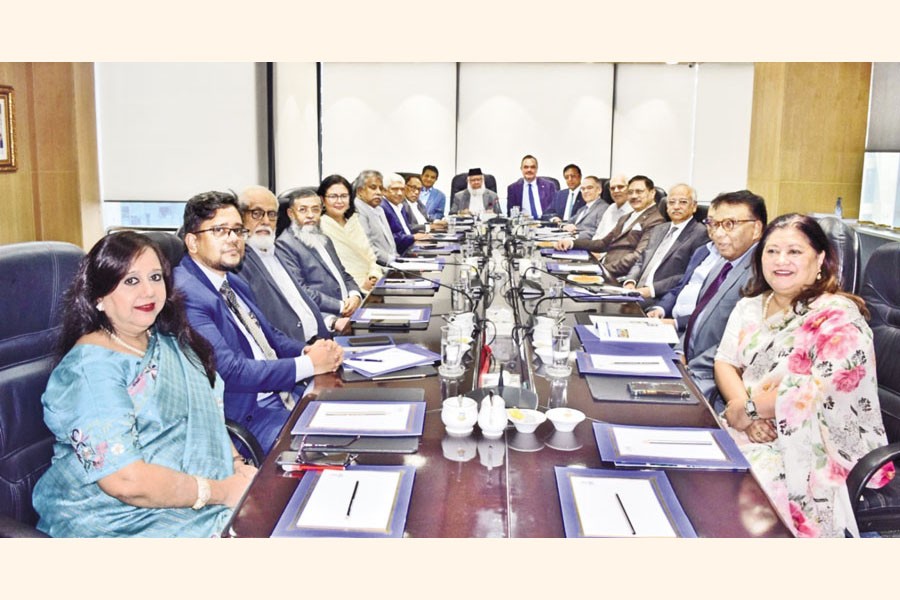
Ambassador of the United States of America to Bangladesh Brent T. Christensen said on Monday that the objective of the Agreement on Reciprocal Trade (ART) is to foster a more balanced, sustainable and mutually beneficial economic partnership between the two countries.
He observed that public debate and media scrutiny are natural elements of the policymaking process.
Mr Christensen expressed hope that the framework would create new opportunities for businesses and consumers in both markets.
The ambassador was speaking at a views-exchange meeting hosted by the International Chamber of Commerce-Bangladesh (ICC Bangladesh) at its secretariat in Dhaka.
The meeting aimed at further strengthening Bangladesh–United States economic and commercial relations, according to a press release.
The ambassador also acknowledged Bangladesh's remarkable economic progress over recent decades and described the country as one of the world's fastest-growing economies.
He noted the strong and evolving economic relationship between Bangladesh and the United States and emphasised the substantial opportunities for further collaboration in trade, investment and business development.
The ambassador highlighted the importance of addressing non-tariff barriers and strengthening the business and regulatory environment to facilitate greater economic engagement.
He emphasised the value of constructive dialogue, negotiation and continued engagement between governments and the private sector to address trade-related challenges and identify practical solutions.
Mr Christensen also underscored the need for countries and businesses to adapt to changing economic realities, evolving trade policies and emerging market requirements.
He further stressed the importance of transparency, predictability and efficiency in taxation and customs administration, highlighting the role of institutions such as the National Board of Revenue (NBR) in supporting trade facilitation and investment.
Mr Christensen expressed support for Bangladesh's ongoing economic reforms and encouraged continued efforts to enhance competitiveness, improve the ease of doing business and strengthen private-sector development.
He reaffirmed the commitment of the United States to working closely with Bangladesh to deepen economic cooperation, expand commercial ties and unlock new opportunities for sustainable growth and prosperity in both countries.
In his welcome remarks, Mahbubur Rahman, President of ICC Bangladesh, highlighted the longstanding economic partnership between Bangladesh and the United States and emphasised the importance of expanding trade, investment and private-sector cooperation between the two countries.
During the discussion, Mr Rahman noted that the United States remains one of Bangladesh's most important trade and investment partners.
He described the Agreement on Reciprocal Trade as an important step towards building a more balanced and mutually beneficial economic partnership.
He noted that Bangladesh has undertaken significant commercial purchases from the United States, including Biman Bangladesh Airlines' order for 14 Boeing aircraft, increased imports of agricultural commodities and cotton, and long-term commitments in the energy sector.
Mr Rahman also highlighted Bangladesh's growing demand for US cotton and underscored the importance of strengthening supply-chain traceability and sustainability in the apparel sector.
He noted that greater utilisation of US cotton could further enhance Bangladesh's competitiveness and compliance credentials in global markets.
Rupali Chowdhury, President of FICCI, observed that governance and regulatory challenges are not unique to any country and can be found in varying degrees across both developing and developed economies.
She noted the support and market-access opportunities provided by major trading partners, including the European Union, and expressed hope that Bangladesh and the United States would continue to explore avenues for deeper trade and investment cooperation that could further strengthen bilateral economic relations.
Former BGMEA President Rubana Huq observed that Bangladesh remains one of the world's leading sourcing destinations for apparel and textiles and expressed confidence that continued improvements in labour practices, transparency and sustainability would further strengthen the country's competitiveness in global markets.
Former BKMEA President Md Fazlul Hoque emphasised that achieving greater self-reliance in industrial inputs and supply chains cannot be accomplished overnight and requires long-term planning, investment and policy support.
Referring to the apparel sector's future growth prospects, he highlighted the increasing importance of man-made fibre (MMF)-based products in global markets and noted that Bangladesh has traditionally been stronger in cotton-based apparel manufacturing.
Mr Hoque also emphasised the need for greater US investment in cotton warehousing and distribution facilities in Bangladesh, which would enable local manufacturers to access high-quality US cotton more efficiently and strengthen supply-chain linkages between the two countries. Concluding the meeting, both sides reaffirmed their commitment to strengthening Bangladesh–United States economic cooperation through enhanced trade, investment, technology transfer and private-sector engagement for the mutual benefit of both countries.
The meeting was also attended, among others, by Eric Geelan, Political and Economic Counsellor, and Asif Ahmed, Economic Specialist at the Embassy of the United States of America to Bangladesh; ICC Bangladesh Vice Presidents AK Azad and Naser Ezaz Bijoy; ICC Bangladesh Executive Board Member and former President of AmCham Bangladesh Aftabul Islam; Anwar-Ul-Alam Chowdhury (Parvez), President of BCI; Kamran T Rahman, President of MCCI; Mir Nasir Hossain, former President of FBCCI; Mohammad Hatem, President of BKMEA; Showkat Aziz Russell, President of BTMA; and Tapan Chowdhury, former Adviser (Minister) to the Caretaker Government of Bangladesh in 2007.
Other participants included Md Jashim Uddin, former President of FBCCI; Syed Ershad Ahmed, President of AmCham Bangladesh; Muhammad A (Rumee) Ali, Chairman of the ICC Bangladesh Banking Commission; and Ataur Rahman, Secretary General of ICC Bangladesh.
syful-islam@outlook.com