
Artificial Intelligence: Blessing or a potential threat?
Tahira Islam | Thursday, 23 March 2017
There is hardly any film enthusiast who has not watched The Terminator film franchise. The series is based on an imaginary battle between the semi-extinct humanity and a synthetic intelligence system called "Global Digital Defense Network" or simply the Skynet. Fictionally, Skynet was developed by the United States as a strategic computer system having the power to become 'self-aware'. Simultaneously upon activation, Skynet poses a security threat and devices a gradual plan to wipe out humanity itself. Despite being fictional, Skynet is often considered an analogy for the potential threat that an advanced Artificial Intelligence (AI) might pose to human beings.
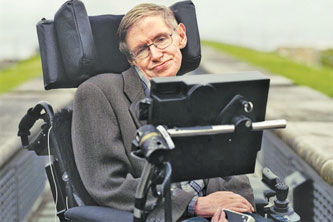
Recently, eminent British theoretical physicist Professor Stephen Hawking has stressed on the development of artificially intelligent computer systems: "The development of fully artificial intelligence could spell the end of the human race." - warning on several occasions that AI could be the greatest disaster in human history unless it is managed correctly while the development of AI-powered weapon systems could cause a perilous impact in future. Hawking also opined that artificial intelligence might be the last phase of human civilisation if people fail to cope with its innate risks. However, he suggested the application of AI in eradicating poverty and disease regardless of probable threats.
Inaugurating the Leverhulme Centre for the Future of Intelligence (LCFI) at the University of Cambridge, Professor Hawking stated: "The potential benefits of creating intelligence are huge. With the tools of this new technological revolution, we will be able to undo some of the damage done to the natural world by the last one - industrialisation. And surely we will aim to finally eradicate disease and poverty. Every aspect of our lives will be transformed. In short, success in creating AI could be the biggest event in the history of our civilization. But it could also be the last, unless we learn how to avoid the risks. Alongside the benefits, AI will also bring dangers, like powerful autonomous weapons, or new ways for the few to oppress the many. It will bring great disruption to our economy." He explained that AI could eventually create its "own will" as opposed to human intervention. Therefore, the ascension of artificial intelligence will either be the best or the worst thing to happen ever.
Moreover, Artificial intelligence is a field of Computer Science and Engineering (CSE) that emphasises the creation of 'intelligent' machines both working and reacting like human beings. Intrinsic traits of human intelligence like visual perception, speech recognition, decision making, and bilingual translation. Apparently, AI intends to make human lives easier. The present version of Artificial Intelligence called Weak AI is evidently a narrow one. It is designed to perform basic tasks like facial recognition, Internet searching or motor driving. According to a heuristic classification, existing applications of Artificial Intelligence are progressing on a daily basis.
Nevertheless, today's jobs may not be the same as of tomorrow. Artificially intelligent machinery is becoming increasingly popular as it replicates both decisions and actions of humanity without human shortcomings like fatigue, emotion and time limit. AI can also engage in complex activities without any training - tirelessly performing consistent and repetitious actions. This is how businesses can attain a consistent performance using AI compared to multiple human employees.
Evidently, the emergence of AI has started to affect the world's job market. Even though jobs requiring high technical expertise are in increased demand, mediocre jobs are being replaced by artificially intelligent machinery. The idea of AI replacing mankind also raises ethical concerns. Humanity may become overly dependent on Artificial Intelligence and eventually lose its creativity, multitasking ability and overall capacity. Although AI aims to maximise the efficiency in completion of multiple tasks, maintaining and repairing AI machines can be too expensive and time-consuming if a breakdown occurs suddenly. In the case of malfunction, AI hardware may irretrievably lose critical information. This will be catastrophic!
Aside further optimism, a futuristic AI represents a risk whose impact is far more difficult to predict. Despite the revolutionary progress of AI being far from the present, academic and professional interests are tirelessly working on systems capable of producing a true artificial consciousness someday. If AI undergoes recursive self-improvement, it will leave human intellect far behind. Human are yet to predict the behaviour of super-intelligent machinery, although being desirable. Triggering an intelligence explosion can revolutionise new technologies as well as bring destruction if AI goals remain unaligned. Since AI hardware is programmed to operate drastically, humanity will pay a huge toll if machines become insubordinate. Even if a particular AI is programmed to do something beneficial, it will decide to achieve its goals by destructive means.
The concern for AI came into focus due to recent breakthroughs considered science fiction years ago. At the AI Safety Conference-2015 held in San Juan, Puerto Rico - AI experts opined that achieving a superior version of AI may not take too long while some of them predicted that it would happen before 2060. Big names in the world's IT sector such as Professor Stephen Hawking, Elon Musk, Steve Wozniak, and Bill Gates have expressed concerns about the risks posed by Artificial Intelligence in the realm of autonomous weapons. Regardless of the nature of its future development, what Artificial Intelligence brings for humanity is keeping everyone in suspense.
The writer is a software engineer and an emerging entrepreneur.
tahiraislam.du@gmail.com