
As biofuels boom, companies retool oilseeds to crack new markets
Sunday, 11 June 2023
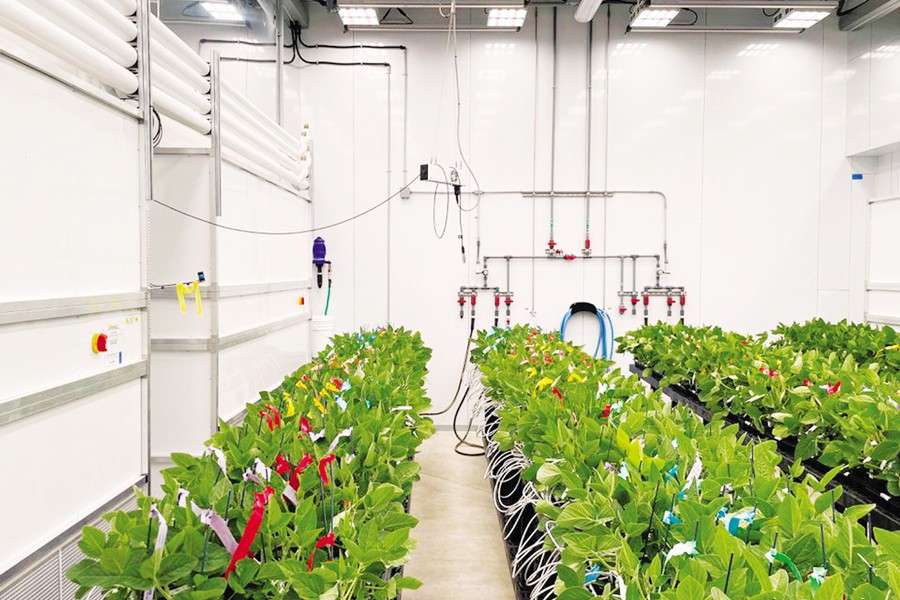
ST. LOUIS, June 10 (Reuters): Deep within a suburban St. Louis warehouse, rows of ID-tagged soybean plants, bred using artificial intelligence, stretch toward precision-timed grow lights and sway as fans circulate a custom mix of carbon dioxide and humidity.
These soy varieties in Benson Hill's 47,000- square-foot "crop accelerator" produce beans with exceptionally high protein to satisfy two competing demands: Supply the growing biofuels sector and expand the market for soy meal.
"We're going to utilize the full genetic potential of the plant to produce things that are more meaningful and valuable," said Matt Crisp, Benson Hill's co-founder and CEO.
Seed and food technology companies like Benson Hill and larger player Corteva are urgently trying to change the nutritional profile of oilseeds to meet an anticipated surge in demand for soybean and canola oil to produce biofuels over the next five years.
Finding new markets for meal, the less valuable oilseed product, is critical to encouraging U.S. and Canadian farmers to expand plantings, company executives and researchers said.
Reuters made a rare visit to Benson Hill's research facility, and spoke to more than a dozen company executives, farmers and researchers, including those directly involved in developing the oilseed varieties, who said boosting protein content and digestibility was key to opening new markets, particularly for aquaculture.
The federal government's US Energy Information Administration said in February that annual US renewable diesel production could more than double by 2025, reaching 5.9 billion gallons, driven in part by tax credits for renewable fuels under President Joe Biden's Inflation Reduction Act.
In response, US soybean crushers are planning to expand capacity by 30 per cent over three years, while Canadian canola crushing looks to jump 60 per cent.
"It's going to be a challenge for sure to move that much meal, soy and canola," said Frank Hart, managing director of special projects for AGT Food and Ingredients, which is planning a Canadian canola-crushing plant. Without new markets he expects canola meal prices to fall about 14 per cent. The industry hopes to jumpstart demand for soybean meal from European, South American and Asian salmon farms and U.S. poultry operations.
Benson Hill's ultra-high protein soybeans contain 45 per cent to 50 per cent protein, up from 36 per cent to 39 per cent. They are currently produced on just 0.2 per cent of the 87.5 million US acres devoted to the crop.
Benson Hill is expected to launch a genetically modified herbicide-tolerant variety in 2025, targeting US poultry and Chile's salmon farms, said Kyle Smith, director of grower innovation. Corteva, working with crusher Bunge, is developing soybeans with higher protein and amino acids for the poultry industry, while maintaining crop yields and oil content. Corteva and Bunge are also working on higher-protein canola. It's a difficult process. Reduce fibre too much and the seed won't hold together.
"Is it easy? No," said Tyler Groeneveld, Corteva's North America commercial grains and oils leader. Corteva aims to bring high-protein canola to market this decade, he said.