
Asia stocks rise but oil resumes gains amid IEA supply report
Thursday, 12 March 2026
HONG KONG, March 11 (AFP): Asian equities rose Wednesday while oil resumed its gains as traders weighed growing supply concerns against a report that the International Energy Agency was considering the release of a record amount of its reserves.
The crude market has been hit by wild volatility since the United States and Israel began striking Iran at the end of last month, with Tehran retaliating by attacking targets across the oil-rich Gulf and effectively shutting down the crucial Strait of Hormuz.
Fears that the conflict could drag on for some time -- choking off energy supplies -- sent both main crude contracts soaring on Monday to within a whisker of $120 a barrel, the highest since 2022. Gas prices also rocketed.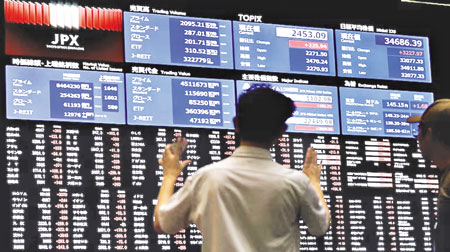 However, prices tanked on Tuesday after US President Donald Trump said war on Iran was "going to be ended soon" and it emerged that the Group of Seven leading industrialised nations would discuss tapping stockpiles.
Hopes were given an extra boost by a Wall Street Journal report saying the IEA proposed a release of reserves that would exceed the 182 million barrels member countries put on the market following Russia's 2022 invasion of Ukraine.
The plan was circulated at an emergency meeting of energy officials from the IEA's 32 member countries on Tuesday, with a decision expected Wednesday, according to the Journal.
Meanwhile, energy ministers of the Group of Seven said Wednesday they "stand ready" to take "all necessary measures" in coordination with the IEA.
Still, Brent and West Texas Intermediate, which dropped about five percent at the start of the day, rose more than two percent in afternoon Asian trade as Iran continued to attack Gulf nations.
Traders were also spooked after maritime security agency said an unknown projectile hit a cargo ship in the Strait of Hormuz abutting Iran, causing a fire and forcing the crew to evacuate.
Iran has vowed to block Gulf oil exports and asserted that it, not Washington, would "determine the end of the war".
A US Department of Energy spokesperson told AFP that officials "are closely monitoring the situation, speaking with industry leaders, and having the US military draw up additional options to keep the Strait of Hormuz open, including the potential for our Navy to escort tankers".
Trump warned Tehran against mining the Strait of Hormuz, through which nearly 20 percent of the world's crude oil usually transits from the Gulf to world markets.
"If for any reason mines were placed, and they are not removed forthwith, the Military consequences to Iran will be at a level never seen before," he said Tuesday in a social media post.
Equity markets rose but pared their earlier rally, with some in retreat by the end of the day.
Tokyo and Seoul, which have seen the widest swings since the crisis unfolded, both finished more than one percent higher, while Shanghai, Sydney, Wellington, Taipei, Bangkok and Manila rose.
Hong Kong, Mumbai, Jakarta and Singapore edged down.
London, Paris and Frankfurt opened with a loss.
"The bigger question for markets is whether energy flows in the region can return to normal," wrote Fawad Razaqzada at Forex.com.
"The Strait of Hormuz remains the critical focal point. As one of the world's most important oil shipping routes, any disruption to traffic through the strait would immediately reignite supply fears and likely send crude prices sharply higher again.