
Asian shares tick higher despite soft data
Thursday, 14 August 2014
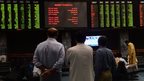
Asian markets were mostly higher Thursday, tracking positive cues from Wall Street as traders shrugged off a slew of soft data including a weaker-than-expected report on retail sales in the world's largest economy. Tokyo and Sydney rose 0.60 percent, while Hong Kong and Shanghai traded flat. Seoul added 0.19 percent after South Korea's central bank cut interest rates for the first time in 15 months, under growing government pressure including warnings of recession from the new finance minister. The rise came after solid gains on Wall Street, where the Dow Jones Industrial Average on Wednesday finished up 0.55 percent at 16,651.80, with investors discounting a lacklustre US retail sales report. Retail sales were virtually unchanged in July from the prior month and, excluding the automobile sector, edged up just 0.1 percent, the Commerce Department said. The report was weaker than analysts expected, and highlighted the fragile state of the US economy where wage growth is minimal and unemployment, though easing, remains high. Adding to the downbeat sentiment, eurozone industrial production data showed an unexpected one-month drop as the Bank of England hinted that a widely anticipated rate rise might be put on hold. Investors in Asia were also still digesting other disappointing regional data posted on Wednesday. Statistics showed Japan's economy suffered its biggest quarterly contraction since the 2011 quake and tsunami, while in China industrial output and retail sales numbers came in slightly slower in July than the previous month's data. The tepid data sparked some speculation among investors about fresh prospects of stimulus from major central banks. On Thursday, the Bank of Korea cut its benchmark rate by 25 basis points to 2.25 percent. It was the first rate cut since May 2013. The move came after the finance ministry last month unveiled a $40 billion stimulus package and revised its 2014 economic growth forecast down from 4.1 percent to 3.7. At the time, Finance Minister Choi Kyung-Hwan warned that the national economy stood at a crossroads between "making a leap forward and falling into a recession", according to AFP.