
Bagging brightens Rajshahi mango\\\'s export prospect
Wednesday, 24 June 2015
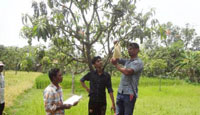
RAJSHAHI, June 23 (BSS): For the first time, use of fruit bagging technology has been started in different mango orchards in Rajshahi and Chapainawabganj districts this year yielding more than 10 tonnes of exportable safe, hygiene and disease-free mango in the two districts.
With the breakthrough, use of harmful chemical, insecticides and pesticides has been reduced drastically brightening the prospect of exporting mango of the two districts.
Scientists of Regional Horticulture Research Centre (RHRC) in Chapainawabganj have released the technology among the growers this year attaining a remarkable success in this field.
Referring to his research findings Dr Saraf Uddin, Senior Scientific Officer of RHRC, told the local journalists that bagged mangoes had high recovery of marketable fruits over the non-bagged ones. Imported newspaper, thin waxy magazines and thick waxy magazines resulted in fruits having the highest marketable yields.
He says mango is the leading seasonal cash crop of the country's northwest region and dominates the economy in the two districts.
According to the DAE sources, there are about three million (30 lakh) mango trees of different ages and varieties on some 32,816 hectares of land in the region.
Meanwhile, Dr Saraf mentioned that Bangladesh has started exporting mangoes to the United Kingdom's supermarkets, creating a huge commercial prospect for the growers to get higher prices of their best quality produce.
Mango exports to the UK will fetch foreign currency and will also help the government starting on product diversification. Besides, Mango exports to European markets will ensure better livelihood of Bangladeshi farmers for receiving high prices of mangoes, he said.
Dr Safar says pre-harvest fruit bagging is a useful approach for plant protection and ensuring improved post-harvest fruit quality.
This is a well-known practice in many of the mango-producing countries but information is lacking on its effects on the external and internal characteristics of the fruits, the appropriate bagging materials and the economics of its adoption.
Bagging with different paper materials resulted in fruits with lower insect and disease damage and minimised fruits quality defects. Thick waxy magazine significantly prevented fruit fly damage with infestation ranging from zero to less than one per cent.
Dr Alim Uddin, Principal Scientific Officer of Fruit Research Station in Rajshahi, says mango is one of the commercially important fruit crops in the region but the important cash crop is prone to attacks of insect pests and diseases in all stages of development.
In this field, the technology has created a high hope among the growers and traders towards removing the menace.
One management practice which can help address these problems is fruit bagging because it is another way of preventing contact between the host and insects and diseases as well as minimise mechanical injuries thus improving quality.
The initiative aimed to determine which of the bagging materials and forms gave the best quality of fruits, determine the effect of the bagging materials and forms on pest incidence and find out which of the bagging materials and forms gave the highest yield and net income.
Amidst successful uses of the technology, there were no spot on mango in the bagged ones. Besides, the mango were protected from all kinds of diseases and pests that boosting the volume of exportable mango.
Apart from this, as the market price of the bagged mango is lucrative. The growers can sell their produce at a higher price which can be Tk 500 more than that of the normal mango.