
Baking business booms
SM Najmus Sakib | Friday, 13 April 2018
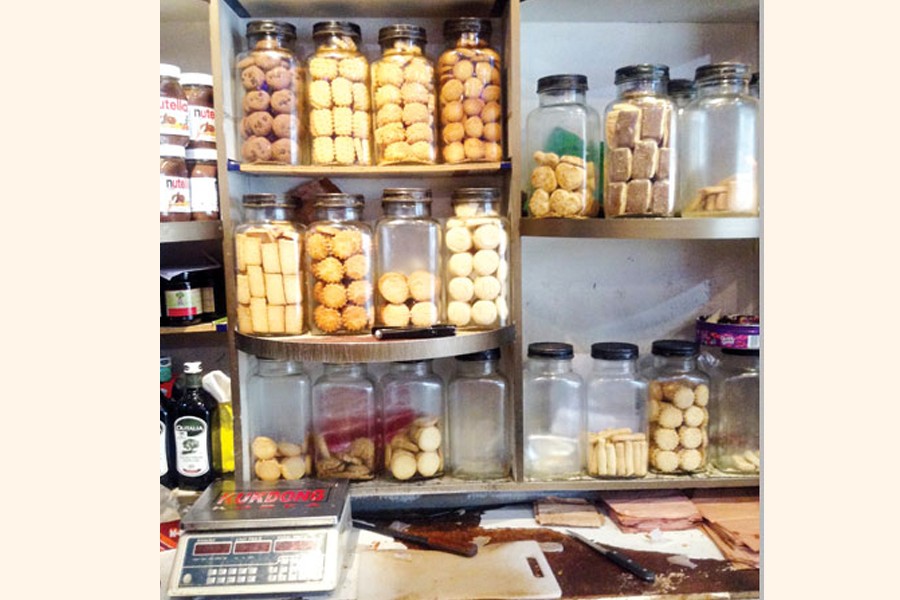
The country's bakery industry has been expanding fast over the last one decade, thanks to the growing demand for bakery products in urban areas, sector insiders said.
According to them, the industry has witnessed a 15 per cent annual growth on an average since 2008 when its market size was only Tk 15-20 billion. The present market size is estimated to be Tk 60 billion.
Presently, as many as 100 auto and semi-auto biscuit factories are now operating in the country while over 5,000 bakers are churning out different types of bakery items manually, they said.
Earlier, the market was largely dominated by small bakeries. But considering the growing demand for bakery products, some medium and big companies and entrepreneurs have made investments in the sector and started using modern technology to produce bakery items like bread, cakes and cookies.
"Just a decade ago, only a few companies were engaged in making biscuits, but now a good number of enterprises have entered the bakery business and some others are in the pipeline," said Md Shafiqur Rahman Bhuiyan, president of Bangladesh Auto Biscuit and Bread Manufacturers Association (BABBMA).
The industry now holds a market share of about Tk 60 billion (Tk 6,000 crore), and over 1.0 million people are working in both auto and semi-auto biscuit factories, he said.
Local biscuit producers are also exporting their products to around 114 countries, including India, Saudi Arabia, Australia, Malaysia and some African and European countries. Exports of biscuits fetch about Tk 1.5 billion every year, said the association president.
Kafil Uddin, general manager of Banoful and Co Ltd., said, "Our business is stable, but we need modern technology and machinery to improve the quality of our biscuits in order to compete with imported foreign brands in the country and expand the export destinations."
The biscuit market is growing in the country mainly because of high demand for ready-to-eat food, he said, adding: "The import of biscuits has also been on the decline."
The government took up a project in 2000 to provide schoolchildren with biscuits which created an opportunity for the local biscuit industry, manufacturers said.
Lowering interest rate, setting up more research labs, improving product quality and ensuring easy access to loan for buying automated machines could boost the sector's growth by 2025, said BABBMA president Shafiqur Rahman.
Industry insiders said they have to import 80 per cent of wheat, the main ingredient of biscuit and cake, although local wheat is far better in quality than the imported one.
Echoing similar views, Shafiqur Rahman said, "If the country could meet the demand for wheat, the quality of products would be improved and the production cost would come down." Local manufacturers have also brought sugar-free and diet biscuits to market for health-conscious people. Such biscuits have been gaining ground, which saw a 20 per cent annual growth, said the BABBMA president.
However, the small bakeries that produce food items manually have been facing tough challenges for the last two years.
Rezaul Haque Reza, secretary of Bangladesh Bread, Biscuits O Confectionery Prostutkarok Samity, which represents small bakers, said they were facing tough competition from automatic biscuit industries. "Our consumers mostly belong to low-income people. It has now become difficult for us to make profit. As a result, a large number of bakery workers are now passing through financial hardship."
nsrafsanju@gmail.com