
Bangladesh may bank on Chinese New Year bonanza
Jasim Uddin Haroon | Thursday, 27 November 2014
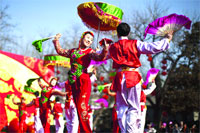
Few Bangladeshis are aware much of the Chinese New Year (CNY), especially its link with Bangladeshi trades. The CNY is a lunar year the next celebration of which takes place on February 19 next. Only Bangladesh's businesses involving export, import and shipping trades are somewhat aware of the business bonanza it unleashes.
Its speciality is that this national day of festivity of China affects the world economy, including Bangladesh, by way of business loss or benefit.
Most Chinese people travel home to visit their families to celebrate and welcome the New Year. This means that hundreds of thousands of factories, in the world's workshop, that make everything--from toys to television--remain shut for at least 15 days straight.
It is important to understand that, for many, especially migrant workers, the Chinese New Year is the only time out of the year they can spend time with their families and so employees flock back to their hometowns for the holidaying.
An interesting feature of the CNY is that the factories never know when, or if, their labourers will return. Such dilemmas often cause further delays in resuming production.
In order to give employees time to return home, most Chinese companies close one to two weeks ahead of the actual date for the annual vacation.
In addition to closing early, they often remain closed for an additional two weeks after the specific CNY date. Even after they open, factories rarely have enough employees back in time to produce at full capacity.
Sometimes, factories resume production with as much as two-thirds of the workforce still absent from work. Depending on the labour market, some of those employees may never return to their former job.
Bangladesh is where the effects are felt most strongly as China is the largest import destination for Bangladesh. It depends on China for raw materials for its industrial consumption. Bangladesh also imports all types of finished products from China.
Production units closed in China means there is gap between demand and supply. Chinese firms produce much ahead of the CNY to feed the nation. There are some products which China does not produce adequately to cope with soaring demand during the festival.
The Chinese spend much of their earnings on the occasion of the biggest festival. Consumption in the world's biggest population grows sharply during the carnival.
It is believed that Chinese consumers spend over US$86 billion from lunar New Year eve until the end of the Chinese New Year.
Sales of food and beverages increase sharply while gold, silver and jewellery industry sees a robust growth during the time. Spending on luxury hotels and high-end food and drinks sees a quantum jump during the shutdowns.
Bangladesh and many other countries take the opportunities to export their products to cater the Chinese demands.
Rise in the demands leads to hike in the prices. So export to China on the occasion of CNY gives good financial dividends to the exporters from other countries, including Bangladesh.
Chinese buyers snap up in Bangladesh to import silver pomprets and fishes, mainly marine fishes, this time. The prices of sea fishes go up in Bangladesh. Many frozen food exporters wait and preserve their catches for the day.
Demand for silver pomprets is high to the Chinese people and it usually remains on top of menus during festival.
Jute products are also very popular to the Chinese people. Local jute product manufacturers usually take the advantages. But, local manufacturers do not take much benefits of it as India does.
Bangladesh does not gain much due to its poor campaign and bargaining power.
Statistics of bicycle export to China are an astonishing matter to many. China is the leader of manufacturing bicycle and exporting it to the rest of the world. For this reason, many do not believe that Bangladesh can export bicycle to the mass manufacturer.
But, this happens. According to many, it is either due to the demand during the festivals or China imports some parts for assembling for its exports before or after the festivals.
Demand for apparel products also soars during the biggest Chinese festival. Many Bangladeshi clothing manufacturers take usually the opportunity. Bangladesh has duty advantages in China. Apparel retailers also see significant increase in sales volume, ranging from 6.0 per cent to 8.0 per cent year-on-year increases. The rise is for clothing and footwear respectively.
But the CNY affects almost the world over. The countries that do not officially celebrate the lunar New Year, such as Bangladesh, India and Malaysia, are also impacted by this festival.
There are many manufacturing and service-oriented companies owned by Chinese people. The firms are 100-percent-owned and joint-venture companies in export processing zones (EPZs) or outside the EPZs.
During the period, they do not work and take long leave for at least two weeks. They do not bother as to whether they lose or gain from the vacation. The migrant Chinese workers travel home for the holiday.
Local factories face problems in Bangladesh as the Chinese are least bothered about production, let alone profit or loss.
This long shut, again, creates problems for different industries around the world, including Bangladesh. Export and import face problems as the shipping business suffers much.
China became biggest trading nation, surpassing the United States of America (USA), in 2013. Shipping giants largely depend on China as they carry goods to and from China. This affects the shipping business globally.
This also affects other nations as the movement of shipments become thin before the CNY. The shipping players adjust the CNY very carefully.
Local exporters and importers send their cargoes much earlier to avoid the difficulties. And if they fail to do so, they suffer much and, in most of the cases, they have to depend on air shipment.
Shipping personnel plan and coordinate efficiently to ensure that supply chain continues to run smoothly before the Chinese New Year.
However, the CNY is a very old tradition in the world. Although it affects many industries and trades in China and beyond, the world community is also accustomed to the practices for years. They also welcome the CNY --- Happy Chinese New year 2015!!!.
The writer is Special Correspondent at the FE. He can be reached at: jasimharoon@yahoo.com