
BD declares 15-point Indo-Pacific agenda
IPO seen as lookalike to US-led Indo-Pacific Strategy
FE REPORT | Tuesday, 25 April 2023
Bangladesh Monday announced a 15-point Indo-Pacific Outlook (IPO) in what is seen by many as a significant geopolitical move akin to the US- led Indo-Pacific Strategy or IPS.
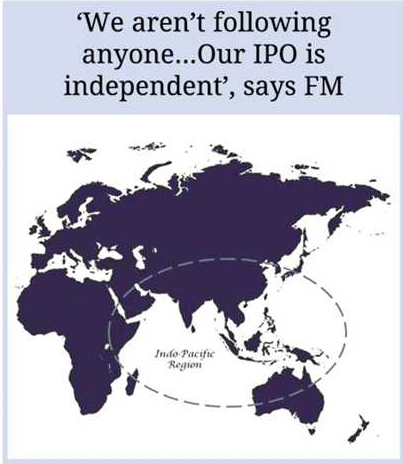
However, talking to The Financial Express after the agenda was rolled out, Foreign Minister Dr AK Abdul Momen elucidated an independent stance of Dhaka on pursuing the IPO for shared socioeconomic advances of the nations in the region.
“We are not following anyone. Our IPO is independent,” he said to make Dhaka’s position clear, as there are views in diplomatic circles that the IPS has a defence connotation like ‘containment’ of the emerging superpower like China.
State Minister for Foreign Affairs M Shahriar Alam read out the IPO statement at a briefing at the foreign ministry in presence of the Foreign Minister, Dr Abdul Momen.
Most of the US allies in the region, including Japan, Australia and India, have already declared their own Indo-Pacific policy agenda, and Bangladesh has long been wooed to join in the conceptual platform.
“Being a littoral State of the Bay of Bengal, Bangladesh considers the stability and prosperity in the Indo-Pacific to be a crucial factor in realizing her “Vision 2041’, i.e., building a modern, knowledge-based developed country by 2041,” the introduction of the IPO reads.
Dhaka thinks the Indo-Pacific area’s collective share in global GDP, preponderance in international trade, enhanced climate action and growing technological dynamism can be key determinants for ensuring Bangladesh’s long-term resilience and prosperity.
“Bangladesh, therefore, envisions a free, open, peaceful, secure, and inclusive Indo-Pacific for the shared prosperity for all,” the state minister quoted the IPO as saying.
According to the text four guiding policies determine the Bangladesh IPO.
The foremost one of the guidelines is Father of the Nation Bangabandhu Sheikh Mujibur Rahman’s foreign-policy dictum ‘Friendship to all, malice to none’.
Second, constitutional mandate on the conduct of international relations based on the principles of respect for national sovereignty and equality, political independence, non-interference in internal affairs, peaceful settlement of international disputes, as well as respect for international laws and the principles enunciated in the United Nations Charter, and striving for renunciation of the use of force in international relations and for general and complete disarmament.
The third one is adherence to the relevant UN treaties and international conventions, as applicable, including the 1982 UN Convention on the Law of the Sea (UNCLOS).
In the fourth place is constructive regional and international cooperation for sustainable development, international peace and security, humanitarian action, and fundamental rights and freedoms.
Consistent with the above-mentioned principles, the following objectives will guide Bangladesh’s Indo-Pacific outlook and engagements, the minister said.
The 15 objectives are: 1. Strengthen mutual trust and respect, forge partnerships and cooperation, and promote dialogue and understanding with the aim of ensuring peace, prosperity, security and stability for all in the Indo-Pacific.
2. Strengthen existing mechanisms on maritime safety and security in the Indo-Pacific, including response to emergencies at sea and conduct of search & rescue, and uphold the exercise of freedom of navigation & over-flight, in accordance with international law and relevant international conventions, including UNCLOS, 1982.
3. Maintain meaningful and value-driven contribution to international non-proliferation, peacekeeping, peacebuilding and counterterrorism efforts, including with partners in the Indo-Pacific.
4. Support regional and international efforts towards combating transnational organized crimes in the Indo-Pacific through both normative and practical actions.
5. Expand global lead on the flagship agenda of a ‘culture of peace’, enhance focus on the ‘women, peace and security’ agenda, promote interfaith harmony and work towards building peaceful, just and inclusive societies in the Indo-Pacific.
6. Promote open, transparent, rules-based multilateral systems that enable equitable and sustainable development in the Indo-Pacific and beyond through inclusive economic growth, right to development and shared prosperity for all.
7. Enhance physical, institutional, energy, digital and human connectivity, facilitate movement of goods, services, capital, and people in a systematic manner, and promote technology transfer, access to innovations and responsible behavior in open and secure cyberspace and outer space.
8. Leverage the domestic agriculture, manufacturing and services sectors towards building resilient regional and global value chains to better manage future crisis and disruptions and to promote unimpeded and free flow of commerce in the Indo-Pacific.
9. Promote conservation, sustainable use and management of oceans, seas, and marine resources in the Indo-Pacific in pursuance of SDG-14 and other relevant internationally agreed development commitments.
10. Engage proactively in promoting food security, water solidarity, and disaster-risk reduction in the Indo-Pacific, including through disseminating home-grown good practices.
11. Continue tangible work towards addressing the challenges of climate change, biodiversity loss, marine pollution, and other significant and harmful impacts on the environment in line with relevant international conventions and commitments.
12. Foster cooperation among Indo-Pacific countries to ensure energy security for all, including through investment and technology transfer on renewable energy.
13. Work towards developing coordinated response to future pandemics and ensuring health security, including through access for all to global public goods like vaccines, diagnostics and other treatments.
14. Collaboration with sub-regional partners and relevant organizations towards bolstering regional cooperation and enhancing mutually beneficial complementarities.
15. Strengthen collaboration and cooperation in science, technology, research and innovation for shared benefits of all, in keeping with the vision of ‘Smart Bangladesh’.
mirmostafiz@yahoo.com