
BD produces 192m kg plastic sachet waste annually: Study
Yasir Wardad | Sunday, 3 July 2022
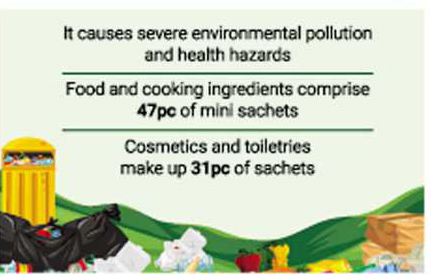
Bangladesh generates 192.4 million kilograms of plastic sachet waste annually, causing severe environmental pollution and health hazards, a latest study shows.
The study titled "Plastic sachet: small packet with huge environmental destruction" also said food and cooking ingredients comprise 47 per cent and cosmetic and toiletries 31 per cent of total sachets or mini pack waste.
The findings were revealed at a media roundtable and report launching event organised by Environment and Social Development Organisation (ESDO) at its office in the city on Saturday.
The study was conducted from June, 2021 to May, 2022 in Dhaka, Rangpur and Chattogram divisions where 2,375 consumers were interviewed.
According to the study, sachets from food items consist 40 per cent, cooking ingredients 7 per cent, cosmetics 24 per cent, toiletries 7.0 per cent and medicines 8.0 per cent.
Of the used mini packs, shampoo usage was found the highest as 69 per cent of the respondents said they buy shampoo sachets regularly.
Oral saline, tomato sauce, cooking ingredients, instant coffee packs, drinking powder, toothpaste, biscuits and cakes are other sachets found used hugely by the consumers, said the study.
According to the study, the country also produces 1.06 billion kg single-use plastic annually.
Chairperson of ESDO Syed Margub Murshed said, "Plastic is a by-product of petroleum which will not be in use when the country would shift to renewable energy. But its harmful impact will remain in the environment for thousands of years."
He said neighbouring India banned plastic sachets from Friday (July 1). "Our government should also take the matter into consideration due to its disastrous impact."
ESDO secretary general Dr Shahriar Hossain said plastic mini pack is small but its harmful impacts are severe as those are neither recyclable nor biodegradable.
And it is multilayer (having 10 to 20 layers) which means contain many types of heavy metals including chromium, cadmium, led etc while adhesive is also being used.
Sunlight's reactions to those chemical could cause harm to both the ecology and the human body, he said, adding that of the total plastic waste, multilayer packaging comprises 20 per cent.
Mini plastic packs are above 10 per cent of the multilayer packaging, he said.
"It is a slow-poisoning process as we are consuming biscuits from the sachets which generating micro or nano-plastics in billions which are entering into the human body directly," he said.
The sachets are also mixing with the environment and polluting soil, water and air. Chemicals on the multi-layer mini packs could harm lungs, cause headache as well as invite reproductive illness and lungs ailments.
However, the study also found that Cox's Bazar alone is producing 69,841 tonnes and Kutupalong 9,073 tonnes of single-use plastics annually.
tonmoy.wardad@gmail.com
"Refill reuse and recycle can accelerate the circular economy. But these mini sachets are not recyclable which is alarming," Shahriar added.
ESDO executive director Siddika Sultana said the government should promote affordable alternatives to plastic sachets as well as implement a legal framework.
The UN Environmental Assembly (UNEA 5.2) has already decided to form an intergovernmental committee to discuss and finalise "the Legally Binding Plastics Convention" by 2024, she added.
She said 175 countries including Bangladesh have so far agreed to this global plastics agreement. "So, we should prepare ourselves to take steps to ban the use of disposable plastic products across the country for the environment and the human health."
ESDO's technical advisor Md Mokhlesur Rahman said people largely depend on mini packs. "So, more awareness needs to be created among the mass people to stop use of mini packets. The producers also need to stop producing sachets and should switch to the refill system."
ESDO demanded imposition of a ban on plastic sachet use.
It also recommended establishing refillable system, imposing high tax on these products, establishment of zero waste shops, alternative packaging with papers, leaves and other environment-friendly packaging systems.
tonmoy.wardad@gmail.com