
\\\'BD rice output to fall by 1.6pc in 2050, 5.05pc in 2100\\\'
Sunday, 31 August 2014
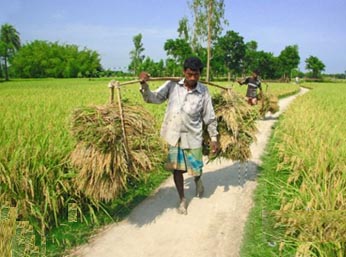
Rice production in Bangladesh will mark a fall by 1.6 per cent in 2050 and 5.05 per cent in 2100 due to climate change, according to a recent report of the Asian Development Bank (ADB). Citing a study of Bangladesh Agriculture University (BAU), the newly released ADB report titled, ‘Assessing the Costs of Climate Change and Adaptation in South Asia’, says the decline in paddy yield due to climate change will bring a negative impact on the country’s real GDP by 0.67pc in 2050 and 0.93pc in 2100. Though paddy production is the most dominant productive activity in Bangladesh, food security is closely linked to rice security given the high prevalence of poverty. Identifying sea level rise and permanent inundation, the vulnerability assessment conducted under this study indicated that 0.9% of Bangladesh dry-land is expected to be permanently inundated. The fall in production in all sectors in the economy due to the land quantity shock will lead to a fall in real GDP. Quoting the BAU study, the report says the real GDP will fall by 0.73% in 2030 and by up to 0.93% in 2100. The ADB report cautions that the negative impacts on the economy due to land quantity shock will also be manifested through a rise in CPI and fall in overall exports and imports, according to a news agency.