
BD's fruit boom & processing revolution
Md Refatul Hossain | Tuesday, 14 July 2026
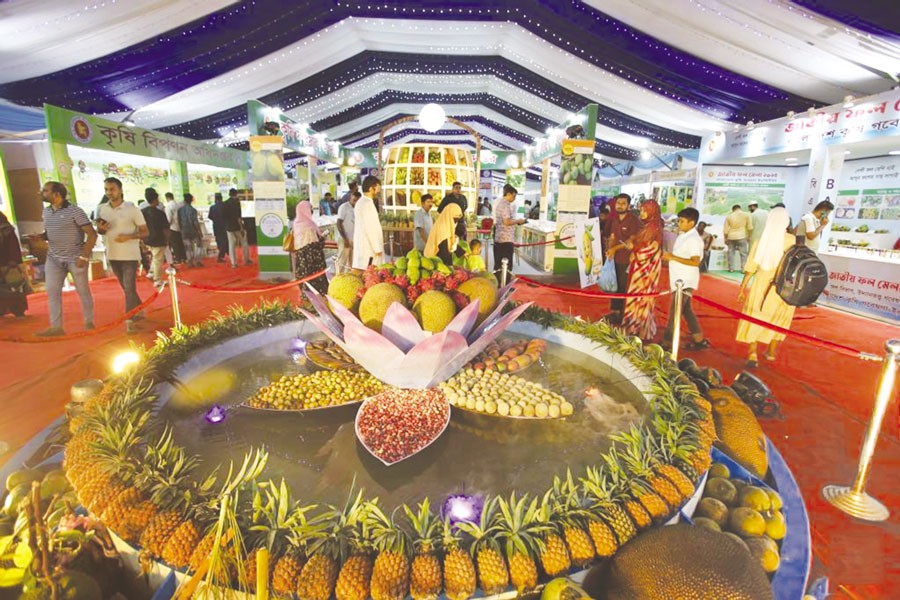
Bangladesh is now witnessing an impressive seasonal fruit boom. Markets across the country are overflowing with jackfruit, mangoes, guavas, pineapples, blackberries, dragon fruits and many other indigenous and exotic varieties. Over the past decade, farmers have steadily diversified their orchards, adopted improved varieties and expanded commercial fruit cultivation. In many areas, traditional crop fields are gradually being transformed into orchards, reflecting changing consumer demand, better profitability and the growing potential of horticultural crops.
This transformation is undoubtedly a positive sign for the country's agriculture. Fruit cultivation not only generates higher incomes than many field crops but also creates employment, improves nutrition and offers significant opportunities for export. Yet this success story carries a troubling contradiction. Every harvesting season, farmers struggle to sell their produce at fair prices while enormous quantities of fruits waste before reaching consumers. The country's production capacity is growing, but its post-harvest management and processing industries are failing to keep pace.
The statistics are alarming. Nearly 45 per cent of Bangladesh's jackfruit production is estimated to be lost before consumption because of inadequate post-harvest handling, limited storage facilities, weak transportation systems and insufficient processing facilities. The country produces around 2.5 million tonnes of mangoes annually, yet almost 29 per cent of the harvest is reportedly lost after picking. Overall, post-harvest losses for fruits are estimated to range between 25 and 40 per cent. These losses represent not only wasted food but also wasted land, water, labour, energy and investment. Such figures reveal that Bangladesh's challenge is no longer one of production. Rather, it is one of building efficient value chains. The country has successfully expanded fruit cultivation, but investments in post-harvest management have lagged far behind. Production has advanced; processing has not. The result is a widening mismatch between supply and market absorption.
This gap is becoming even more significant because Bangladesh's agricultural landscape itself is changing. Across many regions, farmers are gradually replacing low-return field crops with higher-value fruit orchards. This shift promises greater income and better nutrition, but it also demands a completely different support system. Unlike rice or wheat, fruits are highly perishable and require rapid collection, grading, cooling, storage, transportation and processing. Without these supporting industries, higher production simply leads to larger post-harvest losses.
These losses are not simply an agricultural problem; they are an industrial challenge. Bangladesh has become increasingly successful in producing fruits, but it has invested comparatively little in industries that can absorb seasonal surpluses. As a result, markets become oversupplied during peak harvesting periods, prices collapse, and farmers are often forced to sell below production costs or leave fruits unharvested.
The solution, therefore, lies beyond increasing production. The country now needs to unlock the enormous potential of fruit processing and value addition. Fresh fruits have a very limited shelf life, but processed products can be stored for months or even years while creating substantially higher economic value. Mangoes can be transformed into juice, pulp, puree, dried slices, jams and concentrates. Jackfruit can be processed into chips, flour, frozen bulbs, ready-to-cook products and plant-based food ingredients. Pineapples, guavas and dragon fruits similarly offer numerous opportunities for juice, beverages, dehydrated products, confectionery and nutraceutical industries.
Developing these industries would create multiple benefits simultaneously. Farmers would gain reliable markets during harvesting seasons. Food waste would decline substantially. New employment would emerge in rural processing plants, logistics, packaging and marketing. Export earnings would increase through processed food products with longer shelf life and higher value than fresh produce. The country's agro-industrial policy must, therefore, evolve alongside its changing production pattern. Bangladesh now needs a comprehensive strategy that treats fruit processing as an integral component of agricultural development rather than as a separate industrial activity. Seasonal surpluses should be viewed as industrial raw materials instead of market burdens.
However, processing industries alone cannot solve the problem. Bangladesh urgently requires investments in modern cold-chain infrastructure, including pack houses, collection centres, refrigerated transport and cold storage facilities located near major production zones. Better grading, packaging and quality assurance systems would reduce spoilage while improving market competitiveness.
Bangladesh should also encourage private investment in agro-processing through fiscal incentives, concessional financing and public-private partnerships. Small and medium enterprises can play a vital role in establishing decentralised fruit processing facilities close to production areas, reducing transportation costs and preserving freshness. At the same time, contract farming arrangements between processors and growers can provide farmers with assured markets and more stable prices.
Policy incentives will be equally important. Tax concessions, low-interest credit, venture financing and public-private partnerships could encourage entrepreneurs to establish fruit-processing enterprises in rural areas. Small and medium agro-processing industries deserve particular attention, as they can create local employment while providing farmers with reliable markets during peak harvesting seasons.
Export policy should likewise be repositioned. Bangladesh has considerable potential to increase exports of processed fruit products rather than relying predominantly on fresh fruits. Processed products offer longer shelf life, lower transportation risks and higher export value. Achieving this objective, however, will require stronger compliance with international food safety standards, traceability systems and quality certification.
Research institutions and universities also have a critical role to play. Developing affordable preservation technologies, improving post-harvest handling practices and designing innovative value-added products should become national priorities. Extension services must move beyond production advice and equip farmers with knowledge on harvesting, grading, packaging and market standards
The challenge, therefore, is not simply reducing post-harvest losses. It is about creating an integrated fruit economy where production, processing, logistics, finance, marketing and exports function as a single value chain. Such an approach would protect farmers from seasonal price crashes, encourage private investment, generate rural employment and strengthen national food security. Bangladesh has already proved that it can grow fruits in abundance. The next stage of development is to ensure that abundance translates into prosperity. A country that loses nearly one-third of its fruit harvest cannot fully realise the benefits of its agricultural achievements. Every fruit that wastes before reaching the market represents lost income for farmers, lost opportunities for industry and lost value for the economy. The time has come to move beyond celebrating record harvests. National attention must now focus on building the industries, infrastructure and market systems that convert agricultural production into economic value. Henceforth, the country's fruit boom become a genuine driver of rural prosperity, agro-industrial growth and export competitiveness.
Md. Refatul Hossain, former additional director, DAE and senior consultant, agronochain Ltd. refatdae87@gmail.com