
\'Belt and Road\' initiative aids healthy economic globalisation
Liu Junguo, Zhou Hanbo, Xie Yahong, Leng Shumei and Ma Xiaoning | Thursday, 8 June 2017
The China-proposed "Belt and Road" initiative is a great blueprint since it incorporates several billion population under the same framework of win-win development, Shigeo Katsu, president of Nazarbayev University, told the People's Daily in a recent interview.
The scholar made the remarks just before Chinese President Xi Jinping kicked off his state visit to Kazakhstan on Wednesday.
President Xi delivered a speech in the university, proposing to jointly build a Silk Road Economic Belt on September 7, 2013. The Belt and Road construction officially started hereafter.
Katsu, who was also former vice-president of World Bank in charge of European and Central Asian economic affairs, has a deep understanding of global and regional economic development.
He believed the China-proposed Belt and Road initiative is of great significance for global trade liberalisation and economic globalisation, especially against the uprising tide of protectionism.
As a Japanese working in Kazakhstan, Katsu has witnessed the changes brought by the Belt and Road construction on the country over the last three years. He said that the proposal has provided tangible benefits for the country located in the hinderland of the Eurasian continent.
"Kazakhstan has benefited in terms of both transportation and talent attraction," Katsu said, adding that China's increasing direct investment injects new energy to Kazakhstan's economic growth.
"I'm looking forward to China's bigger role in the international community," the president said. The world is facing various challenges including climate change, which calls for joint efforts rather than independent actions, he furthered.
Katsu, also an economist, is optimistic on China's economic development, saying that China has already made progress in its transformation from export-oriented economic growth model to one that is driven by domestic demand. "China's economy is developing on the right track," he added.
China and Kazakhstan will sign agreements on trade, economy and water conservation during Chinese President Xi Jinping's visit to the country, the foreign ministry announced Monday.
The two sides will exchange in-depth views on the bilateral ties, a mutual developmental strategy between the two countries, the construction of the Belt and Road, as well as other regional and international issues of common concern. A joint statement would be released, Li Huilai said.
"Xi's visit to Kazakhstan is another major Chinese diplomatic activity after the Belt and Road forum in Beijing in May," Li Xing, director of the Eurasian Studies Centre at Beijing Normal University, told the Global Times on Monday.
"Xi's visit will continue to promote the construction of the Belt and Road initiative and the strategic link between the initiative and the Eurasian Economic Union," Li Xing said, noting that Kazakhstan is a vital country on the ancient Silk Road and has always been supportive of the initiative.
China hopes all SCO members can reach a consensus on current regional and international issues and work together to sustain regional peace, encourage mutual prosperity as well as promote a fair and reasonable direction for the international order, Li Huilai added.
Li Huilai also announced that the SCO members will sign a treaty against terrorism. India and Pakistan will complete the process of joining the SCO during the summit.
"The SCO used to focus on cooperation against terrorism, but has gradually shifted to economic cooperation under the framework of the Belt and Road initiative," said Wang Dehua, director of the Institute for Southern and Central Asian Studies at the Shanghai Municipal Centre for International Studies.
Cooperation against terrorism still needs to be strengthened among SCO member countries, especially after recent terrorist attacks in London and the Philippines, Wang stressed.
The membership of India and Pakistan will make the SCO the world's largest regional cooperation organisation in terms of population, which will create unprecedented development potential and cooperation, the Xinhua News Agency reported last month.
"The story of friendly exchanges between China and Kazakhstan is a rich mine that should be fully exploited," Zhang Hanhui, Chinese Ambassador to Kazakhstan, told the People's Daily on the eve of Chinese President Xi Jinping's state visit to the Central Asian nation.
In the National Museum of Kazakhstan, one of the landmark buildings in Kazakh capital Astana, many exhibits which were excavated along the ancient Silk Road seem to tell visitors the history of China-Kazakhstan friendship.
Later this year, some cultural relics will be exhibited in Hong Kong, helping Chinese public better understand the important role Kazakhstan has played in the ancient Silk Road, said Zhanara Zharmukhametova, executive head of external affairs department of the museum.
"The Silk Road history has been included in textbooks for 4th graders of primary schools in Kazakhstan," she said with pride.
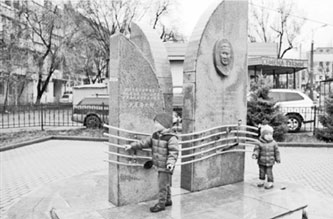
In the 1940s, Xian Xinghai, a renowned Chinese composer, found his way to Almaty and was taken care of by Kazakh composer Bakhitzhan Baykadamov. It was in Almaty that Xian composed many of his famous works.
Courtesy: The People's Daily of China.
newssharing_pd@163.com