
Boiler Act formulated to ensure safety in industries
MONIRA MUNNI | Monday, 9 May 2022
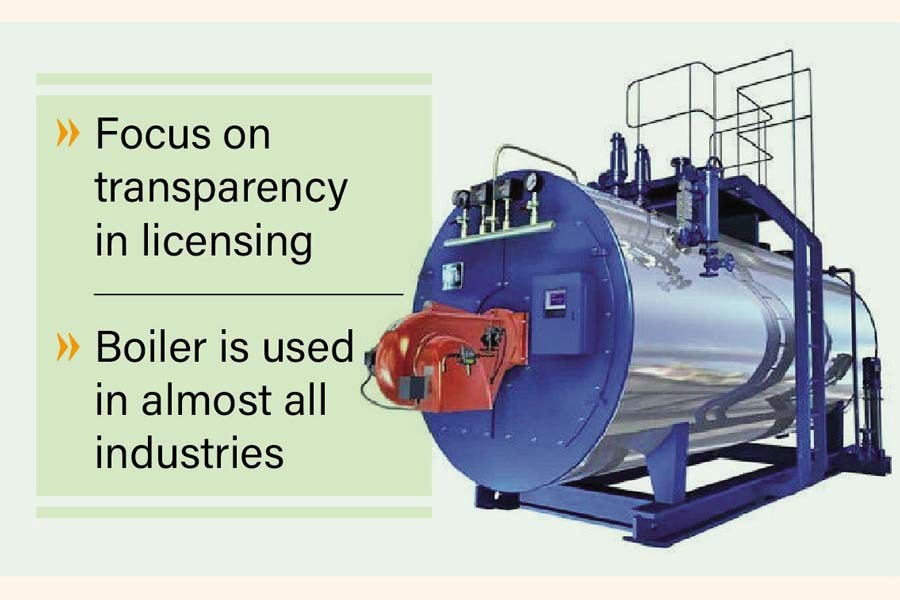
The Boiler Act 2022 has been enacted - scrapping the old law, endorsed in 1923 - to ensure more safety in industrial units.
The new act, approved in the parliament, also makes mandatory boiler operation by the authorised ones having licence for the same.
It has been necessary to repeal the Boilers Act 1923 to enact a time-befitting one to ensure more safety in industrial units for reducing risk of boiler-related accidents in factories, raising awareness about its use, construction of quality boiler, and its export, import and maintenance, according to a gazette notification - issued on April 13 in this regard.
A boiler is a closed vessel, in which generally water is heated and the vaporised fluid is used in various processes or heating applications.
Boiler is used in almost all industries, including textile and ready-made garment (RMG) factories, jute mills, cotton mills, fertiliser factories, paper mills, chemical and pharmaceutical units, and rice mills, said industry insiders.
According to the new act, office of the chief boiler inspectorate will be in the capital city, and the government can set up regional offices across the country.
It also defines the functions of the chief boiler inspector that includes controlling the standard of locally manufactured boilers, verifying the standard of imported ones, and ensuring use of safe and quality boilers, and issuance of licence to operate boilers.
The chief boiler inspector will also prepare the list of boiler producers and maintenance, inspection and welding companies while also maintaining the directory of code and inspection companies and intenders as well as organising trainings for the related people to develop skills.
There will also be a 'boiler board' - incorporating members from the stakeholders concerned - to serve the purposes of the act.
The new act, provided with some conditions, also allows local manufacturing of boiler along with its import and export.
The necessity of boiler inspection emerged in recent years, following one after another accidents in the industrial units, including garment factories, packaging units and rice mills, claiming many lives, the industry insiders also said.
A survey done by Accord - a coalition of western apparel retailers and brands, formed to improve workplace safety in the country's RMG industry after the Rana Plaza building collapse - in 2018 found all 35 of its surveyed boilers defective.
Some 19 of the 35 inspected boilers could not undergo all stages of the inspection, as the boiler equipments in the factories were inadequate or defective, the survey found, revealing a poor status of boilers.
When asked, Khondaker Golam Moazzem, additional research director of the Centre for Policy Dialogue (CPD), said the new act would help modernisation of the boiler sector.
He, however, focused on ensuring transparency and accountability in the whole process of licensing and other activities, saying the boiler inspectorate would have to ensure standard while issuing licences and conducting other promotional activities.
The act mentioned compensation for any accident, but no legal action was made clear against accidents, Mr Moazzem noted.
The CPD and the International Labour Organisation (ILO) previously recommended providing some magistracy power to such authorities, so that they are able not only to impose fine but also to realise the money. But only the boiler inspectorate is authorised to impose financial penalty, he added.
munni_fe@yahoo.com