
Brazil cane crop signaling global sugar deficit
Wednesday, 21 May 2014
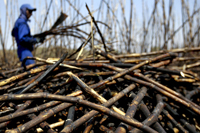
NEW YORK, May 20 (Bloomberg): Brazilian cane-grower Jose Rodolfo Penatti can see evidence from his house window that the world is heading for its first sugar-production deficit in four years.
On the 150 acres his family has farmed in Sao Paulo state since the 1950s, stalks are half the normal height of more than three meters (9.8 feet) and brown rather than green, after a drought from January through March parched the Center South region. "It's the worst scenario I've ever seen," said Penatti, 54, who estimates he'll lose 20 per cent of his harvest.
The smaller crop in Brazil, the largest grower and exporter, will leave global sugar output 900,000 metric tons below demand in the 12 months ending Sept. 30, and the shortfall may be bigger next year, said Bruno Lima, a senior risk-management consultant at FCStone do Brasil. Copersucar SA, a trader, predicts raw-sugar futures will jump 13 per cent by year end to 20 cents a pound. An extended rally may boost costs for buyers including Nestle SA while reviving profit for refiners after four years of surpluses forced dozens to close.
"The deficit has taken the market by surprise," Peter Sorrentino, who helps manage about $3.8 billion at Huntington Asset Advisors in Cincinnati, said in a telephone interview yesterday. "It doesn't take much variation on weather to have significant changes in harvest projections. The market has been down for so long, investors and the industry are also reacting to potential loss in capacity."
Raw sugar has advanced 14 per cent since the end of January to 17.76 cents today on ICE Futures U.S. in New York, outpacing the 5.2 per cent gain in the Standard & Poor's GSCI gauge of 24 commodities. The MSCI All-Country World index of equities rose 5.9 per cent over the same period, while the Bloomberg Treasury Bond Index increased 1.3 per cent.
Brazil, which accounted for 28 per cent of global output last year and 57 per cent of exports, had its driest summer in at least seven decades in the Center South region, damaging tropical crops including sugar cane, coffee and oranges. Arabica-coffee futures surged 66 per cent this year, touching a 26-month high in April, and orange-juice futures rose 12 per cent.