
BRICS shake up global economic architecture
Sunday, 20 July 2014
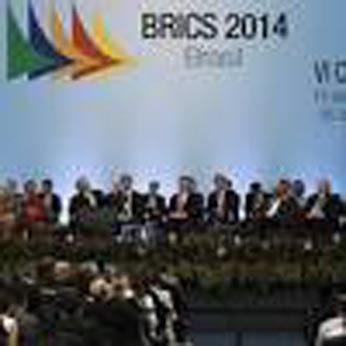
By creating their own multilateral financial institutions, the BRICS emerging-market powers are shaking up global economic governance but remain far from dismantling the post-war system dominated by the West. For the past 70 years, the International Monetary Fund and the World Bank have been the pillars of the world’s economic system, coming to the rescue of countries in trouble and supporting development projects, respectively. But the Bretton Woods institutions are regularly criticised for their inability to reflect the growing and important contributions of the major emerging economies to the global economy. China, the world’s 2nd-largest economy, continues to have just slightly more voting power in the IMF than Italy, about five times smaller. And, since their creation in 1944, the IMF and the WB have only been led by Americans and Europeans. In this context, the launch on Tuesday of a development bank and an emergency reserve fund by the BRICS – Brazil, Russia, India, China and South Africa – appears to be a concrete attempt to address those inequities. The mere creation of the two BRICS institutions sends a strong signal to Western powers, where some doubt the ability of the five powerhouses to surmount their individual needs and ambitions. The launches ‘are significant actions that represent a game changer as they turn statements and rhetoric about cooperation among these countries into reality,’ economic analysts said, according to AFP.