
Budget should focus on jobs, inflation
Dr Debapriya opines
FE Report | Monday, 18 April 2022
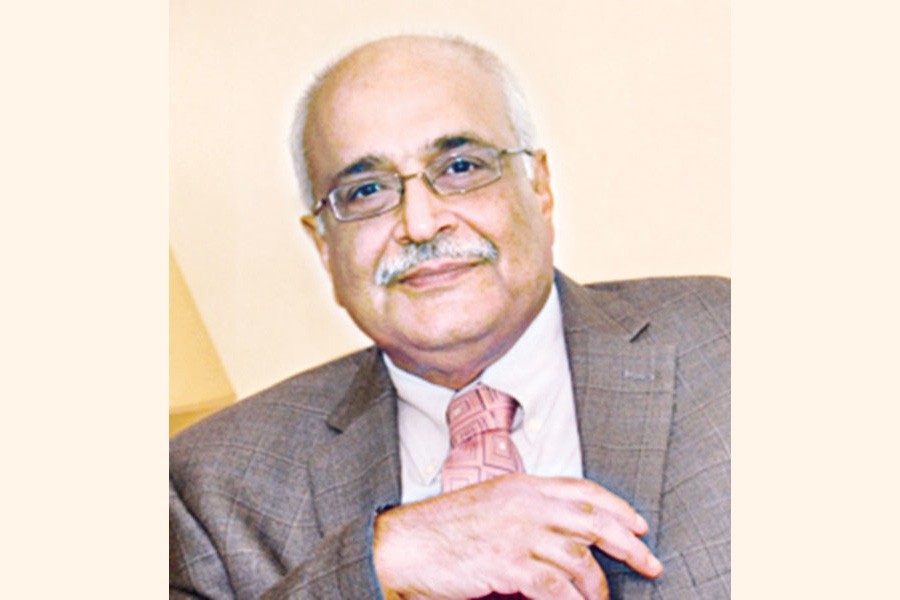
Employment creation should be the prime objective in the upcoming national budget for fiscal year 2022-2023, instead of the GDP (gross domestic product) target, Dr Debapriya Bhattacharya, Distinguished Fellow of the Centre for Policy Dialogue (CPD), said on Sunday.
The noted economist said the government should come out of the traditional practice of budget making to give an exceptional budget, by taking into consideration various factors, like pandemic-induced loss, disruptions to supply chains locally and globally, skyrocketing prices of essentials, inflationary pressure, and the Russia-Ukraine war.
While addressing a virtual dialogue on national budget, hosted by the Citizens’ Platform for SDGs Bangladesh, he said the Covid-19 pandemic outbreak raised the number of unemployed people. It also reduced the income of people, while their expenses were enhanced significantly.
So, the main objective of the budget should be job creation, and the budget should clearly mention how many employments would be generated through private sector and self initiatives.
"Instead of focusing on the GDP target, the main objective should be employment generation. The GDP size keeps rising over the years, but it is also enhancing disparity."
Mr. Bhattacharya, also Convenor of the Citizen's Platform for SDGs, said controlling inflationary pressure should be another main objective of the budget.
Global and national disruptions in the supply chains have caused prices of necessary items to go up, making the daily necessities out of reach of the low and lower-middle income groups.
He noted that spending of the people went up, but their income did not increase accordingly. Rather, their income in many cases declined.
"So, how the government would give some respite to the people through financial assistance, food assistance, and other forms of support, needs to be clarified in the upcoming budget."
The CPD distinguished fellow stated that the general public should have the opportunity to give their feedbacks prior to the actual budget, if a draft of the budget or budget policy is shared (with all).
A targeted expansionary monetary policy is now needed to boost the economy. However, taking cognisance of the current revenue mobilisation and public expenditure situation, he said the goal should be to provide direct financial assistance and food aid to the disadvantaged people in particular.
To this end, the preparation of an inclusive data set for the incentives provided is necessary to ensure accountability, he added.
In the online dialogue - 'Upcoming National Budget 2022-2023: Perspectives of the Disadvantaged Groups' - other discussants highlighted that (recovering from) the losses, caused by the pandemic in the areas of economic activities, education, and health, should be the priority of the upcoming national budget.
To this end, they suggested expanding the ongoing public programmes and introducing new initiatives. It is important that the budget clearly identifies how it would address the needs of the disadvantaged population groups.
Tony Michael Gomes, Director - Technical Programme, Advocacy and Communications, World Vision Bangladesh, said proper analysis of the child budget is needed, as nine ministries are engaged in child protection, and ensuring quality education and nutrition benefits for them.
At least 10 per cent of the budget should be allocated for children in a separate line item at union and upazila levels.
He also stressed that the children, who are more at risk of being dropped out of school, should be provided more fiscal incentives in the next budget.
Khandekar Jahurul Alam, Executive Director of Centre for Services and Information on Disability (CSID), specified that education, health, and employment are the three areas where the persons with disabilities have been most affected.
He informed that more than 40,000 children with disabilities dropped out during the pandemic.
Shakeb Nabi, Country Representative of Cordaid, highlighted that majority of the small and marginalised farmers are in the informal sectors. They are deprived of their rights, and they need to be shifted towards the formal sectors.
While allocating budget, decentralised and community-based agriculture should be on focus along with entire value chain, he added.
Md. Mostofa Ali, Senior Programme Officer of Oxfam Bangladesh, said the agriculture budget should be farmer-friendly and include the farmers.
Professor Robaet Ferdous of Department of Mass Communication and Journalism, University of Dhaka, opined that adopting necessary policy framework plans to ensure free inclusion of the transgender community in the labour market as well as budget allocation for their empowerment and protection is needed.
He added that adequate data regarding the transgender population group in the country is necessary for making useful allocation for them in the budget.
Moderating the event, CPD Joint Director (Dialogue and Outreach) Avra Bhattacharjee said in the light of the recovery from the pandemic, when the aggregate demand requires to be stimulated for economic growth, inclusiveness comes as a big concern.
At this point, the national budget should address the issues along with the government's commitment to meet the Sustainable Development Goals (SDGs), he opined.
jubairfe1980@gmail.com