
Budgetary allocations for Char development - an overview
Zahid Rahman and Nahid Sharmin Juthi | Wednesday, 26 August 2015
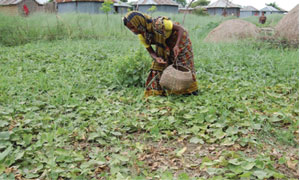
In the budget of the fiscal year 2014-2015 the government allocated Tk 50 million (Tk 50 crore) for development of the Chars (river-shoals), thus improving life of the char-dwellers. But the government has yet to spend any amount of the allocated money for Char development. In the budget it was mentioned that the allocated money would be spent in the communication and other sectors for uplift of the Char people.
In the current fiscal year of 2015-2016, an amount of Tk 500 million (Tk 50 crore) has again been allocated for development of the Char people. The finance minister said in his budget speech, "we are proposing the special allocation of Tk 500 million (Tk 50 crore) in spite of the unspent money which was allocated in the last fiscal year of 2014-15."
It is obviously reassuring no note that Tk 500 million has been allocated again for the development and advancement of the people living on our marginalised Chars. In the past, no budgetary allocations were made for the development of these lands. These areas remained completely neglected, detached from almost all socio-economic amenities.
But the question has been raised as to what the obstacles to utilising the allocation for the Char development are. What is the purpose of this allocation? We have observed over the last few years that there is no particular target or planning in order to improve the quality of life of the Char people. In spite of allocations in the budget, the money cannot be spent.
Over five to six million people are now living in the country's Char areas, but there have been no adequate initiatives on the part of the government to improve their lot. Whatever is being done for the Char-dwellers is done by development organisations financed by donor agencies. Separate budgetary allocations for the Char people and their proper use have long been a strong demand of these organisations. But in reality, despite development-related allocations in the national budget for Chars, the impact has not been felt in the target areas. In the three fiscal years of 2011-12, 2012-13 and 2013-14 there were no separate budgetary allocations for the development of the extreme poor Char-dwellers. The Char areas were completely neglected at that time. People living there were virtually hapless victims of discrimination, apart from various forms of miseries that plagued their lives. But in the fiscal years of 2009-2010 and 2010-2011, there were separate allocations for Char-lands. The first time a separate allocation for the development of Char areas was made in fiscal year (FY) 2009-2010. The allocated amount was about Taka 1.82 billion (181 core and 75 lakh). In the following year (FY 2010-2011), the proposed amount was about Taka 35.48 billion (3,546 crore and 68 lakh). It was mentioned in the Poverty Reduction and Safety Net section under Clause-200 of the third chapter in the budget speech of the Finance Minister in FY 2010-2011: "At the same time, under ADP in the next fiscal, I propose to allocate Tk 1.40 billion (140 crore) for Rural Roads Maintenance Project creating employment for the poor labourers, about Taka 780 million (77.69 crore) for protection of government assets and Rural Employment Project, about Taka 680 million (68.45 crore) for creating employment for the hardcore poor of Monga areas and about 35 billion (Tk 3,546.68 crore) for raising the living standard, together with employment, of the people living in Char areas and other poverty reduction projects." After the budgetary allocations, the Char people were hoping for better days. But they had to wait patiently. The Char-dwellers saw a ray of hope as the government took initiatives to stand by them. In the following fiscal year, the allocated money was more than expectation. From then on, the expectation of the people kept growing compared. But to the disappointment of the Char inhabitants, the budgetary funds remained idle. No remarkable development programmes were undertaken for the Char people that were declared in the budgets of the fiscal years of 2009-2010 and 2010-2011. As the allocations are not directly released by any ministry or department, no detailed information about the allocations and their utilisation can be found. However, no allocated money has been spent for the development of the Char people since FY 2009-2010.
The Char-lands could be considered among the most neglected areas in the country. As has been seen over the decades, no tangible development work took place in the Char areas, usually located in the remote areas in mid-rivers or on extended river banks. The people of the Chars have for ages been passing through different socio-economic problems, besides the periodic onslaught of natural disasters. Most of the far-away Char-dwellers are deprived of their basic rights, enshrined in the Constitution and enjoyed by the people on the mainland. These people lag behind others in food, security, nutrition and education.
Against this backdrop, a number of organisations financed by donors are found engaged in project-specific development works on different Chars. The works are focused on eradicating poverty, increasing empowerment, increasing social awareness, asset generation and bringing government services to the Char-dwellers. With the assistance of donors, many development agencies are found working at Shibganj in Chapai Nawabganj district, Bagha and Godagari in Rajshahi district, Bera in Pabna district, Hatibandha, Kaliganj and Aditmari in Lalmonirhat district. Although the projects have lofty goals and the people concerned are sincere in their work, these are constrained by inadequate resources.
In order to bring about a positive change in the lives of the Char people, mere budgetary allocations are not enough. Those ought to be followed by timely utilisation. Modern technologies and inputs should be introduced in agriculture, health and cattle rearing sectors. It is not too difficult a task to reduce poverty in Chars by empowering the womenfolk. Besides, maximum utilisation of lands for agriculture will be highly effective in ensuring food security. Moreover, if the manpower found in the Char areas could be made a skilled workforce with training, it will bring radical improvement of life there.
Zahid Rahman is member secretary, National Char Alliance, and Nahid Sharmin Juthi is a researcher.
zahidrahman67@gmail.com