
Building a modern, pluralistic, globally connected BD
Lessons from Asia and a path forward
Julian A. Weber | Monday, 8 December 2025
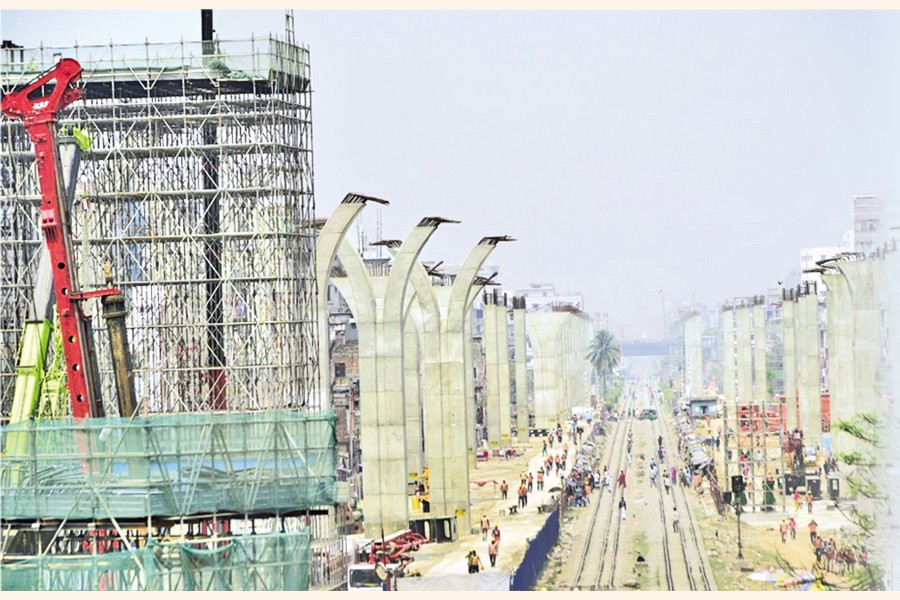
6.jpg) Bangladesh is at a critical turning point of either becoming a modern, high-growth nation attracting foreign capital or risking stagnation by falling back into old collectivist patterns of paralysing self-pity. The formula for success is simple yet challenging: practical pluralism paired with diversified investment. This means upholding rule of law with rapid court decisions, stable regulators and open markets for all partners, local and global. The alternative? Congested cities, unfinished infrastructure, collectivist monoculture and an unbreakable middle-income ceiling. Asia offers lessons: Seoul, Taipei and Jakarta show how disciplined pluralism and clear rules attract ambition; Sri Lanka's rapid recovery demonstrates how infrastructure can catapult countries forward. To seize this window of opportunity, Bangladesh must now embrace growth by showing openness to the world and embrace country-agnostic capital.
Bangladesh is at a critical turning point of either becoming a modern, high-growth nation attracting foreign capital or risking stagnation by falling back into old collectivist patterns of paralysing self-pity. The formula for success is simple yet challenging: practical pluralism paired with diversified investment. This means upholding rule of law with rapid court decisions, stable regulators and open markets for all partners, local and global. The alternative? Congested cities, unfinished infrastructure, collectivist monoculture and an unbreakable middle-income ceiling. Asia offers lessons: Seoul, Taipei and Jakarta show how disciplined pluralism and clear rules attract ambition; Sri Lanka's rapid recovery demonstrates how infrastructure can catapult countries forward. To seize this window of opportunity, Bangladesh must now embrace growth by showing openness to the world and embrace country-agnostic capital.
Pluralism is not a Western ideal; it is a natural growth engine zeroing in on David Ricardo's principle of comparative advantage. When laws apply equally, investors trust contracts and citizens believe in fair competition, economies accelerate. Bangladesh's next phase of modernisation depends on this: strengthening pluralist governance whilst diversifying investment partners and departing from collectivist monoculture. The country's youth, density and digital ambition can translate into global competitiveness only if rule of law, policy stability and market openness become its true infrastructure. The question is, what foundation must Bangladesh lay to make this transformation durable?
Successful modern economies require three governance pillars. The first is rule of law, ensuring that legal frameworks are consistently applied and respected. The second is predictable policy, providing stability and clarity for long-term planning. The third is open, competitive markets that allow fair participation for all actors. Together they build credibility, the currency of global investment. Investors tolerate risk but not arbitrariness. Entrepreneurs take bets when policy signals are steady. Bangladesh's growth narrative will only play out when these pillars move from aspiration to architecture, forming the backbone of a truly pluralist, not socialist economy.
Before any growth plan can succeed, Bangladesh must define what pluralism truly means in its own context, beyond political babble or imported theory.
Political pluralism means real competition amongst parties, empowered local governments and inclusive representation across regions. Economic pluralism means clear property rights, fair competition and equal treatment for both domestic and foreign firms. Civic pluralism ensures that people can organise, speak and believe freely, building trust that drives innovation and cooperation. Together these elements form the ecosystem where growth becomes not just faster, but fairer and more resilient.
Pluralism is the invisible infrastructure of economic confidence. When courts deliver timely justice, contracts hold and media can question power, and capital flows more freely. Investors favour societies that embrace freedom with legal predictability, where no single group monopolises thought and opportunity. In these systems, innovation thrives because ideas compete on merit, not privilege, and not on rhetoric. For Bangladesh, embedding pluralism is therefore not a moral choice but an economic strategy to unlock potential and create long-term competitiveness.
Asian lessons, not European templates
Bangladesh's policymakers often look westward for inspiration, yet the most relevant lessons lie closer to home. Countries such as South Korea, Taiwan and Indonesia built their progress on disciplined pluralism, efficient governance and market reforms suited to their demographics. They focused on productivity, made imports cheap and diversified exports instead of replicating welfare-heavy, neo-socialist models which wealthy economies can afford. By studying Asia's success stories, Bangladesh can craft its own path, one that fits its youth-driven, high-density and opportunity-rich society.
Singapore and Malaysia show that pluralism need not mean disorder. Both underpinned openness with stability and coherence, maintaining a strong institutional platform allowing private enterprise and foreign investment to flourish. Their success came from clear rules, efficient regulation and merit-based governance rather than ideological rigidity. For Bangladesh, this offers a practical model, proving that political stability and pluralist economics build a virtuous cycle.
India's experience highlights the challenge of emancipating from collectivism. Its federalism and early market reforms showed how scale and competition can drive innovation and attract global investment. Yet remnants of Nehruvian socialism, such as state control, price regulation and protectionist instincts, continue to restrain its potential. The state still tries to steer where it should get out of the way for people and businesses. For Bangladesh, the lesson is to pursue empowerment and free markets whilst breaking from the collectivist reflex that treats private enterprise as something to be managed rather than trusted.
Sri Lanka's resurgence shows how bold infrastructure investment can transform an economy. Projects like Colombo Port City, Hambantota Port and expressways are now driving growth, trade, and tourism. Debt terms should be sustainable, but what matters most is that the infrastructure gets built. Ports and highways last for generations, creating assets that outlive financing cycles. For Bangladesh, the lesson is simple: build, build, build and let durable infrastructure anchor future prosperity.
Bangladesh's strategic edge
Bangladesh holds advantages few developing nations can match. Its young population, expanding export base and position along the Bay of Bengal give it access to both South Asian and South East Asian markets. What holds it back are not its fundamentals but its frictions: corruption, land disputes, unreliable electricity, dangerous and congested roads, administrative bottlenecks and finally accumulating taxes along any value chain slowing execution by creating an infinite inflation spiral. With credible governance, low taxes and clear rules, Bangladesh could convert these natural strengths into a lasting edge as the region's most dynamic hub for manufacturing, services, and technology.
Bangladesh's growth is constrained less by ambition than by administration. Land titling remains opaque, contracts take too long to enforce, taxes and logistics costs erode export competitiveness. Power supply is uneven and urban congestion drains productivity. These are not structural curses but ideological management failures that policy discipline can fix. Streamlined regulation, transparent land governance and reliable infrastructure would release enormous private energy already present in the economy. Removing these frictions is the quickest path to converting lethargy into performance.
Capital seeks clarity, not charity
There is a difference between money and capital. Capital is money allocated by investors for long-term returns. It advances economies. Investments from non-owners like NGOs and global institutions are not true capital. They feel good when they hit bank accounts but fail to generate long-term returns and don't build meaningful businesses or jobs. Real capital is developed land, factories, roads, malls, telecommunication; things people pay for long term.
Real capital investors commit when they trust that contracts will be honoured regardless of who governs. Pluralism provides that assurance. It builds credibility through competition, accountability, and open discourse. For Bangladesh, embedding pluralist norms is the best guarantee of long-term investor confidence.
Bangladesh's progress will come from freeing private capital to build, own and compete for the wallets of citizens, not from government spending. Public-private partnerships can be transitional tools, not permanent fixtures; they invite cronyism and abuse. The state's task is to ensure clear property rights, swift contract enforcement, and as low as possible taxation so markets can operate without fear or favouritism.
Urban projects like Purbachal, Jolshiri and the American City concept can demonstrate what modern, investment-ready Bangladesh looks like. Each should serve as a showcase for transparent governance, efficient permitting and privately financed infrastructure. Success in these hubs would prove that Bangladesh can plan, build and manage cities that attract global business without excessive bureaucracy. Once operational, these models can be replicated in Chattogram, Sylhet, Khulna and Rajshahi, creating a network of competitive urban economies that drive national growth.
Courts and regulators are as critical to growth as roads and ports. Investors value predictable rules more than subsidies, and entrepreneurs thrive when disputes are resolved quickly. Bangladesh should modernise its commercial courts, expand arbitration and mediation and remove overlapping regulations that breed fraud and confusion. Legal reliability attracts long-term capital, whilst arbitrary enforcement drives it away. Building trust in institutions is therefore the most powerful and least costly form of infrastructure the country can create.
Bangladesh must invest in the systems that sustain competitiveness, not just those that show progress on paper. Efficient logistics, reliable energy and high-speed connectivity are the backbone of modern trade. Education must shift towards technical and vocational excellence, linking universities with industry to build a workforce ready for automation and AI.
Real inclusion grows from opportunity, not from state planning. When private enterprise expands, skill development and better practices follow as natural by-products of competition. In a developing country, progress must be practical, not overburdened by imported ideals or excessive regulation. Private organisations, driven by efficiency and reputation, will address social and workplace standards in ways that reflect ground realities.
Bangladesh's challenge is not vision but delivery. Projects stall in permits, courts and committees that add no value. Discipline in follow-through, not new policy statements, will determine whether Bangladesh's ambitions turn into tangible outcomes.
Progress must be measured by facts, not declarations. Bangladesh should publish clear indicators on investment flows, project completion times, contract enforcement and logistics performance. Public scorecards create pressure for improvement and signal reliability to investors. Transparency is cheaper than subsidies and more persuasive than speeches. When citizens and businesses can see where progress is real and where it is not, accountability becomes self-sustaining and reform gains its own momentum.
Bangladesh stands ready to define its own model of modernity. By trusting private enterprise, protecting fair competition and welcoming global capital without bias, the country can rise beyond the middle-income trap. Success will not come from copying others but from mastering its own strengths. If Bangladesh commits to pluralism, discipline and freedom of enterprise, it can become the most dynamic example of practical modernisation in Asia.
The writer is the founder and chief executive of SELISE Group, a global technology and investment firm. julian.weber@selisegroup.com