
OPINION
Can hilsa be saved?
Syed Fattahul Alim | Tuesday, 23 June 2026
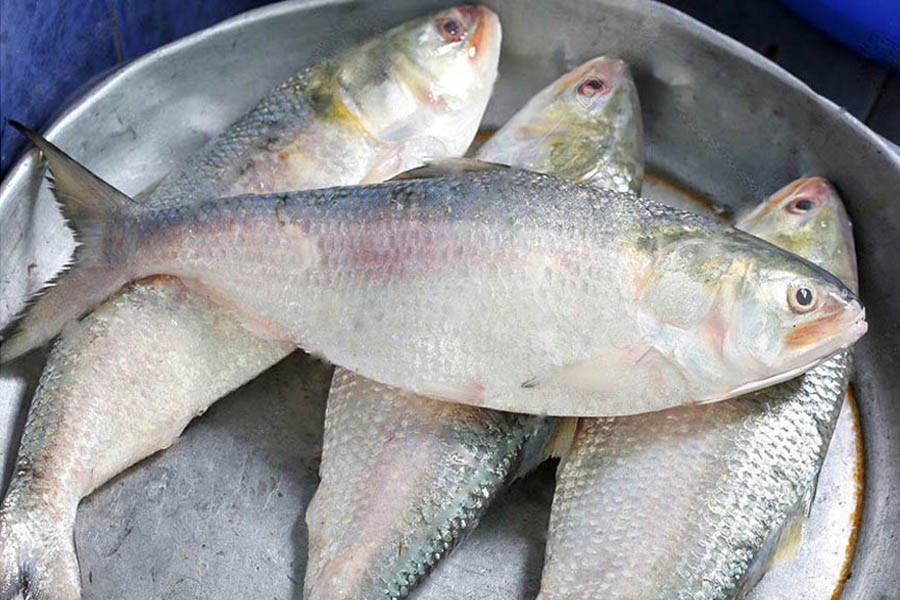
On 20 (Saturday), a fisherman caught a large hilsa (fish) weighing 2.40 kg in his net from the River Meghna. When the fisherman, Kamal Majhi, brought the fish to the Ramnewaz fish landing centre (Matsya Ghat) in Manpura upazila of Bhola district, it was big news in the Ghat area among the fishermen, wholesalers, middlemen and locals. A lot of curiosity and excitement among the riverbank people was also created over the news of the 'big catch (!)'.
But why should a lone hilsa caught in a fisherman's net should cause such a big fuss? Because, the local people believe, it was a 'Raja ilish' meaning 'King hilsa', although it was a female fish as it had egg (roe) inside it. As such, it should have been called a 'Queen hilsa'. In truth, the word 'raja' here has a quite different connotation than orthodox English grammar would like to hold. However, the excitement was not just because of the characteristics of the hilsa. In fact, among the riverbank people, this kind of catch (of raja ilish) is considered a harbinger of good luck. The knowledge of what is good omen or bad omen about fish harvest is something handed down through the generations. The hilsa-catching community of Manpura knows that. That is why this excitement over a solitary king hilsa! But what is the district fishery officer's' view about the event? The Bhola DoF official, according to reports, was of the view that, as it was an egg-bearing hilsa, it means it was about to release its eggs in the river. According an estimate, the hilsa was around three years old which is indicative of the fact that the government's fish protection policy of imposing seasonal bans (breeding season ban) on catching mother hilsa for 22 days in October has been working. Otherwise, indiscriminate fishing would have depleted all adult as well as juvenile (jatka) hilsas leaving no mother hilsa to be caught-let alone a three-year-old one-in the fishnet. Notably, in the Bay of Bengal, the ban is enforced for 58 days from April 15 to June 11 to protect juvenile hilsa (jatka) and other marine resources. This measure encourages the mother hilsa to approach the estuarine networks of the Meghna and Padma river systems during peak spawning season. It usually happens during the Bengali month of Aswin (between early to mid-October) when rainfall is heavy, the levels of water in the rivers rise and the current is strong.
The primary estuaries and river mouths for spawning include the Tetulia, Arial Kha, Baleshwar and Andharmanik rivers heavily concentrated in the coastal belts of Bhola, Chandpur, Lakhsmipur and Patuakhali. However, the capture of a 'raja ilish' in Manpura notwithstanding, fishery scientists are not upbeat about the prospect of big hilsa catch during this peak season that starts from next month (July) through to October. Usually, the heaviest catches take place during months of August and September, the traditional rainy season. But will this peak season be rewarded with the expected volume of hilsa harvest? Fishery scientists doubt. They are concerned about the Bay of Bengal's rising temperature, which according researchers, is altering hilsa's migratory route. The situation is being further exacerbated by mindless fishing regardless of mother or juvenile hilsas often using fine-mesh current net. So, it is hardly surprising that the fish stock is depleting. Even worse, the food chain and habitat of hilsa along with other fishes and aquatic resources are being destroyed due to dumping of industrial waste, plastics and pesticides in the rivers. And the sea, too, is not being spared. Meanwhile, salinity intrusion is taking place in the coastal rivers and estuaries. These are gradually robbing mother hilsas of their spawning grounds. But these are long-term threats to hilsa. Meanwhile, manmade issues driving away hilsa can at least be addressed. That would control potential damage to hilsa for some more years until humanity develops better means to save hilsa sustainably.
sfalim.ds@gmail.com